Planning the future of your business is one of the most important responsibilities of a business owner. Many entrepreneurs spend decades building their companies, yet surprisingly few create a clear succession plan.
Without preparation, a business can easily collapse during transition. Statistics show that only a small percentage of companies survive across multiple generations.
Succession planning removes the uncertainty. It turns a business from something dependent on the owner into something that can survive and thrive long after the founder steps away.
Why Succession Planning Matters
Many owners believe they are building a business. In reality, they are building a prison that depends entirely on them.
If your goal is to pass the company to your children, sell it to competitors, or transition leadership to someone else, the strategy must be intentional. Each path requires a completely different approach.
Succession planning begins with understanding what success actually means for your business and your life.
“Most owners are not building a business. They are building a prison that depends on them.”
Lead Well.
If you're looking for more resources to work ON your business, we have them.

For many entrepreneurs, the deeper motivation is legacy. Success is not only about generating income today. It is about creating something that lasts from generation to generation.
But the statistics are sobering.
- Only 4% of businesses reach their 10th year
- Only 12% survive into the second generation
- Only 30% of those survive into the third generation
Those odds are not about luck. They are about preparation.
Success in succession planning is found in preparation.
A Lesson in Humility and Preparation
A powerful example of preparation comes from Dan Miller, the author of the New York Times bestseller 48 Days to the Work You Love.
Dan once hired someone he had previously taught. Despite being a highly respected author in his 70s, he placed himself under the leadership of a former student in order to bring clarity and structure to his business.
That humility allowed him to create a clear succession plan during the final chapter of his life.
His story illustrates a critical principle. Even highly successful leaders must intentionally prepare for transition.
Step 1: Define Your Desired Outcome
Before creating a succession plan, you must answer one simple question.
What do you want the outcome to be?
Many business owners jump straight into the mechanics of exiting without clarifying their real goal.
Ask yourself:
- Do you want a large financial payout?
- Do you want your children to run the business?
- Do you want someone else to run it while you stay involved?
- Do you want to step away from day-to-day operations but remain connected?
Take a sheet of paper and write down what your ideal transition looks like.
Then discuss it with the people closest to you. These conversations should be handled carefully and with discretion. Succession planning is not something to casually discuss with everyone.
Clarity at this stage makes every other step easier.
Step 2: Decide How You Will Exit
There are several primary paths for business succession.
- Work Forever
Some owners believe they will simply keep working indefinitely.
The reality is that every business will eventually transition. Life guarantees it.
You can either allow that transition to happen by default through legal processes and estate complications, or you can design the plan yourself.
The better goal is to reach a place where you work because you want to, not because you have to.
“Work because you want to and not because you have to.”
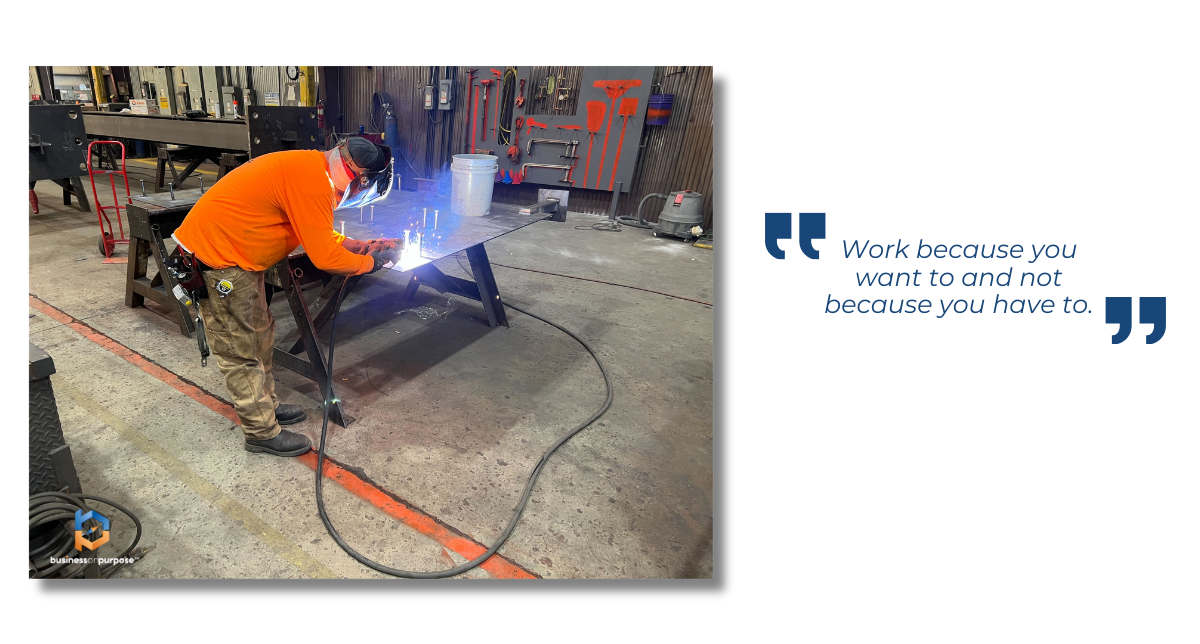
Purpose and contribution remain important even later in life. Instead of stopping work completely, many owners transition into a more flexible role.
- Transition to Family
Another common path is transferring the business to family members.
This might include children, cousins, or extended family who are capable of leading the company forward.
If this is your goal, it is important to clearly communicate the why behind the decision. Understanding the purpose of the transition helps family members align with the long term vision.
- Sell the Business
Selling the company to an outside buyer is another common succession strategy.
Potential buyers may include:
- Competitors
- Strategic buyers from other markets
- Entrepreneurs entering the industry
Business brokers and M&A consultants can help identify these opportunities and determine whether your company is sellable.
Most business sales are evaluated using EBITDA, which stands for Earnings Before Interest, Taxes, Depreciation, and Amortization.
This number helps buyers determine the value of the company using industry specific multiples.
The market ultimately determines the multiple, but strong systems, processes, and leadership can increase that value significantly.
Step 3: Build Systems That Make the Business Transferable
A business cannot be transferred if it only exists inside the owner’s head.
To prepare for succession, the company must operate through clear systems and documented processes.
Start by mapping the four core systems of every business:
- Marketing
List every marketing process used to generate awareness and leads.
Examples include:
- Website updates
- Social media outreach
- Advertising campaigns
- Community outreach
- Referral partnerships
Marketing can be divided into two categories:
- Air support such as billboards or television ads
- Ground game such as personal outreach and relationship building
Most small businesses grow primarily through ground game marketing.
- Sales
Next, document every step involved in converting leads into customers.
This includes:
- Sales conversations
- Appointment scheduling
- Follow up processes
- Proposals and estimates
- Closing procedures
Every step should have a clear, repeatable process.
- Operations
Operations represent the core delivery of your product or service.
Document the procedures that allow your company to consistently produce results for customers.
This may include:
- Production workflows
- Customer delivery steps
- Quality control
- Scheduling and logistics
- Administration and Accounting
Finally, record the administrative systems that keep the business running.
Examples include:
- Payroll processes
- Accounts payable and receivable
- Insurance documentation
- Licensing and renewals
- Financial reporting
“When processes exist only inside the owner’s head, the business cannot be transferred.”

Documenting these systems allows someone else to understand, operate, and improve the company.
Why Systems Increase Business Value
When you sell or transfer your company, buyers are not purchasing you.
They are purchasing a repeatable system that can operate with or without you.
A business that depends entirely on its owner has limited value. A business built on documented systems, trained employees, and clear leadership becomes a transferable asset.
That is the real goal of succession planning.
Final Thoughts
Succession planning is not something that happens at the end of your career. It should begin long before you are ready to step away.
Preparation gives your business the best chance to survive leadership changes and continue serving customers for years to come.
Whether you plan to sell the company, pass it to family, or simply step back from daily operations, the key is clarity and preparation.
Ready to Prepare Your Business for the Future?
Start today with a simple exercise.
Take a blank sheet of paper and begin listing the processes inside your business under the four core systems:
- Marketing
- Sales
- Operations
- Administration and Accounting
Even spending ten minutes documenting these processes will move your company closer to becoming a business that can grow and succeed with or without you.
The earlier you start, the stronger your legacy will become.
Scott Beebe is the founder of Business On Purpose (mybusinessonpurpose.com) and speaker for the AEC industry and author of the book Let Your Business Burn: Stop Putting Out Fires, Discover Purpose, and Build a Business That Matters. Business On Purpose works with business owners to articulate purpose, people, process, and profit to liberate owners from chaos and make time for what matters most.