Starting a business is exciting. But keeping it running without you is the real test of its strength.
Here is a reality that surprises many entrepreneurs. Eighty percent of businesses that start fail, and the reason is often not bad luck. The real issue is that the business depends too heavily on the owner.
Ask yourself an honest question.
If you were forced to take a 30 day vacation with no email, no phone, and no messages, would you come back to a thriving company or a smoldering crater?
That question sits at the heart of succession planning.
A succession plan proves your business has value beyond you.
What Succession Planning Really Means
When you hear the phrase succession plan, the easiest way to understand it is by focusing on the word success inside it.
Succession planning serves two purposes.
- Successfully transitioning your business.
- Celebrating the success your business has built over the years.
If you are even thinking about succession planning, that is already a strong step. It shows you are thinking long term about the future of your company.
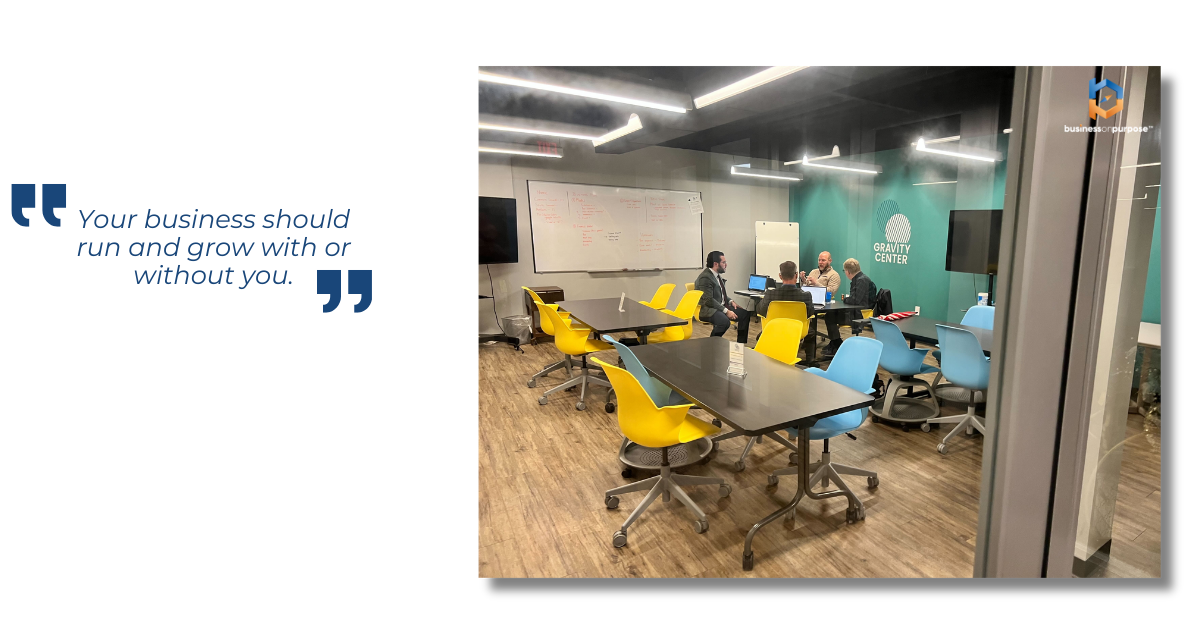
The goal is simple. Your business should run and grow whether you are present or not. Whether you take a vacation, step away temporarily, or eventually transition ownership, the company should continue operating smoothly.
Lead Well.
If you're looking for more resources to work ON your business, we have them.
Why Most Succession Plans Fail
Planning alone does not solve the problem.
Many organizations spend hours creating detailed plans. Four hour meetings turn into eight hour workshops. Sometimes companies spend several days building elaborate plans.
Then something predictable happens.
The plan sits on a shelf and collects dust.
Small businesses experience this even more than large corporations. Large companies can afford consultants and extra resources. Smaller businesses need something different.
They need implementation and action.
A succession plan must be practical and usable.
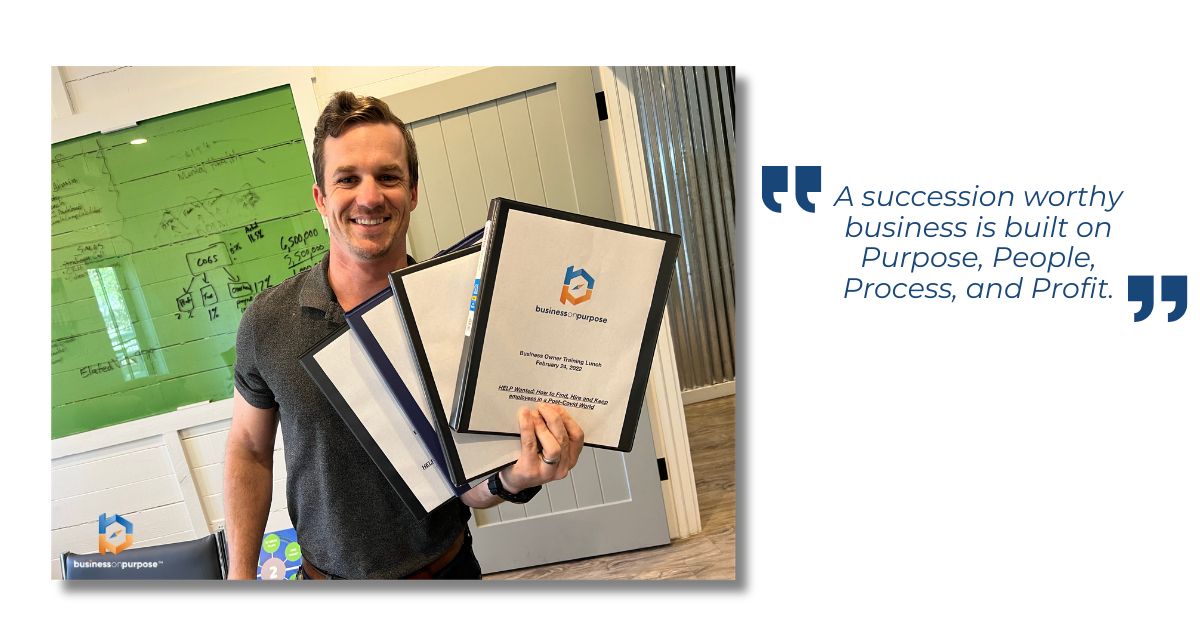
The Four Ps of a Succession Worthy Business
A strong succession plan starts with a simple framework called the Four Ps.
Write these across the top of a page.
- Purpose
- People
- Process
- Profit
Under the Profit category, list four operational areas vertically:
- Marketing
- Sales
- Operations
- Administration
This structure helps you organize your entire business into a system that can function without constant owner involvement.
Purpose: The Direction of the Business
Purpose defines where your business is going and why it exists.
This includes:
- Vision
- Mission
- Values
- Company culture
Culture is not something that simply appears over time. Culture is created by the decisions and behaviors leaders allow inside the company.
If you review your culture and dislike what you see, the responsibility often sits with leadership.
Purpose gives your team clarity about what they are building together.
People: The Team That Can Run the Business
You cannot transition a business that only one person knows how to operate.
The people inside your company must be able to run the organization without you.
This involves creating clear systems such as:
- Organizational charts
- Defined job roles
- Performance scorecards
A real life example shows how powerful this can be.
Over the past three years, one business owner and his wife left their company for 14 to 30 days every year. During that time there were no emails, no Slack messages, and no phone calls.
For their 25th wedding anniversary, they left for a four week trip to Italy and Turkey.
Before leaving, the owner stood in front of a room and pointed to another team member.
He told the audience that this person would handle everything he normally did, and would likely do it even better because he had more daily experience in that role.
The authority had already been transferred long before that moment.
The team was prepared.
The business kept running.

Process: How the Work Actually Gets Done
Processes are the systems that guide daily work.
These systems can be divided into four main operational areas.
Marketing
Marketing tells the world your business exists. It communicates who you are and what value you offer.
Sales
Sales converts prospects into clients. This is the moment when someone decides to trust your company.
Think of it like a wedding ceremony. The agreement is made and the partnership begins.
Operations
Operations is where you fulfill the promise you made during the sale. It is the day to day work that delivers results for your clients.
Administration
Administration supports everything behind the scenes. This includes finance, accounting, documentation, and organizational support.
When you map these processes clearly, your team knows exactly what to do and how to do it.
Profit: The Fuel of the Business
Profit is the fuel that keeps the entire system moving.
Without fuel, a car cannot run. The same principle applies to business.
Every dollar that enters the business should be divided intentionally into categories such as:
- Costs
- Overhead
- Taxes
- Profit
Many business owners fall into the trap of borrowing money to cover problems. Borrowing can hide issues temporarily, but eventually the music stops.
Healthy businesses rely on structured financial systems, not constant borrowing.
Profit also allows you to create dashboards and alerts that help you monitor the health of your company.
These financial signals help leaders focus on improving people, processes, and purpose.
The Real Goal of Succession Planning
A succession plan is not just about selling your company or retiring.
It is about creating a business that works without constant supervision from the owner.
When purpose, people, processes, and profit all work together, your company becomes stable, scalable, and valuable.
That kind of business gives you options.
You can take time off. You can grow faster. You can transition leadership when the time is right.
Final Thoughts
Building a succession ready business starts with clarity.
Define your purpose. Equip your people. Document your processes. Manage profit carefully.
When these pieces work together, your business becomes bigger than any single person.
And that is the real measure of a strong company.
If you want to strengthen the foundation of your business, start by creating a clear vision story.
A well defined vision becomes the starting point for powerful succession planning.
Take time this week to outline where you want your business to go and how your team can help get it there.
Your future company depends on the systems you build today.
Scott Beebe is the founder of Business On Purpose (mybusinessonpurpose.com) and speaker for the AEC industry and author of the book Let Your Business Burn: Stop Putting Out Fires, Discover Purpose, and Build a Business That Matters. Business On Purpose works with business owners to articulate purpose, people, process, and profit to liberate owners from chaos and make time for what matters most.