I’ll never forget riding in the back of a Toyota pick-up along the back dirt roads of Kogi State in Nigeria with a friend of mine named Babangida.
We had been working together in his home culture on a variety of projects and had developed a friendship where I could ask him some intentional questions.
I asked, “Babangida…we spend a lot of money to come here, would you prefer if we just sent money?”
He looked at me with a firm stare and responded simply, “your presence is worth far more than your money will ever be.”
Lead Well.
If you're looking for more resources to work ON your business, we have them.
In 1906, a young man named Philo Farnsworth was born into a Mormon family living in rural Utah. As Farnsworth grew you had an increased interest in electronics and physics.
Eventually Farnsworth applied to the Naval Academy and joyfully accepted due to his scores which at the time for the 2nd highest in Naval Academy history. Within a few months Farnsworth sought honorable discharge due to the fact that his father had died…and also that the government would own any patents that he applied for so long as he was on military payroll.
See, Farnsworth had a knack for inventing things, and one of the things that he would go on to introduce to the world with the help of some San Franscisco philanthropists was a small invention called the television.
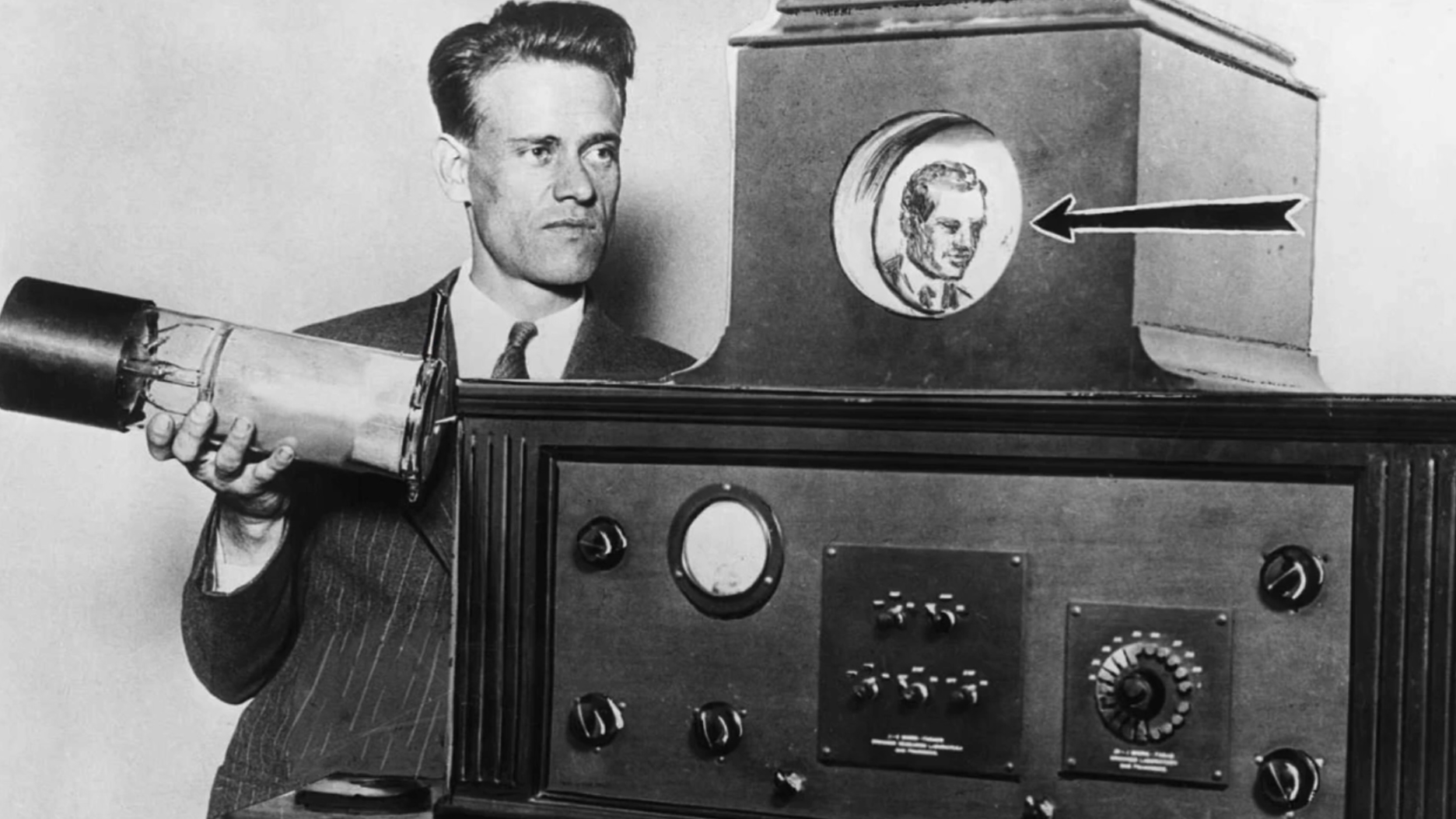
The television then began sweeping the nation in the 1950’s.
John Steinbeck said in the opening of his book Travels With Charley, “When I was very young… the urge to be someplace else was on me”…and in his 50’s the urge never left.
Radio and television allowed us the magical opportunity to “be someplace else” and never leave the thickly carpeted and plastic covered living rooms of our grandparents’ generation.
For the next few decades, we had “wars and rumors of wars” (MT 24). It was harkening back to Billy Joel’s “We Didn’t Start The Fire” when we had…
“Hemingway, Eichmann, “Stranger in a Strange Land”
Dylan, Berlin, Bay of Pigs invasion
“Lawrence of Arabia”, British Beatlemania
Ole Miss, John Glenn, Liston beats Patterson
Pope Paul, Malcolm X, British politician sex
JFK – blown away, what else do I have to say?”
We had the personal computer, the internet bubble, 9/11, and school shootings.
Then something really big happened.
Before I go further, I want to share a resource with you.
The Anxious Generation: How the Great Rewiring of Childhood is Causing an Epidemic of Mental Illness by Jonathan Haidt.

Some things I am about to relay may churn your mind and stir your heart a bit.
We have a hot tub. Just the other day, after a month or so of a violent pollen plague I cleaned out the hot tub filter leaving pollen dots all around the hot tub.
It was only when those pollen bits were stirred that I was able to clean them out. We want to stir the waters of our attention… one of the most valuable gifts we’ve been given. We can renew almost everything in life; but we cannot renew time and attention for it will sprout wings, take flight, and fly away.
There are four primary takeaways from the book that I think helpful to understand. Before I share those allow me to explain why I bring this up…
Right now, I am generally void of the gift of your presence (and you are void of my presence). Yeah, I know you are here…but Steinbeck’s words are the driving sentiment every time we scroll declaring that we have “the urge to be someplace else.”
Brant Hanson says, “Attention is the currency of our lives, the thing that matters most…you ‘pay’ attention, like we pay to attend an event.” (Life Is Hard Loc 2003)
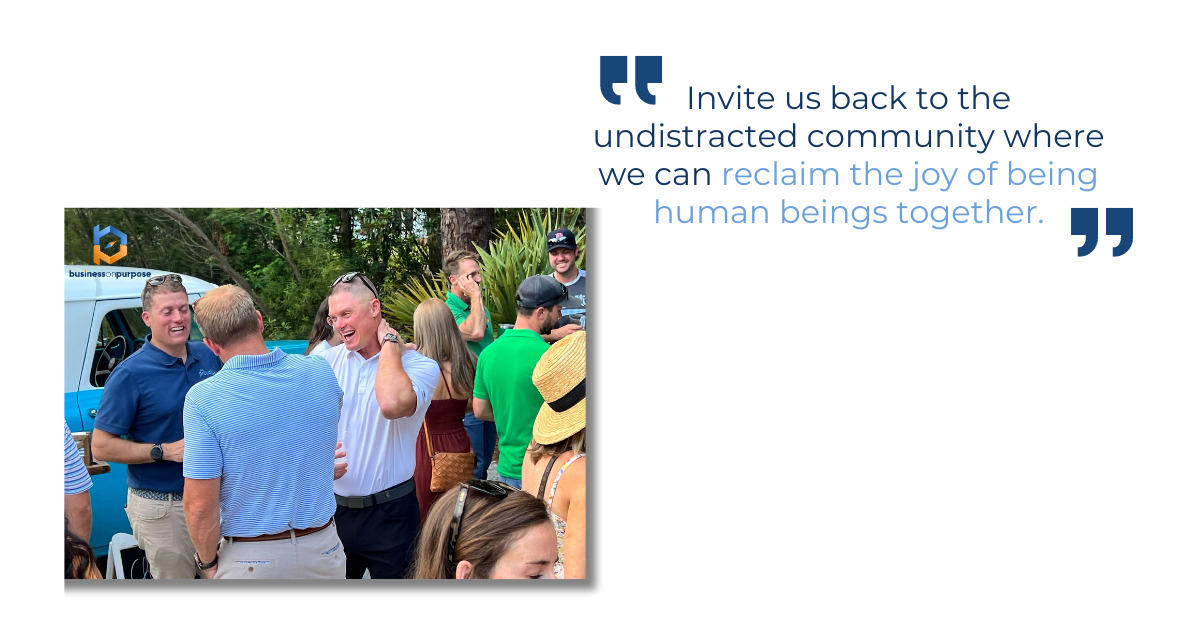
GOAL: This time together is a time to gently and clearly compel and invite us back to the undistracted community where we can reclaim the joy of being human beings together (husbands, wives, friends, children, cousins, and co-workers). An invitation to notice human inflections, to see human hurt, to feel human joy.
Instead, our attention has been hijacked so that we photoshop digital inflections, scroll through edited hurt, and meticulously inflate digital joy while time and attention get sacrificed on an infinite alter of premeditated behavior modification rooted in addiction science studied and gushing out of Silicon Valley.
We are being sold to those promising the purest dopamine hits, and there is finally a small movement of intelligent souls crying in the wilderness begging to make straight paths (Isaiah 40).
What do I want to cause with this talk? For you and me to think about our thinking. To turn around from our screens and see the human life we are missing by scrolling your digital life.
The four purposes of Haidt’s book.
First, he explains, “the nature of childhood and how we messed it up.”
Second, he explains, “the harms that result from the new phone-based childhood (as opposed to a play-based childhood).
Third, Haidt explains, “what we must do to reverse the damage in our families, schools, and societies.”
The fourth purpose of the book is to encourage us that “change is possible if we can (take collective action).” (Isolated action rarely works).
First, the date.
2010 THRU 2013 seems to be years that will be recalled well into the future.
A perfect storm hit in the 2010’s.
Although the iPhone (smartphone with apps) came out in 2007, it was not until around 2012 that it became common among teens.
In 2013, phone carriers began offering unlimited phone and text plan shortly followed by unlimited data.
Facebook purchased Instagram in 2012.
Just two years prior to 2012 the iPhone 4 went to market with the first smart-phone based front-facing camera.
This merging of historically unlimited technology led to the opening of the digital Golden Corral buffet line of social connectivity while we all looked around and begin telling everyone the food looked great and yet we felt like garbage everytime we ate there.
In the same way, diabetes began dramatically increasing in response to a processed, fast food diet, mental health quietly began deteriorating.
From 2010 to 2020 mental illness among college students increased 134%, even higher if you just considered ages 18-25.
Depression 106%.
ADHD by 72%.
Emergency room visits for self-harm among girls have increased 188% since 2010.
Suicide rates for boys increased 91% for boys and 167% for girls.
Well, isn’t it just the pandemic? Actually, you can see a pandemic spike for sure, but after the incidences had already been increasing dramatically.
What happened? That author believes we migrated from a play-based childhood to a phone-based childhood and in doing so the brain of the child was rewired in a way that values technical productivity and boredom alleviation over presence.
Sherry Turkle, author of Reclaiming Conversations, believes technology has helped “cure us of talking”.
She highlights the world’s largest conference call provider, used by 85 percent of Fortune 100 firms and discovered that during meetings
- 65 percent do other work,
- 64 percent send emails,
- 55 percent eat or make food,
- 47 percent go to the bathroom,
- and 6 percent take other phone calls (254).
Think about the feeling of the meeting facilitator reckoning with the reality that they are entirely uninteresting. No wonder we second guess ourselves.
Where is the hope and what is the point? How do we reclaim our human connection?
REMEMBER OUR GOAL: This time together is a time to gently and clearly compel and invite us back to the undistracted community where we can reclaim the joy of being human beings together (husbands, wives, friends, children, cousins, and co-workers). An invitation to notice human inflections, to see human hurt, to feel human joy.
I have good news in the midst of some challenging mountains for us to climb.
The brain can be rewired and we have the choice to jump out of our digital personas and into the true human we were designed to be where I have the honor of your attention and you have the honor of mine.
Remember that old phrase, “can I have your attention please”? Never before have we had to think so hard about our response….
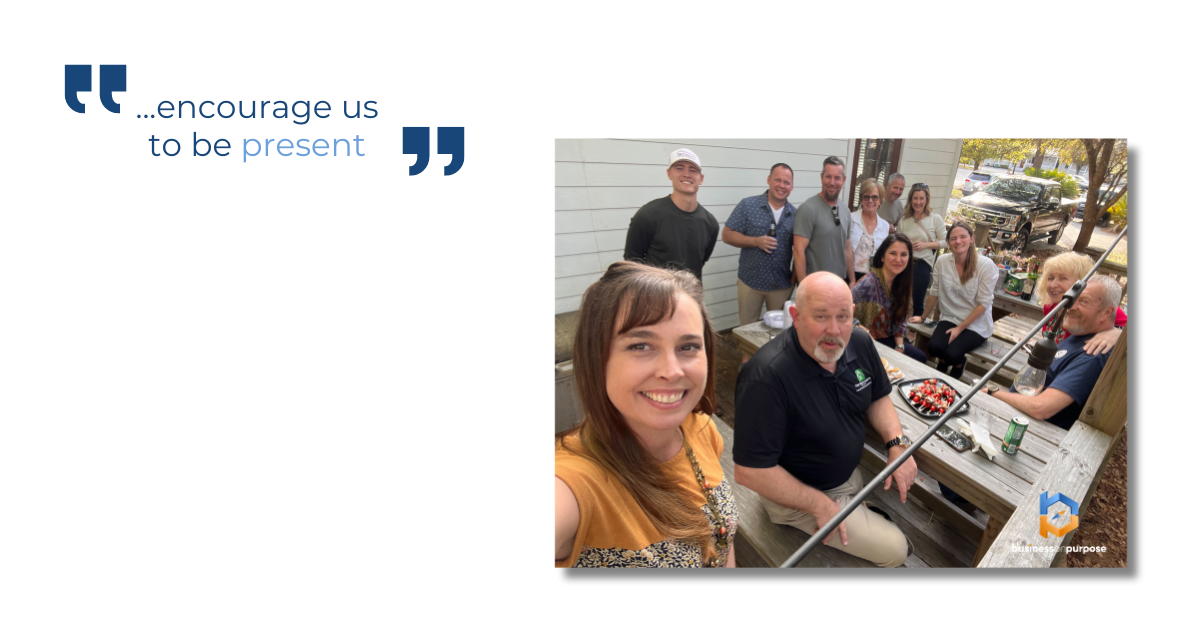
You’ll be tempted to think this is a talk about “winning our kids back”. This is not…it is a talk to encourage us to be present…around the table, present in team meetings, present on the back porch, present at the cheer competition, present while on the phone with a friend not continuing to crank out email.
Remember, your presence is worth far more than your money, your success, your productivity, or your responding to the latest, loudest voice crying out through the evil conduit of email.
Haidt suggests four macro initiatives that can set a reclaiming foundation to our genuine connection with each other.
First, is voluntary coordination. Adults getting together and committing to one another simple things like, “we will leave phones away from the dinner table.” Something simple…but collective.
Second, is creating social norms and moralization much like has happened around a community getting together to push back on drunk driving.
Third, are technological solutions like new types of phones that provide healthy boundaries and reduce pressure on both parents and children. Although tech companies are rarely incentivized to this end.
Finally, government policy and legislation.
But what can we do collectively, and what can I do individually to see you and you see me and we connect human to human?
Ashley and I spent some time thinking through this and here are some basic steps we can begin to take collectively, that if held to would keep our eyes up, ears open, and hearts available to each other in a world of isolation.
First, we can “go BIG” at home and at work as the foundation for conversation. Begin In Gratitude (which is already at the core of Shoreline) can become the hallmark not just during internal meetings but also subcontractor meetings, client meetings, gatherings and other connecting points. It’s easy to “go BIG” and it intentionally rewires our brains to see a little sunshine on a cloudy day.
Next, we can acknowledge thankfulness and consistently write thank you notes (again, already at the core of Shoreline). Handwritten notes are a shock to the recipient precisely because they are analog. It’s as if I can see and feel your personality and your humaness in the unique squiggles of your own handwriting.
Third, you can set time limits on your social media and don’t adjust them:). Begin considering how you feel when you hit your limit? What is that emotion telling you about your habits, your boundaries, and more importantly, your availability to others?
Fourth, start your day with reflection and introspection. Ask yourself “where am I?” This helps acknowledge what feelings, fears, burdens, and ideas you are bringing into your day. Social media curates a story of your life telling me that you have no fear, no worries, no challenges, but instead you live a life of kids with perfect smiles and a body without blemish. It is good to feel your humanity, so you can help me feel mine.
Fifth, find your people. If you have friends, spend “intentionally wasteful” (Jeff Campbell) time with them…if you don’t have friends, find a hobby that has people, a gym, play pickleball, join a book club.
“But when do I have time?”
When you hold to your social media boundaries and free up 2 hours per day!
Two more.
Sixth, commit to keeping your phones away from the table at meals. We can practice that today. Simon Sinek thoughtfully shows that when our phone is on the table, even if it is turned over, we communicate that “you are not the most important thing right now.”
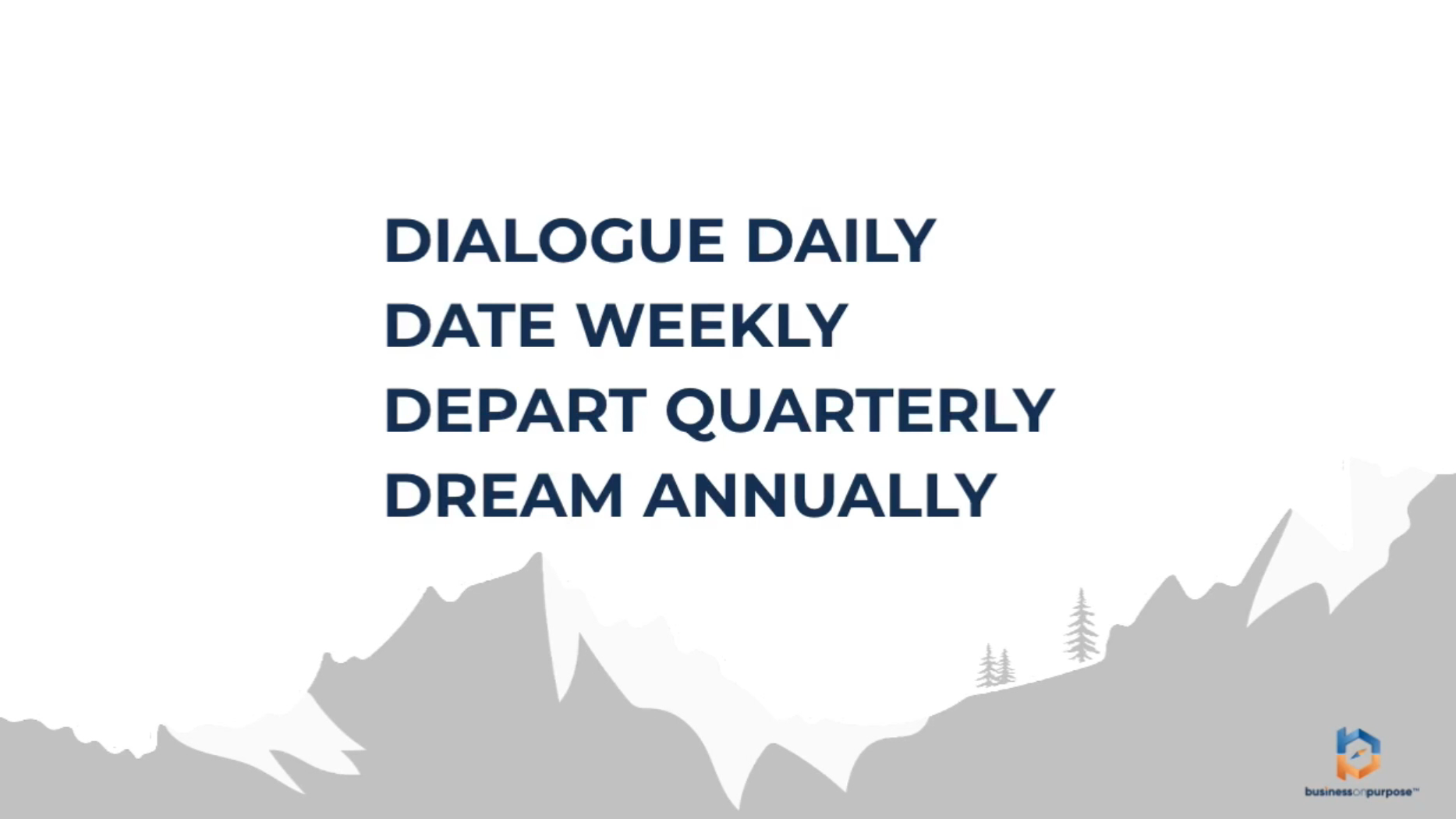
Finally, a phrase that we heard years ago and work hard to implement especially when you are most busy.
- Dialogue Daily – when do you sit and have “chair time” and just talk. “Eku Joku”
- Date Weekly – putting the kids to bed and cooking dinner together with no distraction
- Depart Quarterly – go somewhere else together, camping, a inexpensive hotel with a pool, a friend’s lake house, or the Ritz. Go somewhere and adventure together.
- Dream Annually – create a calendar, your financial barn, and review your family vision
Scott Beebe is the founder of Business On Purpose (mybusinessonpurpose.com) and speaker for the AEC industry and author of the book Let Your Business Burn: Stop Putting Out Fires, Discover Purpose, and Build a Business That Matters. Business On Purpose works with business owners to articulate purpose, people, process, and profit to liberate owners from chaos and make time for what matters most.