In our time with business owners, a lot of the headache has less to do with finding the right products and services. Innovation usually comes pretty easily for entrepreneurs. The real challenge, however, is identifying and filling financial drains in the business—that’s what can truly cause frustration.
I’ve got some exciting news! My brand-new book, The Chaos-Free Contractor, is now available on Amazon. This book is specifically for contractors. While we work with many different industries, over 80% of our clientele are in the contractor space or support the contractor space.
One of the key concepts I discuss is the importance of finding and filling financial drains in your business. Money management for contractors involves understanding three key perspectives: past, present, and future. I want to explore each of these to help you better manage your finances, regardless of your industry.
Lead Well.
If you're looking for more resources to work ON your business, we have them.
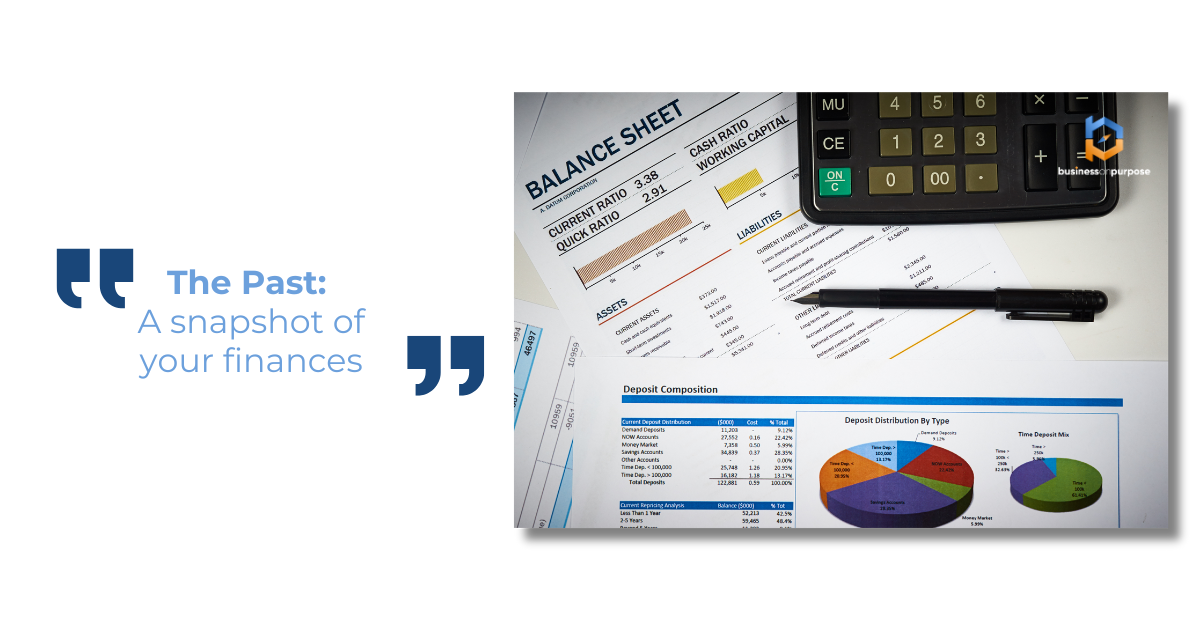
The past perspective of money is like looking at a frozen snapshot in time, represented by balance sheets and profit and loss (P&L) statements. While these documents provide valuable information, they are static and don’t offer much flexibility in decision-making. The IRS is particularly interested in these historical records, as they form the basis for tax calculations. However, as a business owner, relying solely on past data can limit your ability to make informed financial decisions.

Your present financial situation is reflected in your actual cash accounts. We like to say we live in the real world of cash. This is where the concept of subdivided bank accounts comes into play. By separating your money into different categories, you gain a much clearer picture of where each dollar should go.
This tactic is similar to what Mike Michalowicz outlines in his book Profit First. It allows you to allocate funds for specific purposes, giving each dollar a job and a home. By using this method, you can better manage your finances and ensure that you’re always aware of how much money is available for different aspects of your business—whether it’s generosity, reinvestment, capital expenses, or operating costs.
While accountants and the IRS focus on past financial data, you, as a business owner, need to operate primarily in the present, dealing with cash on hand. Accrual accounting has its merits, but most contractors and business owners benefit from making decisions based on the cash actually available—not just what financial statements indicate from the past.
To stay on top of your finances, it’s a good practice to review your bank accounts every single week. This simple habit allows you to make real-time decisions based on your current financial situation.

Now that we’ve covered the past and present, the final piece of the puzzle is looking at the future through a simple tool called budgeting. Start by reviewing the chart of accounts on your P&L statement. Analyze your spending patterns over the last two, three, or four years, and use that data to project upcoming expenses for the next year. While budgeting doesn’t need to be an exact science, making your best estimate will help guide future financial decisions.
As you monitor your spending, compare it against your budget to ensure you’re staying on track. Pairing a simple budget with a project start sheet (or job start sheet) can provide unparalleled clarity for your business, whether small or large. If you’re in a project-based business, you can create a list of projects with columns for future months, allowing you to plug in anticipated billings based on your schedule of values.
If you’re a product-based business, you can start projecting product sales volume over the next week, month, or quarter. This practice, combined with a strong cash management strategy, can significantly improve your financial control.
Perfection in financial management is unrealistic because money is always in motion—like a river that never stops flowing. Your job isn’t to halt the flow but to channel it effectively. Whether you’re a contractor, a product-based business owner, or even running an ice cream shop, financial success is about balancing the past, present, and future.
Past financial data is necessary for tax purposes and long-term planning, but your day-to-day decisions should be guided by your present cash situation. By doing this, you’ll be better equipped to handle your finances and make smart decisions that support your success.
If you need help managing your business finances, visit mybusinessonpurpose.com/ask. You can hop on a free 15- to 20-minute call with one of our professional coaches, who will walk you through your financial questions in more detail.
One thing we ask: Make sure you’re the primary owner, have three or more employees (between 3 and 100), and generate at least $1 million in revenue if you’re a contractor—or at least $500K if you’re a service-based business.
Scott Beebe is the founder of Business On Purpose (mybusinessonpurpose.com) and speaker for the AEC industry and author of the book Let Your Business Burn: Stop Putting Out Fires, Discover Purpose, and Build a Business That Matters. Business On Purpose works with business owners to articulate purpose, people, process, and profit to liberate owners from chaos and make time for what matters most.