You are looking at your bank account as a business owner and thinking, “Do you have to pay an employee for training?”
You want competent employees.
You want a strong culture.
But you do not want to spend $15,000 a month on a jet-setting training guru.
Here is the truth that every business owner needs to understand.
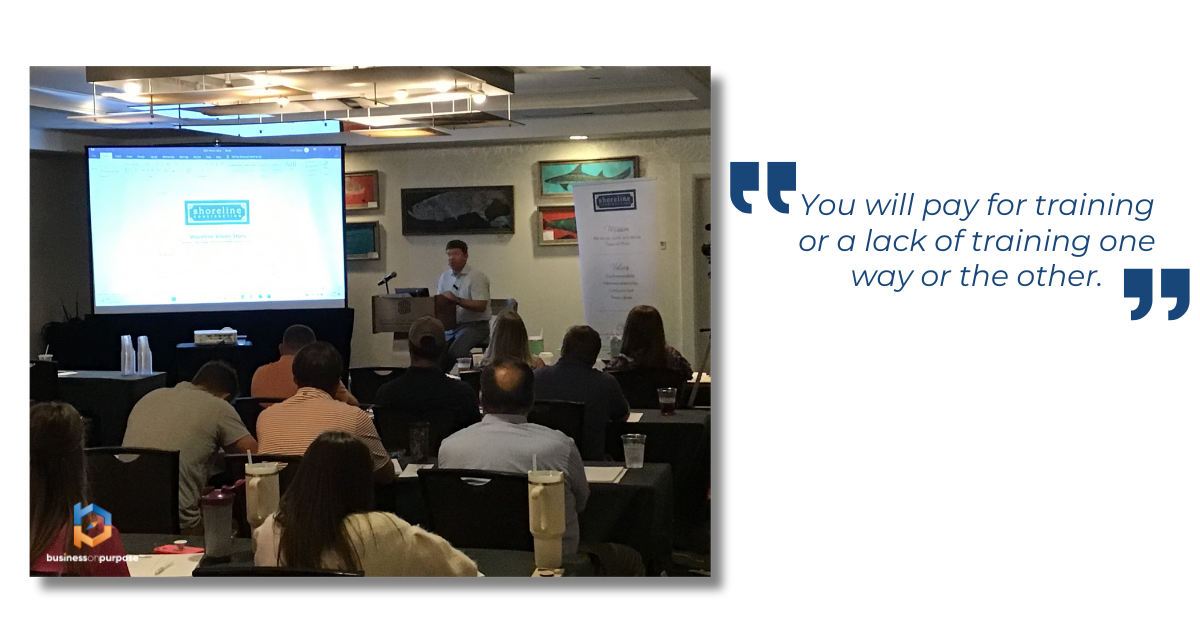
You Will Pay for Training One Way or the Other
Whether you invest upfront or avoid it altogether, training always has a cost.
You either pay for training now and receive the benefits and return on investment, or you delay it and pay later through employee turnover, mistakes, callbacks, and frustration.
Lead Well.
If you're looking for more resources to work ON your business, we have them.
When an employee earning $40,000 to $70,000 leaves your business, the real cost is often $10,000 to $25,000 per person.
For employees earning six figures, turnover costs can equal their entire annual salary.
Training is not optional. The only question is how intentionally you approach it.
The Three Ways You Pay for Employee Training
When business owners ask how to do free training, the honest answer is simple. There is no such thing.
You pay for training in three ways.
- Time
Employees are paid while they train. That time has a real cost.
- Attention
Someone has to deliver the training. That is your time or a leader’s time.
- Money
Materials, resources, or third-party support all require financial investment.
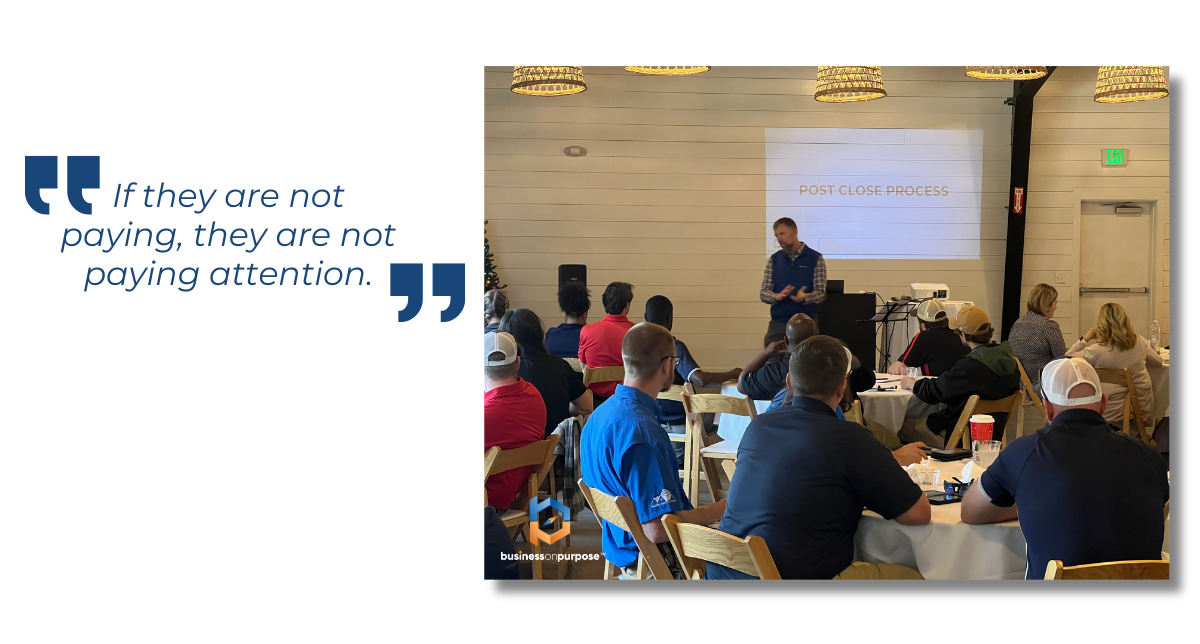
Training should cost something. When you have skin in the game, you take it seriously. And so does your team.
How to Insource Training Without Draining Cash
The goal is not to eliminate cost. The goal is to reduce outside spending and increase internal impact.
Here are four tools that allow you to insource training while building a stronger culture.
Tool 1: A Four-Week Onboarding Script
Onboarding should be intentional and detailed.
Week 1 Day 1.
Week 1 Day 2.
Week 1 Day 3.
Every task, expectation, and process should be mapped out so that by the end of four weeks, your employee is fully operational.
Think of a boat getting up on plane. Once it does, it moves smoothly and efficiently. That is what onboarding should do for your people by week five.
Tool 2: The Master Process Roadmap
Every business runs on four foundational pillars.
Purpose
People
Process
Profit
Within the process pillar sits the Master Process Roadmap.
This is your entire business on one sheet of paper.
It breaks operations into four core systems.
Marketing
Sales
Operations
Administration
Under each system, you document every process that exists. Website updates. SEO. Invoicing. Accounts payable. Scheduling. Fulfillment.
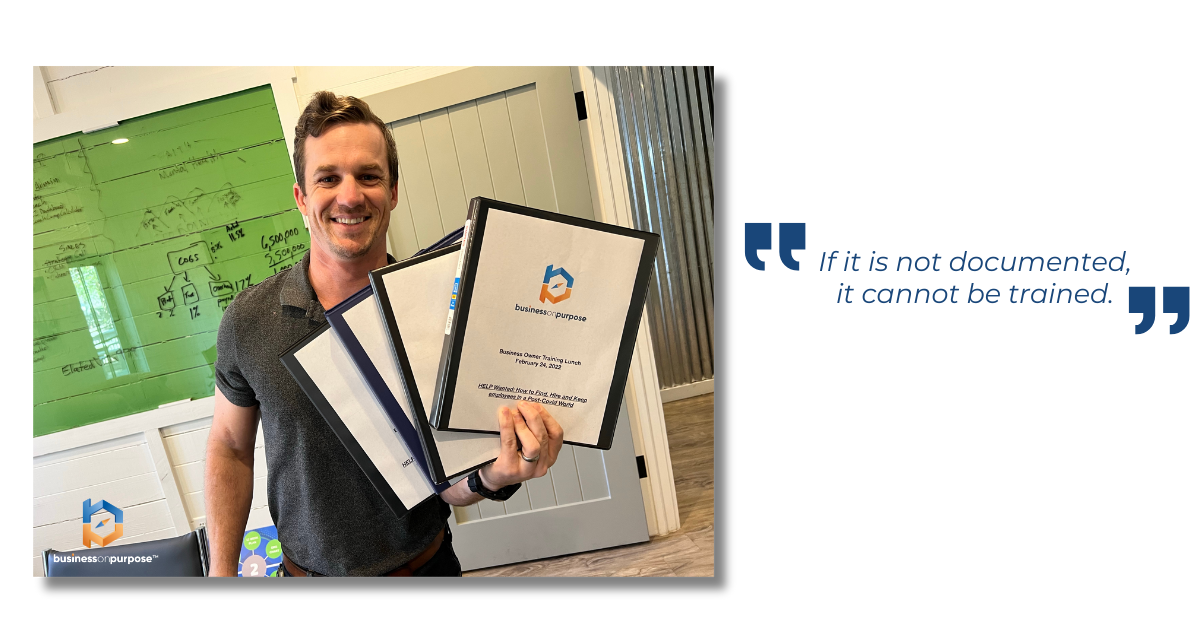
A simple exercise is to set a five-minute timer and brain dump everything that happens in your business under those four headings. That becomes the foundation of your training program.
Tool 3: The Anchor or Culture Calendar
Training should not be random.
The Anchor takes your vision, mission, values, and core processes and spreads them across 52 weeks.
You train repetitively.
You train predictably.
You train meaningfully.
Instead of one high-energy workshop that fades in a week, you drip training into the business all year long.
Tool 4: A Weekly Agenda-Driven Team Meeting
One meeting.
Once a week.
One hour.
No more.
Most meetings fail because they lack structure and boundaries. This meeting exists to reinforce training, create accountability, and drive implementation.
When meetings are effective, people stop hating meetings.
Why Boundaries Create Freedom
Onboarding.
Documented processes.
Weekly training rhythms.
Clear meetings.
What do these create? Boundaries.
Think about LeBron James. Without the boundaries of a basketball court, he is simply a talented athlete. Inside those boundaries, practiced with repetition and purpose, he became one of the greatest players in history.
Your business works the same way.
A Powerful Training Story
There is a small hot dog chain called Pal’s Sudden Service.
It looks unassuming. Almost cartoonish.
Yet it was featured in Harvard Business Review after winning the Malcolm Baldrige Quality Award in 2001. The same award won by FedEx and Ritz-Carlton.
Why?
Because of their commitment to training teenagers and part-time employees with extraordinary precision.
When the CEO was asked, “What if you invest all this time and money and they leave?” his response was simple.
What if we do not and they stay?
The Goal Is Engaged, Capable Employees
You do not want long-term employees your customers dislike.
You want engaged people who understand the process, the culture, and the expectations.
Training done well invites people to do hard things and grow.
And remember, you are paying either way.
The smartest investment is time and attention spent building training inside your business.
If you want help building a simple, repeatable training program for new employees, click the link below and learn how to design onboarding that works from day one.
Training done right liberates business owners from chaos and creates space for what matters most.
Scott Beebe is the founder of Business On Purpose (mybusinessonpurpose.com) and speaker for the AEC industry and author of the book Let Your Business Burn: Stop Putting Out Fires, Discover Purpose, and Build a Business That Matters. Business On Purpose works with business owners to articulate purpose, people, process, and profit to liberate owners from chaos and make time for what matters most.