Most leaders fail before they ever start because they confuse vision with strategy.
Forget the 50 page templates that nobody reads. Forget the binder that sits on a shelf collecting expensive dust. What you need is clarity and implementation.
By the end of this guide, you will have a comprehensive framework that separates world class leaders from frustrated managers.
Lead Well.
If you're looking for more resources to work ON your business, we have them.
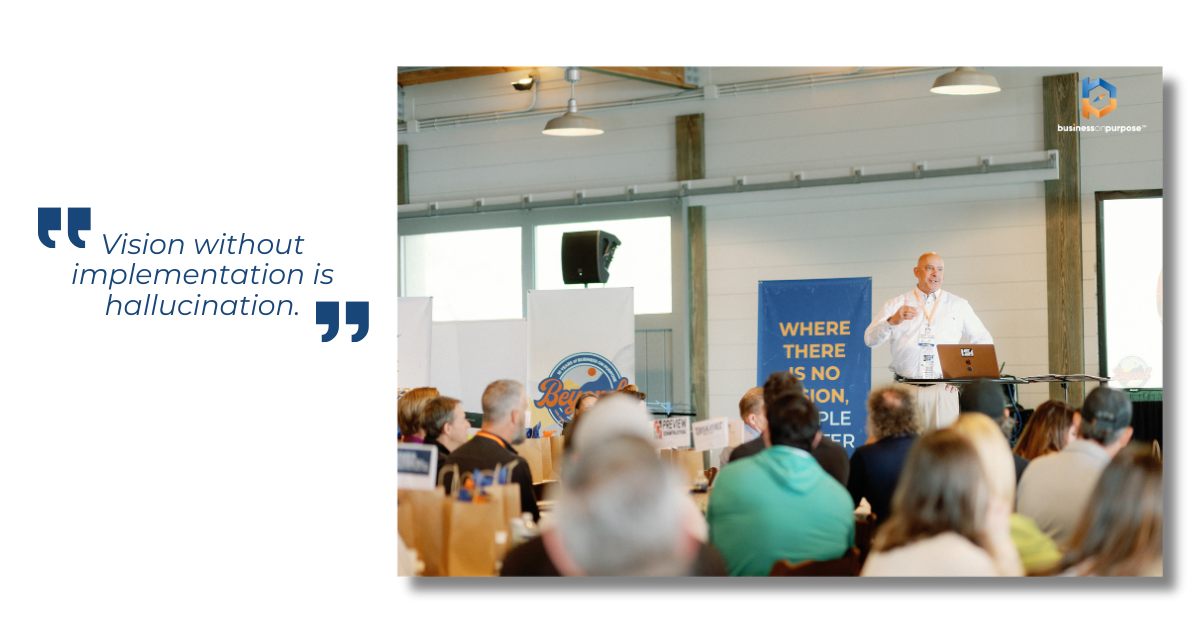
Strategic planning is not about producing a document. It is about creating clarity and executing it consistently.
Vision vs Strategy: Know the Difference
Vision is principle based. Strategy is short term.
Principles span decades and centuries. Strategy changes with time. Social media changes. Artificial intelligence changes. Marketing tactics change.
Vision does not.
A vision is a detailed snapshot of the future of your business, family, or organization. It is long term clarity. Strategy is how you move toward it in the near term.
When we say “strategic plan,” what we are really building is a vision story.
The purpose of that vision story is simple:
Clarity.
I once worked with a business owner generating $12 to $15 million annually. Nine years into his business, he looked across the table and said:
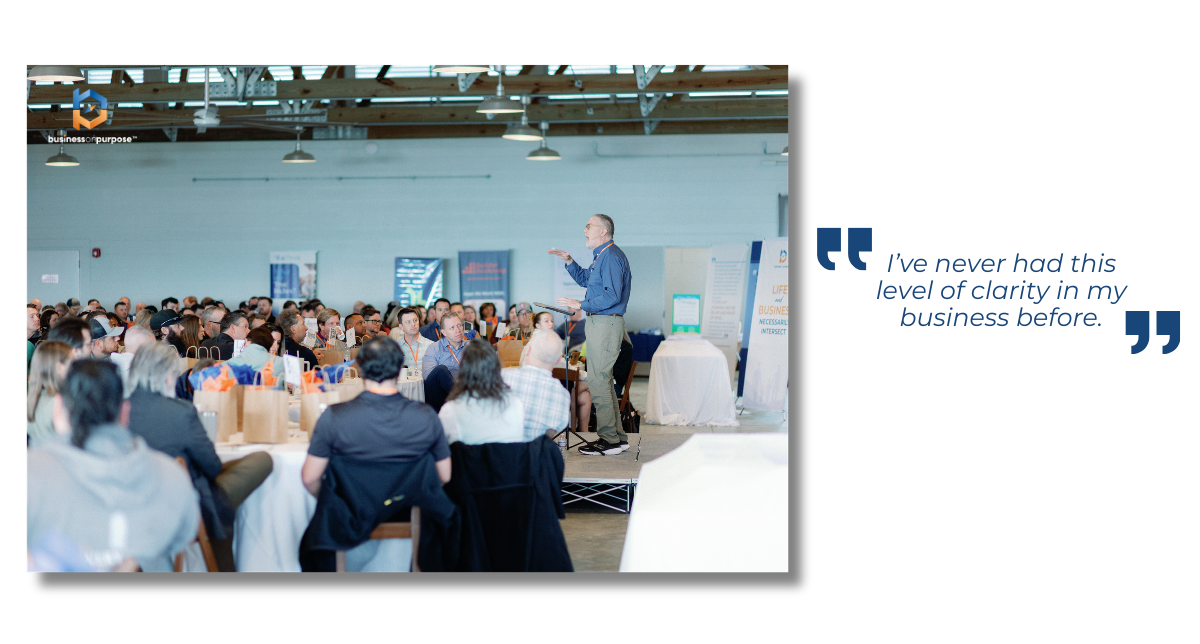
Success without clarity is still confusion. Clarity changes everything.
The 7 Step Vision Story Framework
Here is the exact framework.
- The Term: Choose a Meaningful Date
Start 18 to 36 months out.
Do not pick January 1 randomly. Choose a meaningful date. A graduation. An anniversary. A milestone.
Make it emotional. Make it visceral.
When the date means something, motivation increases.
That date becomes your target.
- Family Freedom Comes Before Business
Life and business necessarily intersect.
If work is difficult, it follows you home. If home is difficult, it follows you to work.
So we start with life.
In your chosen future date, what does your family look like?
Do not say “travel more.” Be specific.
Where are you going? With who? For how long? What will you do?
Write it in detail.
Now define your freedom:
- What does your work schedule look like?
- Are you off on Fridays?
- Are you dropping your kids off at school daily?
- Are you mountain biking on Tuesdays?
Be specific.
This section motivates everything downstream.
- Financial Clarity: Start With Profit
Now we get into the numbers.
Start with profit, not revenue.
Ask this question:
By that future date, how much salary and distribution do I want to receive from this business?
That is your starting point.
Then work backward:
- What revenue supports that profit?
- What percentage margin are you targeting?
- What are the necessary expenses?
If this feels complex, simplify it:
Write down a top line and a bottom line.
That is your financial section.
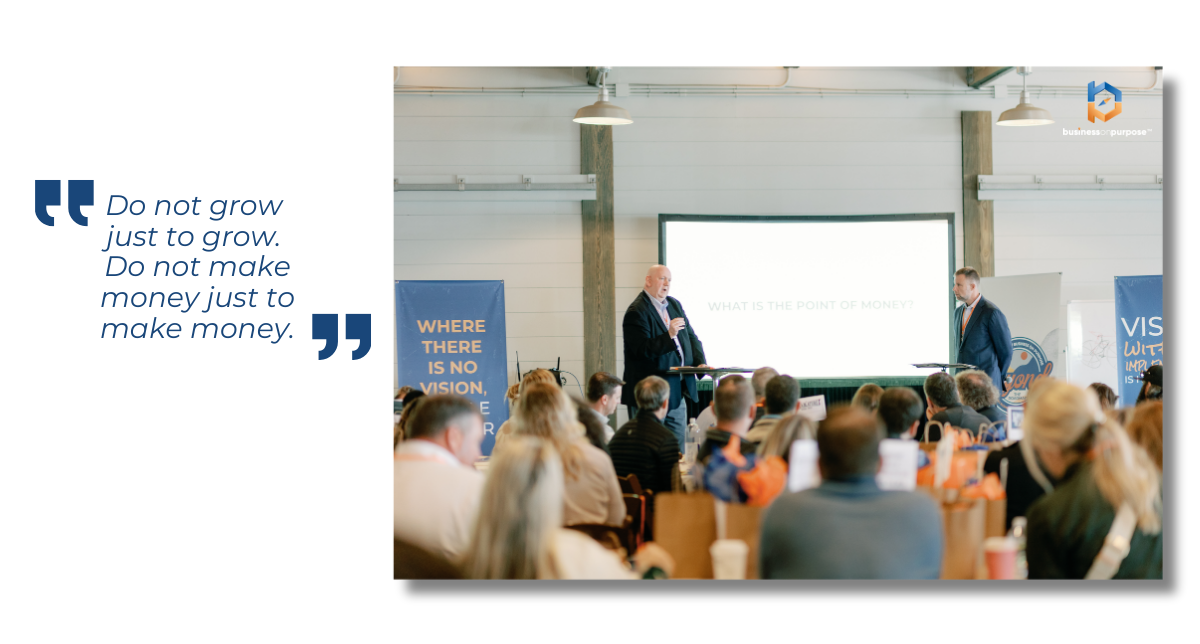
Money is a metric, not a mission.
- Define Your Product or Service
Get specific.
Do not say “construction.”
Do not say “healthcare.”
Do not say “retail.”
Break it down.
If you are a contractor, are you residential remodel? Kitchen and bath? Commercial buildout?
If you are retail, what categories?
Create a short, clear list of exactly what you do and what you do not do.
This determines how much you must sell to hit your financial target and fund your family freedom.
Everything stacks together.
- Build the Team Structure
If you want financial growth, you will need a team.
Your team is not a group of cogs. They are your first internal customers.
Start with structure, not names.
Think of the human body. The skeletal system supports growth. Your organization needs a skeleton too.
Use these four categories:
- Marketing
- Sales
- Operations
- Administration including accounting
Define the roles required in each area.
If you are small, you may fill multiple roles. That is fine.
Think role first, people agnostic.
Build the skeleton that supports your vision.
- Define the Ideal and Non Ideal Client
Two lists.
Non Ideal Client
Think about the worst engagement you have had.
Do not list names. List traits.
What behaviors, expectations, or patterns are you not built to handle?
Ideal Client
Now think about the clients you love working with.
What traits do they have?
When they walk in, you think:
“Yes. What can we do to work together?”
This clarity allows your marketing and business development to aim intentionally.
- Define Your Culture
Imagine sitting in a restaurant booth.
In the booth behind you, a client is talking about your company. They do not know you are there.
What do you hope they say?
Not “nice” or “fast.”
Full phrases.
Examples:
- “We were in a tough spot and they pulled us out.”
- “They communicated clearly the entire time.”
- “They treated us like we mattered.”
Write five to ten full phrases.
That is your cultural vision.
Now Comes Implementation
Most leaders stop at vision. That is the mistake.
Here is how to implement.
Step One: Draft It
Take 30 uninterrupted minutes.
Write out the seven categories.
No distractions.
Step Two: Brain Dump Processes
Set a 15 minute timer.
Under Marketing, Sales, Operations, and Administration, list every process in your head.
Now you have clarity of destination and clarity of execution.
Step Three: Communicate the Structure
People want to know where they fit.
Am I an elbow? A femur?
Communicate the organizational structure clearly.
Keep it clean. Avoid complexity.
Step Four: Weekly Team Meeting
Start with one simple system.
A one hour, agenda driven, leader led weekly team meeting.
Do not go over one hour.
Add a recurring agenda item to review elements of the vision story.
Repetition creates clarity.
Say it over and over again.
Step Five: 12 Week Goals
Every 13th week, each team member sets three goals for the next 12 weeks.
Three goals only.
Each goal can have multiple tactics.
Use your weekly meeting to review progress and hold accountability.
Vision drives strategy. Goals drive implementation.
Final Thoughts
A strategic plan is not a binder. It is not a template.
It is a living, breathing vision story.
When built correctly and reviewed consistently, it becomes repetitive, predictable, and meaningful.
We have bottled up a decade of experience around strategic planning, vision clarity, and people development.
If you want help training new hires so your team can actually execute this vision, we have a free resource for you.
Go to trainnewhires.com and access a free training video and tool that walks you step by step through how to train new hires the right way.
Clarity creates momentum.
Momentum creates results.
Results create freedom.
Start building your vision story today.
Scott Beebe is the founder of Business On Purpose (mybusinessonpurpose.com) and speaker for the AEC industry and author of the book Let Your Business Burn: Stop Putting Out Fires, Discover Purpose, and Build a Business That Matters. Business On Purpose works with business owners to articulate purpose, people, process, and profit to liberate owners from chaos and make time for what matters most.