Most business owners believe the biggest threat to their company is a competitor or a weak economy. In reality, one of the most important moments in the life of a business is transition.
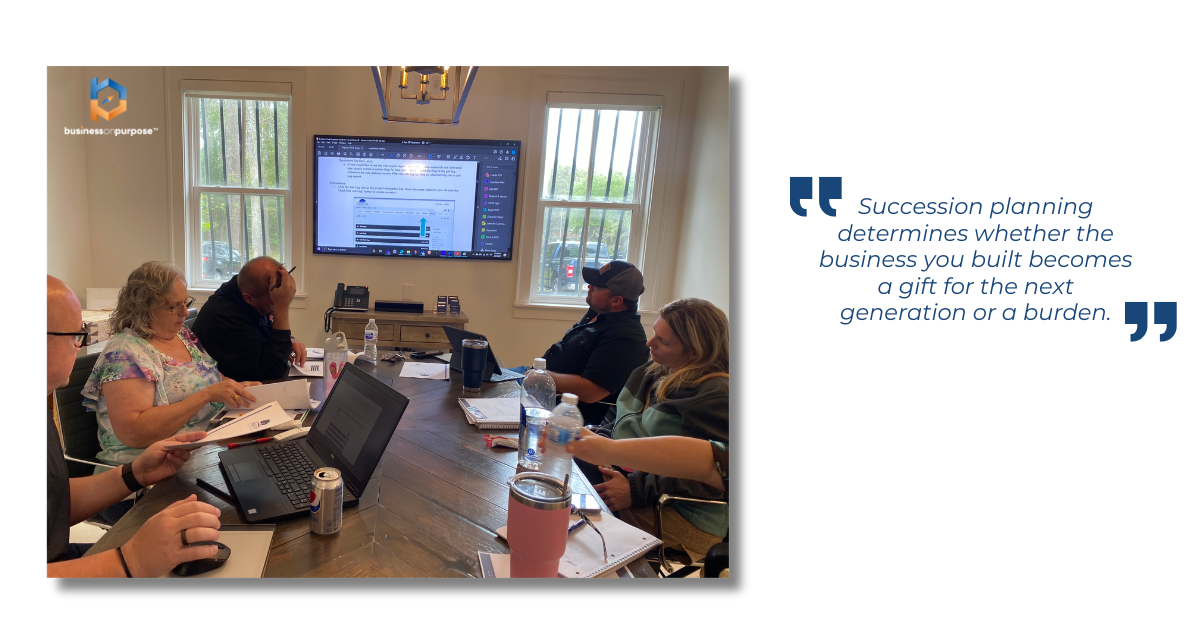
Succession planning determines whether the business you built becomes a gift for the next generation or a burden that collapses under uncertainty.
Consider this statistic. Only about 4 percent of businesses ever reach their tenth birthday. If your business has already crossed that milestone, it is worth celebrating. Building something that survives a decade takes resilience, persistence, and countless difficult decisions.
But longevity alone is not enough. Without a clear plan for the future, even a successful business can struggle during leadership transition.
Succession planning helps protect everything you have worked to build while maximizing the value you receive from it.
Lead Well.
If you're looking for more resources to work ON your business, we have them.
Below are four powerful benefits of succession planning that every business owner should understand.
- Reward: Clarifying the Outcome You Built the Business For
When creating a succession plan, one of the first things to examine is reward.
Why did you start your business in the first place?
For many entrepreneurs, the early rewards are practical. Income, financial stability, and the ability to support a family. These are the near-term rewards that often appear within the first few years.
Over time, deeper rewards begin to emerge.
A growing company begins to create opportunities not only for the owner but for employees, customers, and entire communities. Teams build careers. Clients gain solutions that improve their businesses and lives.
Those long-term rewards often become more meaningful than the initial paycheck.
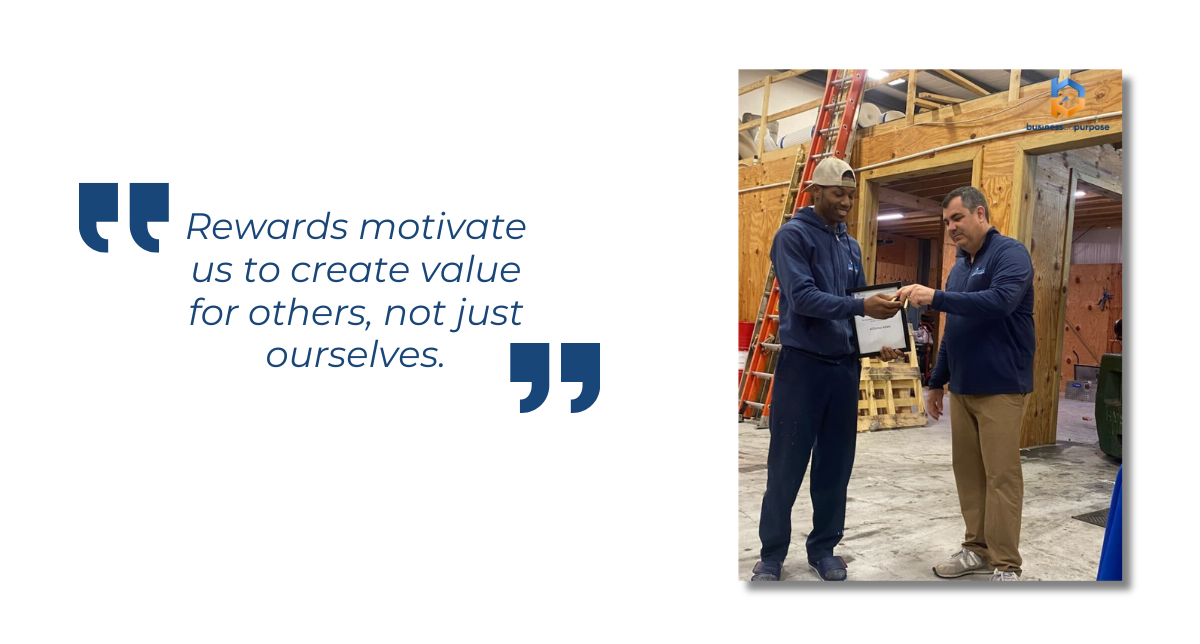
Rewards also have an important psychological role. They motivate people to build, innovate, and create value for others. While reward should never be the sole motivation for work, recognizing it helps align effort with purpose.
Succession planning forces business owners to clearly define the rewards they want both now and in the future.
Once those rewards are defined, it becomes easier to shape a vision for the future of the company.
- Setting the Stage for Others to Thrive
Building a business is similar to building a stage for a performance.
In theater productions, the audience sees the actors delivering powerful performances. But behind the scenes are teams who build the set, design the lighting, coordinate timing, and prepare every detail before the curtain rises.
Without those stage builders, the performance would never happen.
The same is true for business owners.
Entrepreneurs create platforms where other people can use their talents, develop their careers, and serve customers in meaningful ways. The company becomes the stage that allows employees to perform their best work.
Succession planning ensures that the stage continues to exist even when the original builder steps away.
Instead of everything depending on a single individual, the structure allows others to carry the mission forward.
A well-prepared succession plan allows the business to continue creating opportunity for employees, partners, and customers long into the future.
- Replacing Chaos With Clarity
One of the greatest enemies of business leadership is chaos.
Chaos does not always appear obvious. It often disguises itself as distraction, urgency, or constant activity. Many business owners spend their days reacting instead of leading.
Without structure, companies drift into confusion. Roles become unclear. Decisions slow down. Growth stalls.
Succession planning introduces something powerful in place of chaos. Clarity.
Clarity begins with defining the essential foundations of the business:
- Purpose
- People
- Process
- Profit
From these foundations, leaders can then build clear structures for areas such as:
- Marketing
- Sales
- Operations
- Administration
When these elements are organized, the business becomes easier to manage, scale, and eventually transition.
Succession planning forces leaders to confront difficult but necessary questions. Who leads next? How are decisions made? What systems ensure continuity?
These answers replace confusion with confidence.

- Creating Long Term Value
Another major benefit of succession planning is the creation of value.
Most people initially think of value in financial terms. And financial value certainly matters.
Succession planning can significantly increase a company’s market value by improving key metrics such as EBITDA, which represents earnings before interest, taxes, depreciation, and amortization. It can also increase the multiple applied to that earnings figure when the business is sold or transferred.
However, value extends far beyond financial numbers.
A strong succession plan also expands the company’s ability to impact more people. As systems improve and leadership strengthens, the business can grow to serve more employees and more customers.
The result is a business that not only becomes more valuable on paper but also more meaningful in practice.
There is a deeper principle behind this.
Vision begins as something unseen. Work is the process of bringing that unseen vision into reality. Entrepreneurs imagine possibilities, then build systems, products, and teams that transform those ideas into tangible results.
Succession planning protects that vision so it can continue to grow long after the original founder steps aside.

The Real Advantage of Succession Planning
Ultimately, the greatest benefit of succession planning is freedom of choice.
Without a plan, business owners often feel trapped. The company depends entirely on their presence. Leaving becomes difficult, risky, or even impossible.
With a thoughtful succession strategy in place, the business becomes flexible.
It can grow with you or without you. It can transition to new leadership smoothly. It can continue serving employees and customers while allowing the founder to pursue new opportunities.
Succession planning transforms the business from a personal responsibility into a lasting legacy.
Final Thoughts
If you have spent years building your company, succession planning is not optional. It is one of the most important strategic decisions you will ever make.
A strong succession plan helps you:
- Define the rewards you truly want
- Create opportunities for others
- Replace chaos with clarity
- Increase the long term value of your company
Most importantly, it ensures that the business you poured your life into continues to thrive long into the future.
Ready to Start Planning Your Business Succession?
If you want to maximize the value of your business and protect its future, start building your succession plan today.
Take time to define your vision, clarify your systems, and prepare the next generation of leadership.
The sooner you begin, the more options you create.
Start planning today so your business becomes a lasting legacy, not just a temporary success.
Scott Beebe is the founder of Business On Purpose (mybusinessonpurpose.com) and speaker for the AEC industry and author of the book Let Your Business Burn: Stop Putting Out Fires, Discover Purpose, and Build a Business That Matters. Business On Purpose works with business owners to articulate purpose, people, process, and profit to liberate owners from chaos and make time for what matters most.