Understanding What Operations Really Means in Your Business
Most business owners feel frustrated with operations, but the real issue is not the operations themselves. It is a misunderstanding of what operations actually do. Many confuse running a business with fixing operations, and that confusion quietly breaks everything else.
At its core, business is about serving people. It is about human connection through commerce. Systems and money are part of the equation, but they are outcomes, not the primary purpose.
Lead Well.
If you're looking for more resources to work ON your business, we have them.

The True Purpose of Business
Before diving into operations, it is important to step back and understand why a business exists.
Business has always been about connection. Through commerce, we create relationships, exchange value, and contribute to each other’s lives. Yes, there is compensation involved, but the deeper purpose is service.
The purpose of business is to serve each other, with systems and money as byproducts.
The Four Cornerstones of Every Business
Every business, no matter the industry, operates on four foundational pillars:
- Purpose
- People
- Process
- Profit
Within the process pillar, there are four core systems:
- Marketing
- Sales
- Operations
- Administration
A key detail many overlook is the order. Marketing always comes before sales. People cannot buy from you if they do not know you exist.
Building Purpose Into Your Business
Purpose is not something you guess. It must be clearly defined and documented.
Under purpose, you need to establish:
- Vision
- Mission
- Values
- Culture
What These Actually Mean
- Vision is your destination. It defines where your business is going.
- Values are your decision filters. They guide how you act along the way.
- Mission explains why you are doing all of this in the first place.

Culture is not ping pong tables or office perks. It is the result of what you intentionally build. The habits, systems, and behaviors you reinforce will shape the environment of your business.
If left unmanaged, culture forms on its own. And often, not in a way you want.
Macro vs Micro Operations
To truly understand operations, you need to see it in two layers.
Macro Operations
This is the operation of the entire business.
It includes:
- Organizational structure
- Hiring and onboarding
- Scheduling
- Systems across all departments
- Financial management tools
Macro operations define how the business runs as a whole.
Micro Operations
This is what most people think operations means.
It is simply product or service delivery.
- Fulfilling what was promised in sales
- Delivering value to the customer
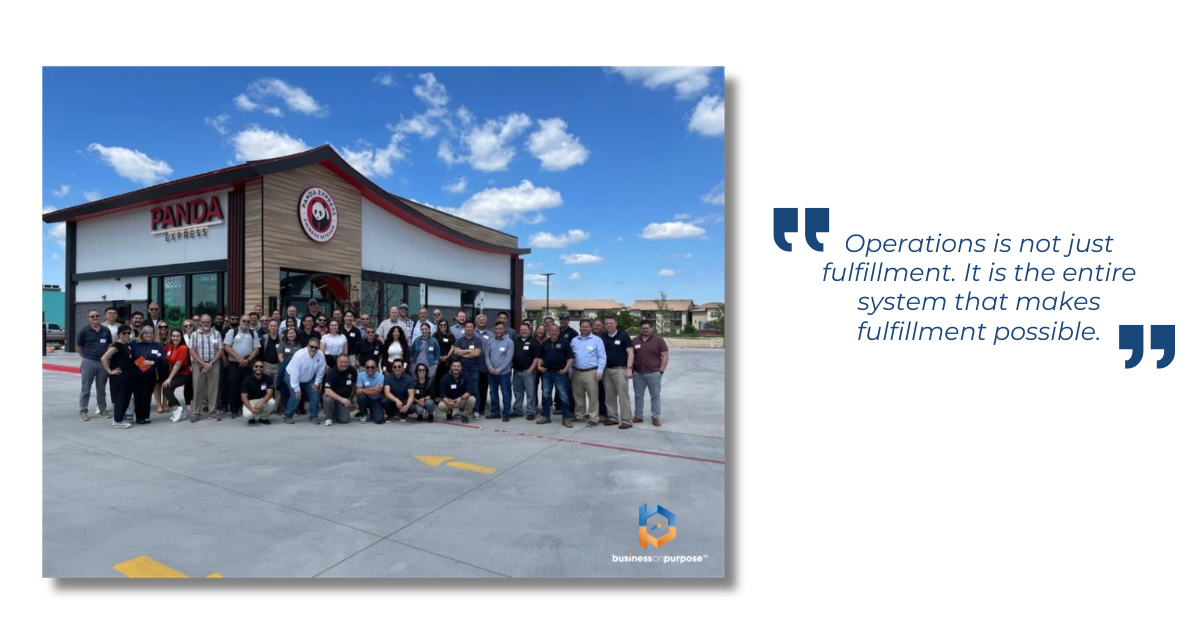
When you only focus on micro operations, you miss the bigger picture. Marketing brings people in. Sales converts them. Operations fulfills the promise. Administration supports everything.
All of these together form the complete operational engine.
Why Most Businesses Break Down
Problems do not usually come from effort. They come from lack of clarity.
If you do not define:
- Vision, people do not know where to go
- Mission, people do not know why they are working
- Roles, people do not know what to do
- Systems, people waste time and energy
If you do not articulate how your business runs, your team will create their own version of it.
This leads to inconsistency, confusion, and eventually frustration.
The Systems Mindset
Instead of feeling overwhelmed, adopt a systems mindset.
Start simple:
- Talk through your processes out loud
- Record your thoughts
- Map out what already exists
- Build gradually
You do not need everything perfect. You need clarity and progress.

Even basic systems like weekly schedules can dramatically improve performance. Without them, time gets lost, priorities blur, and productivity drops.
A Powerful Example of Macro Operations
Consider the story of Ernest Shackleton and his Antarctic expedition.
Stranded for nearly two years in extreme conditions, not a single crew member died.
Why?
Because Shackleton operated at the macro level.
- He adjusted the vision when circumstances changed
- He created structure and routines
- He maintained clarity and leadership
Clear structure and intentional leadership can sustain even the most extreme environments.
Final Thoughts
Operations is not just about delivering a product or service. It is about building a system that allows your business to function effectively at every level.
When you understand both macro and micro operations, you gain the ability to diagnose problems and fix what is actually broken.
If your business feels chaotic or overwhelming, it is time to step back and define your operations clearly.
Start documenting your systems. Clarify your purpose. Build structure into your team.
Or, if you need guidance, reach out and get support. The goal is simple. Create a business that runs with clarity so you can focus on what truly matters.
Scott Beebe is the founder of Business On Purpose (mybusinessonpurpose.com) and speaker for the AEC industry and author of the book Let Your Business Burn: Stop Putting Out Fires, Discover Purpose, and Build a Business That Matters. Business On Purpose works with business owners to articulate purpose, people, process, and profit to liberate owners from chaos and make time for what matters most.