Technology should serve your business, not the other way around. Yet for many business owners, it feels like every new app adds more chaos, more cost, and more confusion.
Instead of creating freedom, technology can quietly become a burden.
Let’s fix that.
The Myth About Technology
There’s a common belief that technology automatically makes everything easier. But when you look at how it has evolved, the reality feels different.
We moved from personal computers in the 70s and 80s, to widespread use in the 90s, to smartphones in the 2000s. Then everything converged around 2012 with mobile devices, front-facing cameras, social media platforms, and unlimited data.
So here’s the real question:
Has all of this created more clarity and freedom in your life and business?
For most people, the answer is no.
Instead of freedom, we often feel more tethered, more distracted, and more overwhelmed.
Lead Well.
If you're looking for more resources to work ON your business, we have them.

Why Technology Feels Overwhelming
Every tool you add to your business comes with its own system, its own rules, and its own language.
It’s like learning a new language every time you install a new app.
A great example comes from podcasting. Many people focus heavily on the technology behind it instead of the actual purpose, which is building connection and engagement.
That leads to an important question:
Are you using technology to serve your business, or are you serving the technology?
Step 1: Start With the Universal Language
The first step is simple but powerful.
Start with spreadsheets.
Spreadsheets are the universal language of technology. Every software tool is built on top of a system that looks very similar to rows and columns.
When you begin here, you:
- Understand how your data is structured
- Build clarity before adding complexity
- Create a foundation for smarter tech decisions
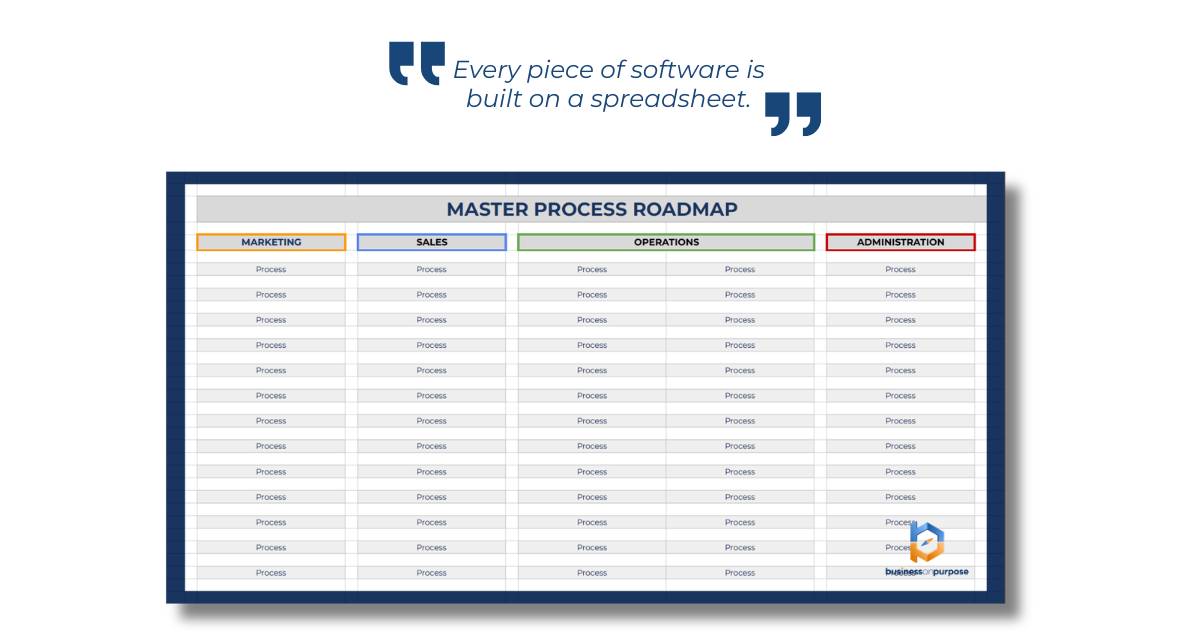
Instead of jumping straight into tools, map a core process in a spreadsheet first. This helps you understand what you actually need before adding another app.
Step 2: Build a Process Roadmap
Technology without process creates chaos.
That’s why the next step is to map your business using a simple framework:
- Marketing
- Sales
- Operations
- Administration
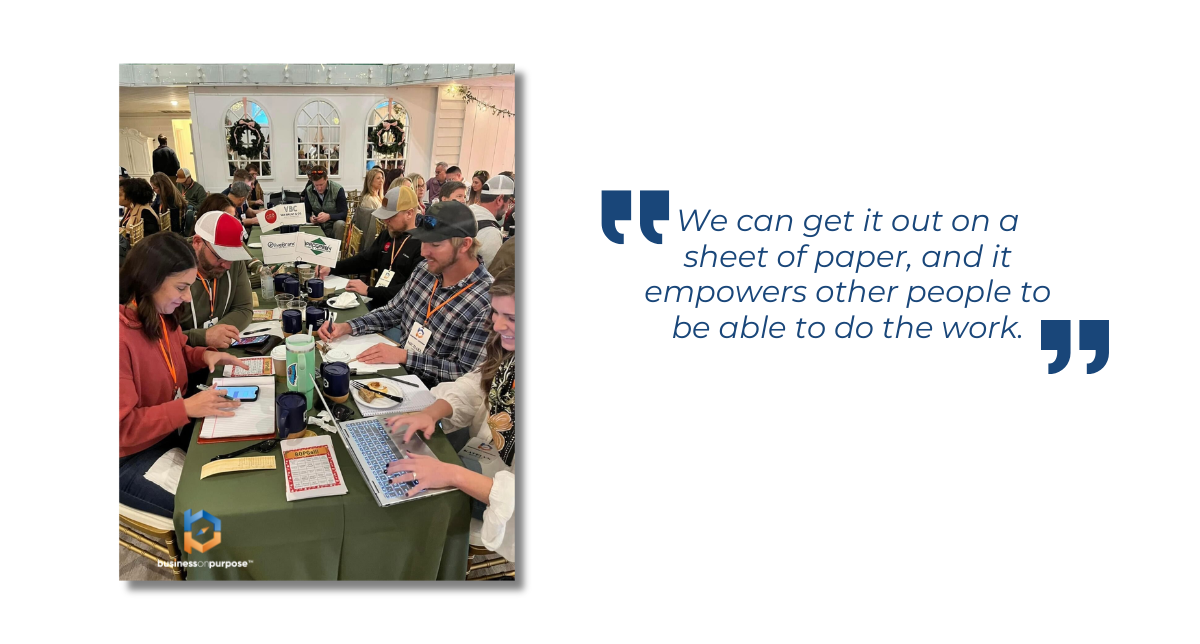
Create these as columns in your spreadsheet. Then list out the processes under each one.
This becomes your process roadmap.
It allows you to:
- Get ideas out of your head
- Document how things actually work
- Make it easier for your team to execute
Step 3: Assign a Tech Stack Owner
Now that you have clarity on your processes, you need someone responsible for your technology.
This is your tech stack owner.
This person becomes the single point of accountability for:
- Managing tools and software
- Integrating systems
- Solving tech-related issues
- Evaluating new tools before adoption
Without this role, businesses often end up with disconnected tools that barely work together.
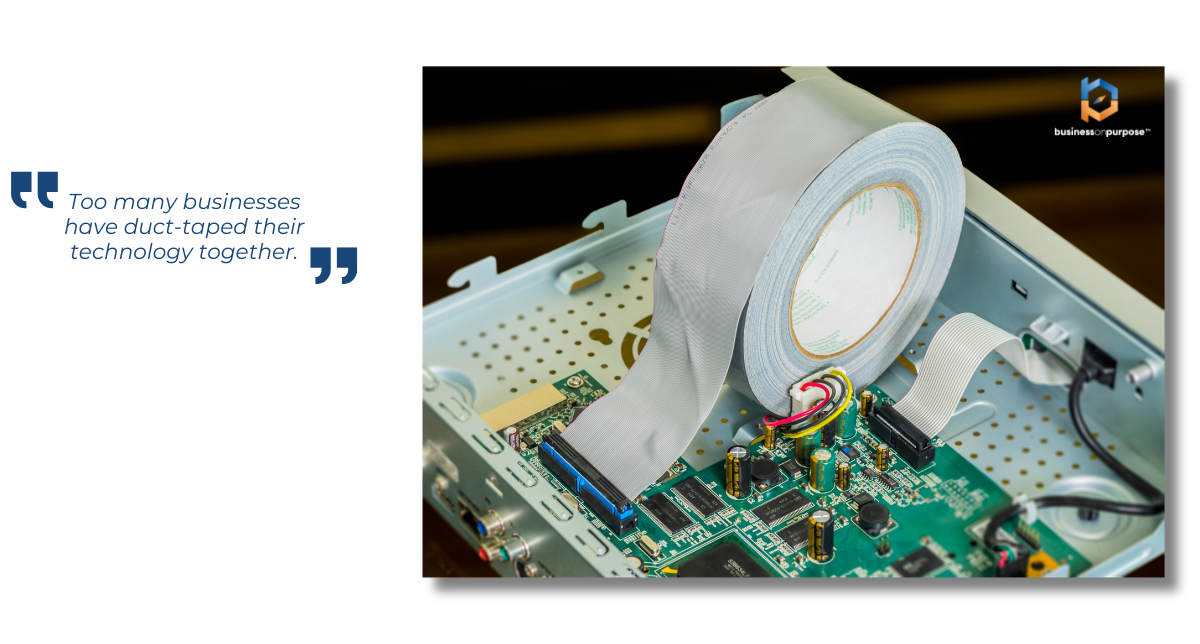
A dedicated owner ensures your technology works as a system, not a collection of random tools.
Step 4: Implement With Consistency
The final step is all about execution.
You don’t wait months to get started. You begin now.
But you also commit to doing it the right way using three principles:
- Repetition
- Predictability
- Meaning
These principles help your team learn, adopt, and consistently use the systems you build.
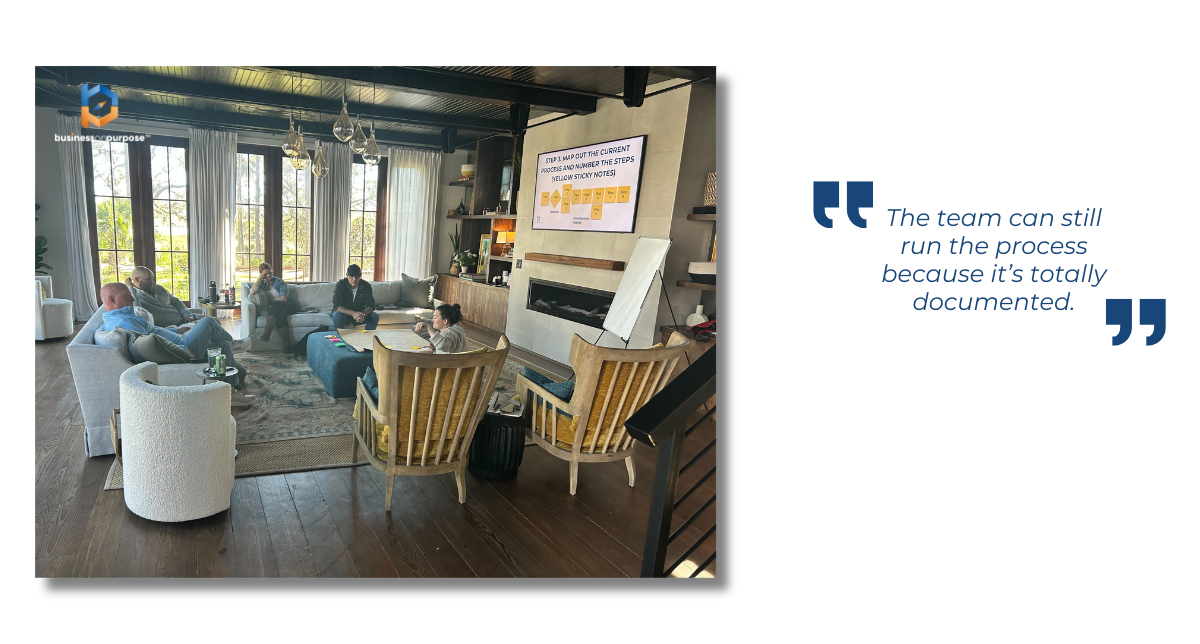
When your processes are documented and your technology is aligned with them, your business becomes more stable and scalable.
Even when you step away, your team can continue to operate effectively.
Bringing It All Together
To truly use technology to improve your business operations, focus on four simple questions:
- What: Start with spreadsheets
- How: Build a process roadmap
- Who: Assign a tech stack owner
- When: Implement now with consistency
When you follow this approach, technology becomes a tool for freedom instead of a source of stress.
Final Thoughts
Business operations can feel overwhelming. That’s normal.
But when you simplify your approach and focus on clarity first, everything changes.
You move from chaos to control.
From confusion to confidence.
From busy to effective.
If you’re ready to simplify your operations and make technology actually work for your business, start today.
Take one process, map it in a spreadsheet, and build from there.
Small steps lead to massive clarity.
Scott Beebe is the founder of Business On Purpose (mybusinessonpurpose.com) and speaker for the AEC industry and author of the book Let Your Business Burn: Stop Putting Out Fires, Discover Purpose, and Build a Business That Matters. Business On Purpose works with business owners to articulate purpose, people, process, and profit to liberate owners from chaos and make time for what matters most.