Running a business can feel confusing when your profit looks strong on paper, yet your bank account tells a different story. Many business owners face this exact problem. You see net income on your P&L, but the cash simply is not there.
So what is really happening?
Let’s break it down in a practical, real-world way.
The Cash Illusion Most Business Owners Fall For
Many owners believe this simple idea:
“As long as there’s money in my bank account, I must be making money, right?”
Lead Well.
If you're looking for more resources to work ON your business, we have them.
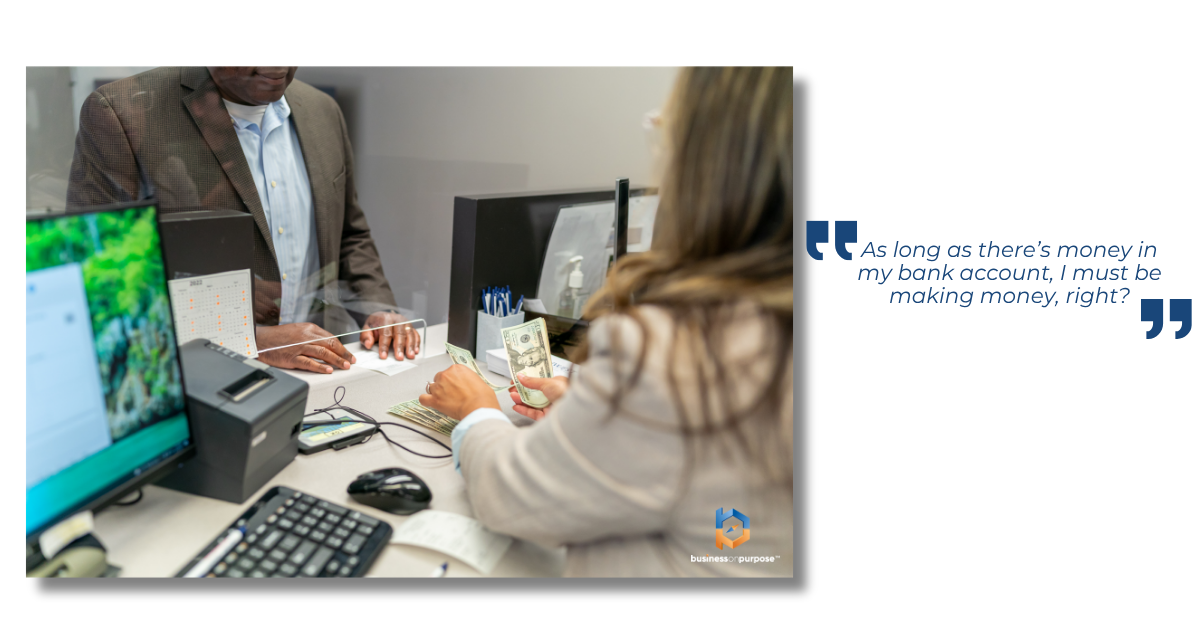
That belief is one of the most dangerous myths in business.
Cash in the bank does not equal profit. And worse, many businesses unknowingly fall into a cycle of using future money to pay for past expenses.
This often leads to what feels like survival mode, constantly juggling funds just to stay afloat.
A Real Story That Changes Everything
A homebuilding company generating $15 million in annual revenue once revealed something shocking during a financial review.
They had:
- Collected client deposits
- Used those funds for unrelated expenses
- Planned to use future deposits to complete earlier projects
The total?
$1.7 million in unfunded client deposits.
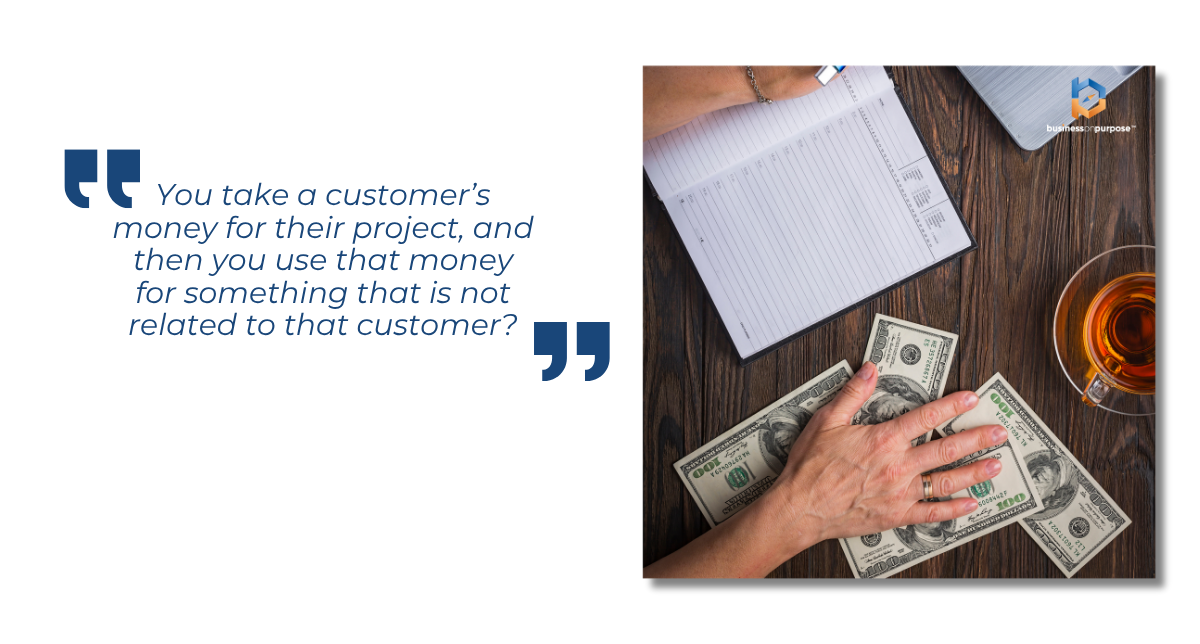
“You take a customer’s money for their project, and then you use that money for something that is not related to that customer?”
This is not just risky. It mirrors the structure of a Ponzi scheme.
Many businesses do not intend to operate this way, but without clear systems, it happens unintentionally.
Understanding the True Behavior of Money
There are two critical truths every business owner must understand.
- A Dollar Is Never Just a Dollar
- A dollar in is always less than a dollar
- A dollar out is always more than a dollar
When money comes in:
- You pay cost of goods
- You cover expenses
- You reinvest
When money goes out:
- Taxes apply
- Fees apply
- Hidden costs appear
“A dollar is never a dollar.”

- Money Exists in Three Time Frames
- Past: P&L statements and balance sheets
- Present: Cash in your bank account
- Future: Budgets and projections
Your bank account reflects reality. Your reports reflect history.
Understanding this difference changes how you make decisions.
The Popcorn Bucket Principle
Think of your business finances like a large bucket of popcorn.
If everything sits in one bucket, you treat it like it is all yours.
You spend freely. You overlook waste.
But if that same popcorn is divided into smaller buckets, something changes.
You become more intentional.
The Solution: Subdivide Your Money
Instead of one bank account, create multiple accounts that each serve a purpose.
Start with These Core Accounts:
- Income Account
- Cost of Goods Account
- Operating Expenses Account
- Tax Account
- Profit Account
- Capital Expenses Account
This system forces clarity and discipline into your business.
How It Works in Practice
When money comes in:
- Allocate a percentage immediately to Cost of Goods
- Distribute the remaining funds across your other accounts
- Only spend what is available in each category
If one account runs out, the business is telling you something.
That feedback is powerful.
Why This Eliminates the Need for Debt
Most businesses go into debt for one reason:
They run out of operating cash.
This system prevents that by:
- Creating spending boundaries
- Improving visibility
- Forcing discipline
“The number one reason people get into debt is because they run out of cash for operating expenses.”

The 4 Barriers You Must Overcome
Implementing this system is simple, but not always easy.
- Yourself
It feels like extra work, but it creates clarity.
- Your Bookkeeper
More accounts do not mean more complexity long term.
- Your Bank
If they charge unnecessary fees, find another bank.
- Your CPA
Traditional accounting focuses on the past. You must focus on cash in the present.
A Simple Weekly Habit That Changes Everything
Track your cash once per week.
- List all your accounts
- Record balances every Monday
- Review trends
This takes about three minutes.
And over time, your cash balance will naturally increase.
Why?
Because you start paying attention.
What Financial Clarity Really Looks Like
When this system is in place, everything changes:
- You know exactly where your money is
- You stop guessing
- You reduce financial stress
- You operate with confidence
Final Thoughts
Financing operations and expansion does not have to mean taking on debt.
It starts with understanding cash, respecting its behavior, and building a system that gives every dollar a job.
Clarity creates control. Control creates growth.
Ready to Take Control of Your Business Finances?
If you are tired of guessing where your money goes and want a clear system that actually works, it is time to take action.
Start by organizing your accounts. Build your structure. And most importantly, commit to consistency.
If you need guidance, support is available. The right system can transform your business.
Scott Beebe is the founder of Business On Purpose (mybusinessonpurpose.com) and speaker for the AEC industry and author of the book Let Your Business Burn: Stop Putting Out Fires, Discover Purpose, and Build a Business That Matters. Business On Purpose works with business owners to articulate purpose, people, process, and profit to liberate owners from chaos and make time for what matters most.