When we first meet business owners, it’s kind of like anything else. We try to make ourselves look better than we typically are doing. And so we tell some stories that may or may not be true.
But once we get to know business owners, we realize there’s a lot underneath the surface that we want to explore — for one ultimate purpose: to liberate them from chaos and make time for what matters most.
We’re not impressed by storytelling much anymore because we’ve heard so many stories. By the time we peel back the curtain, we realize, “Oh, you’re just like everybody else.” And that’s when the real work begins. Once we realize that, we can take the sheen off and start building real solutions.
The Hidden Struggle: Time and Communication
One thing we hear a lot from business owners is, “Everything’s good, everything’s rosy.” But soon we uncover what’s really happening:
- “I’m not the best communicator.”
- “I really kind of stink at it.”
- “My time just disappears because I’m having to communicate and re-communicate over and over again.”
Sound familiar?
Guard Your Time Like You Guard Your Money
Let’s talk about retention in the Big Five Feedback Loop Models. Here’s the key idea:
We must guard our time like we guard our money.
Lead Well.
If you're looking for more resources to work ON your business, we have them.

Most business owners live in a constant state of reaction. They wake up to chaos, spend their days as little firefighters — putting out fires, throwing Hail Marys, and juggling multiple tasks simultaneously.
This has to change.
The Mindset Shift: An Ideal Weekly Schedule
One of the most powerful strategies to fight this chaos is implementing what we call an Ideal Weekly Schedule.
Think about it this way:
- We want to be great communicators.
- We want to be great budgeters.
- We want to be great job costers and inventory takers.
- We want to be excellent at the daily tasks of business.
But too many times, we look up at 6 p.m. and think, “I got nothing done today.”
The ideal weekly schedule works like Tetris — fitting time blocks together so you can use your most valuable asset, time, wisely.

Remember, you can make more money. You can’t make more time. Dietrich Bonhoeffer called time “irrevocable.”
Treat Your Calendar Like a Budget
Think of your week as a budget of time slots. Allocate them intentionally:
- Need time for estimating, sales, outreach, or marketing? Schedule it.
- Expecting client calls? Set aside time.
The key is to predetermine these time buckets instead of letting others dictate your schedule.
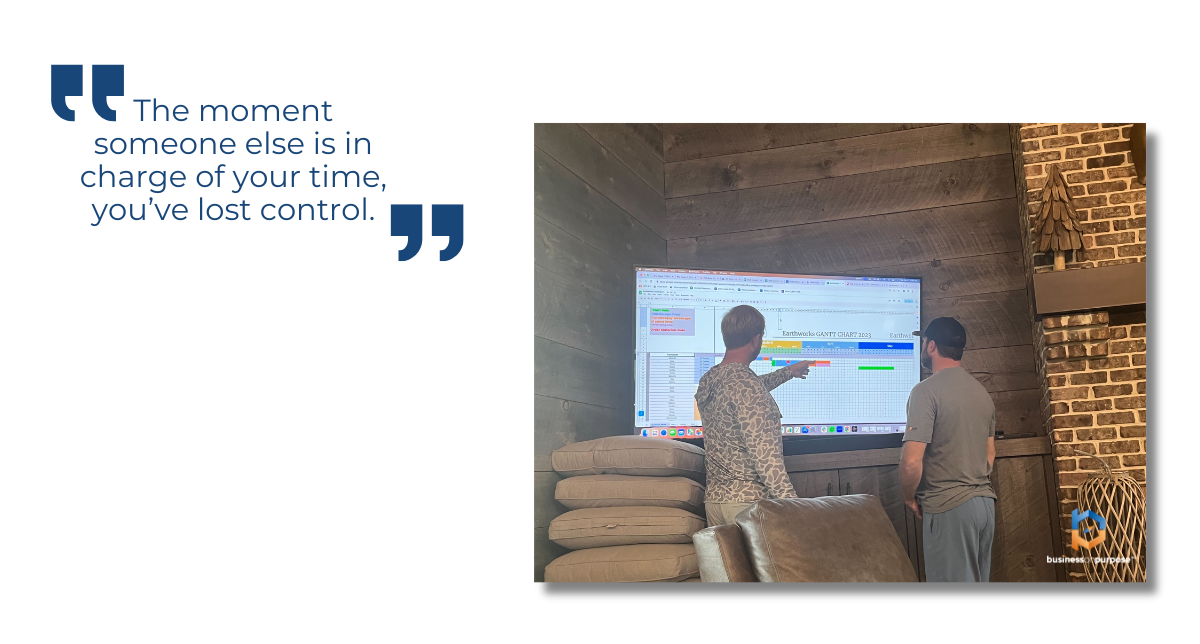
The moment someone else is in charge of your time, you’ve lost control.
And here’s the hard truth — you don’t have to be available every time a client calls.
Remember this:
Email is someone else’s agenda for your day.
The average person spends over three hours a day on email — not counting text messages and phone calls.
When you feel like you need to be constantly available, ask yourself:
Is it truly necessary — or is it just your ego needing validation?
The Latest Loudest Voice Disease
Here’s what’s really going on: you may be suffering from a condition we call LLVD — Latest Loudest Voice Disease.
Sounds gross, right? But it’s real.
We’ll go deeper into that in a future podcast, but for now, just recognize it. If you hear that and think, “Yep, that’s me,” it’s time to step back and reassess.
Your Time Is Yours
Your time is your time — and your calendar should reflect that. Some of you might say, “No, it’s not.”
But yes, it is.
You can always choose to do something else with it. There might be consequences, but it’s still your choice. Until you believe this, you’re not ready to effectively schedule and manage your day.
Annie Dillard once wrote:
“How we spend our days is, of course, how we spend our lives.”
Buy Back Your Time
I recently read Buy Back Your Time by Dan Martell — an excellent book. He talks about hiring an assistant to free yourself up.
After ten years in business, I realized I needed that too. We’ve had helpers before, but this time we brought on what we call an implementation assistant.
For the first three months, their entire role is focused on me — getting things off my plate so I can focus on three primary things:
- Coaching my small group of clients
- Developing new tools (like a powerful operating system tool we’re building)
- Storytelling — podcasts, speaking engagements, and events
Anything outside those three priorities pulls from my time — and I can’t get that time back.
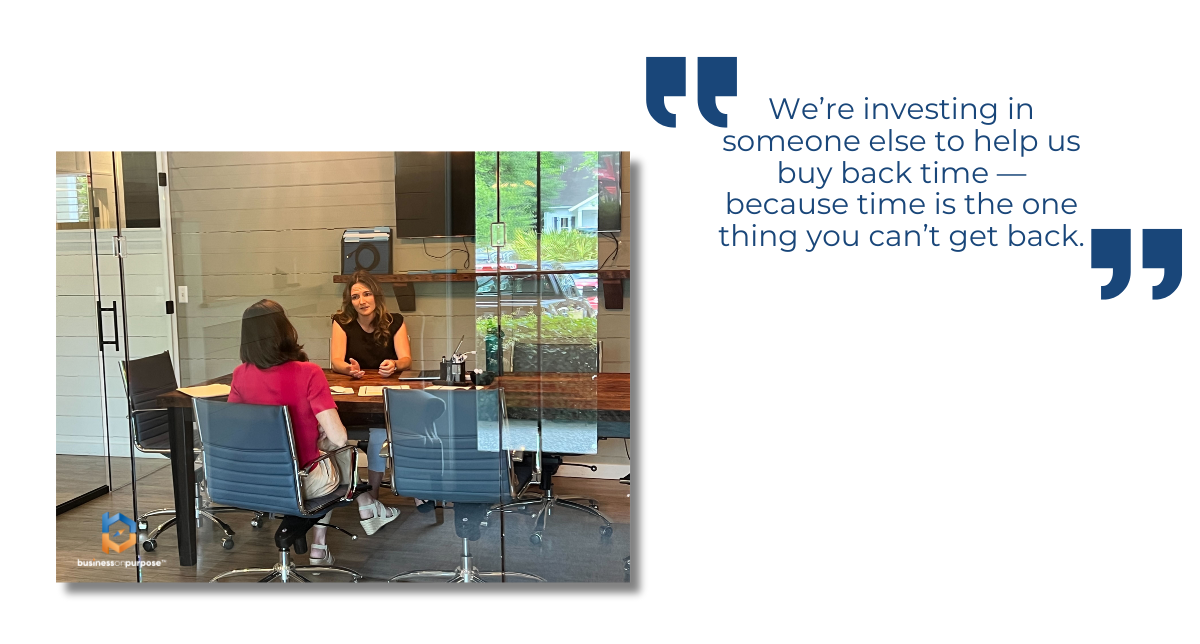
We’re investing in someone else to help us buy back time — because time is the one thing you can’t get back.
Your Next Step
If you’ve got questions about any of this, head to businessonpurpose.com/ask
And if you’re a business owner with three or more employees doing $1M+ in revenue, we’d love to chat for 15–20 minutes. No strings attached. If you want to know how to work with us, we’ll tell you — but only if you ask.
Our goal is simple:
To help you be liberated from chaos so you can make time for what matters most.
Scott Beebe is the founder of Business On Purpose (mybusinessonpurpose.com) and speaker for the AEC industry and author of the book Let Your Business Burn: Stop Putting Out Fires, Discover Purpose, and Build a Business That Matters. Business On Purpose works with business owners to articulate purpose, people, process, and profit to liberate owners from chaos and make time for what matters most.