I had a total PTSD flashback to the pandemic and the Great Resignation. Oh, my goodness!
At the time of this writing, it’s 2025. I was just thinking about how once we find a great teammate—a truly valuable team member—we want so badly to keep them. It reminds me of NCAA collegiate coaches right now, who work tirelessly not only to recruit new talent but also to retain the talent they already have. After all, it’s easy for players to move back and forth between teams.
So, let’s talk about retention in your business. How can you make sure you retain the right talent—the individuals who are delivering real value not only to the business and its mission, but also to their fellow team members? These are the people who find joy in their work. Let’s see if we can help liberate you from chaos by showing you how to keep them.
To retain talent, you need to invest time in deep, meaningful conversations. I realize that may sound uncomfortable for some of you. Maybe you’re even tempted to stop reading right now, thinking, That’s not within my wheelhouse.
Lead Well.
If you're looking for more resources to work ON your business, we have them.
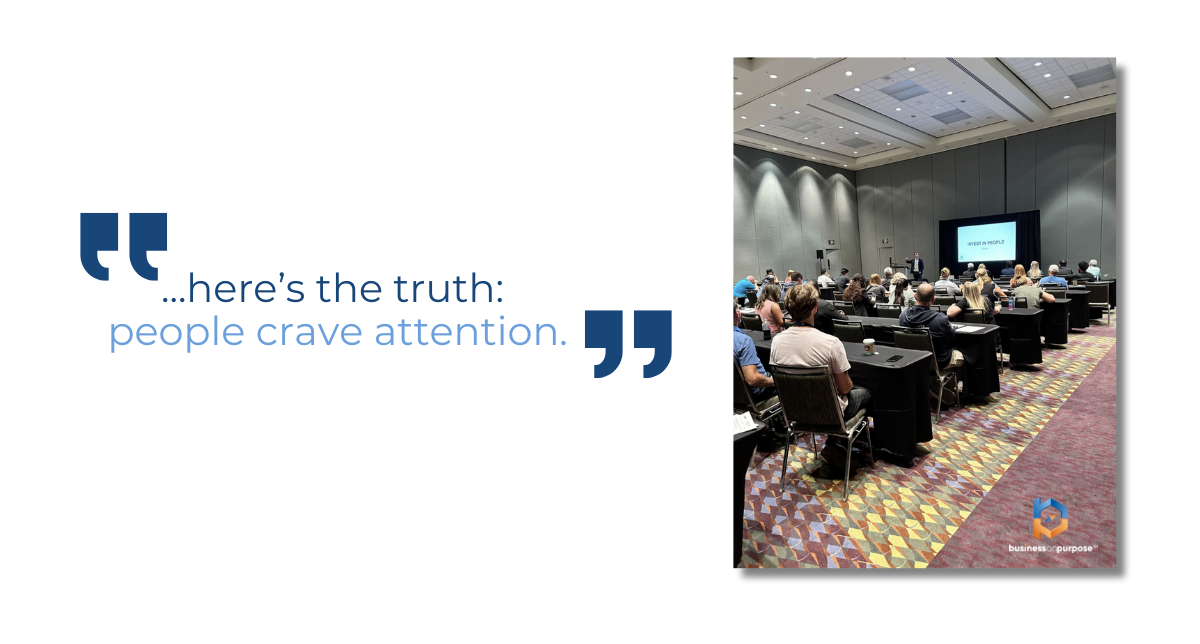
But here’s the truth: people crave attention. You do, too. I do, too. We crave connection. And when we feel disconnected, we start looking elsewhere—even if the work itself is rewarding. Someone might think, This is my ideal job, but if it’s not paired with the right culture, they’ll still leave.
One effective way to foster that connection is through what we call the Big 5 Feedback Loop. If you’ve followed this concept before, you may already be familiar with it. It’s inspired by the Big Five safari animals in Africa. (Honestly, I don’t quite remember what they all are—I’m sure a lion, a giraffe, and an elephant make the list—but you can look them up.)
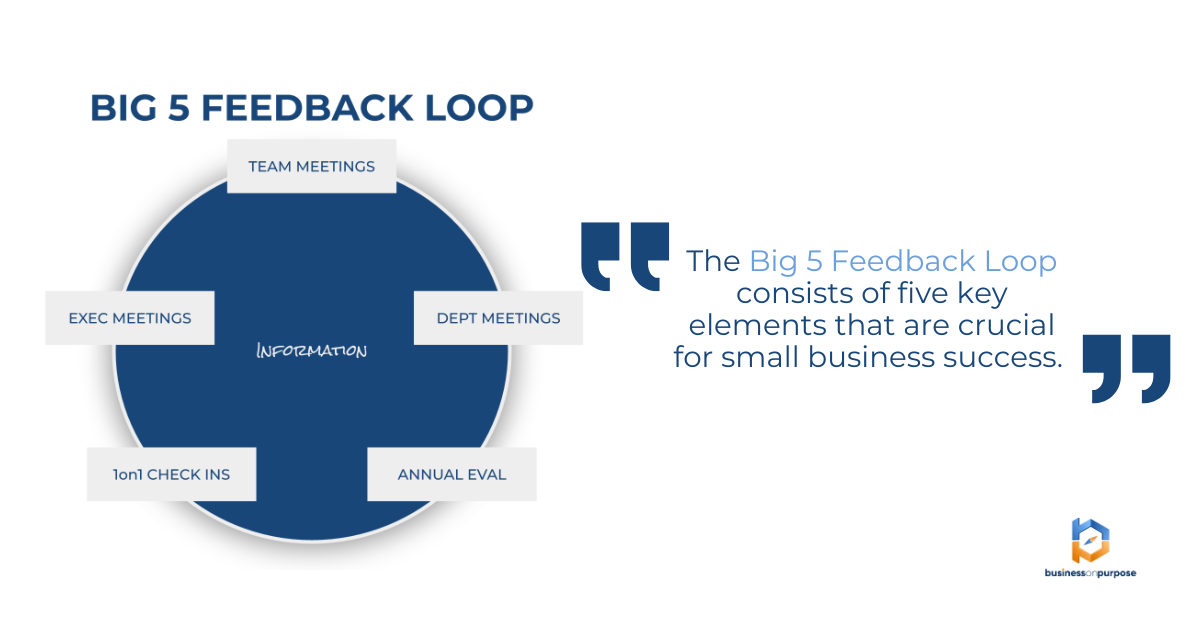
The Big 5 Feedback Loop consists of five key elements that are crucial for small business success. Think of it as a loop with five intentional touchpoints:
- Team Meeting
A weekly, one-hour gathering led by a leader with a set agenda. It’s not new—but it’s intentional. One hour, agenda-driven, leader-led. During this meeting, you celebrate big wins, review what we call the anchor (the culture-building essentials of your business), conduct training, give handbook reminders, celebrate birthdays and anniversaries, and review the upcoming 4, 8, 12, and 16-week calendar. Too often, leaders get so caught up in daily tasks and sales that they forget to do these things.
You’ll also discuss your 12-week goals—three quarterly objectives—and briefly touch on each business system (Marketing, Sales, Operations, Admin) at a high level. This is NOT the time for project-level problem solving. That comes later.
- Departmental Meetings
These are weekly, one-hour sessions focused on specific business systems or departments—Marketing, Sales, Operations, and Admin. If your team is small, you can combine Marketing and Sales, and that’s perfectly fine. These meetings dive into repetitive elements and results. For example, in your Operations meeting, this is where you discuss job-by-job details and production updates. But remember, this is the only place to do that.
- Executive Meeting
This is for your high-level leadership team. Even in a small business, it’s valuable to zoom out and take a bird’s-eye view once or twice a month. Here, you’ll focus on strategy, big-picture issues, and overall alignment.
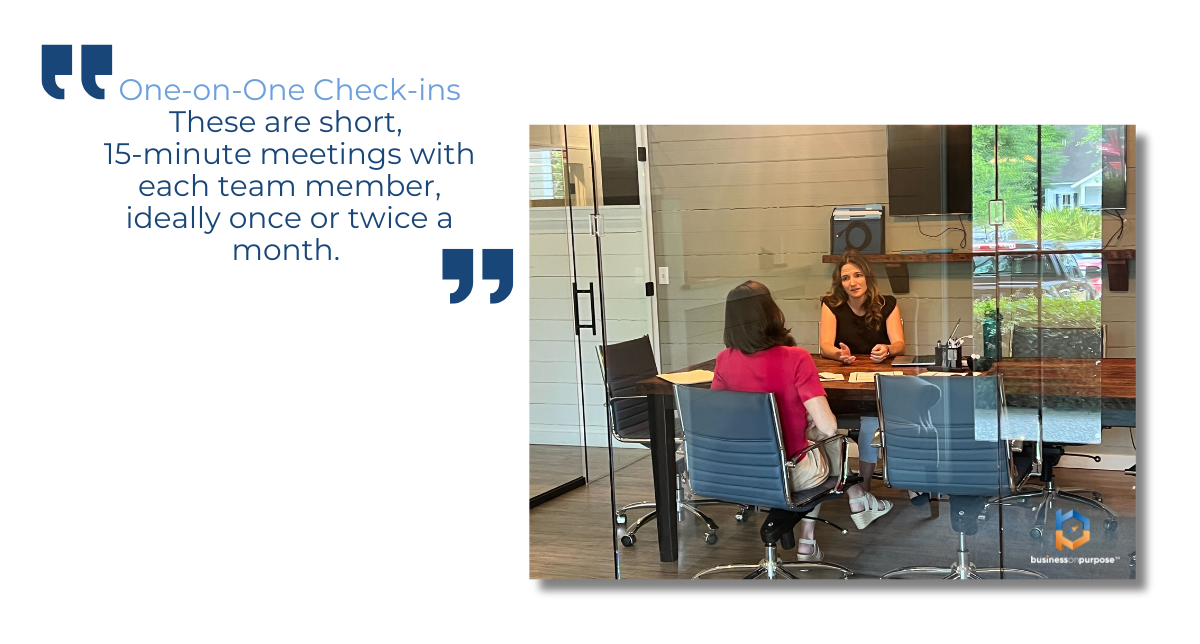
- One-on-One Check-ins
These are short, 15-minute meetings with each team member, ideally once or twice a month. They follow a five-question format:
- What big win do you have from this month?
- What are you seeing and thinking right now?
- What blind spots do I have?
- What do you need from me?
- Here’s what I see and what I need from you. (This last one is a statement where you provide feedback.)
- Annual Performance Review
This happens once or twice a year. What makes it effective is that it’s two-way. Half the review is your evaluation of the team member, and the other half is their self-assessment. Use the same set of questions for both, ideally delivered in a form ahead of the meeting.
If you implement the Big 5 Feedback Loop—Team Meetings, Departmental Meetings, Executive Meetings, One-on-One Check-ins, and Annual Reviews—you’ll create multiple intentional touchpoints for communication and connection. This builds a strong, engaged team that feels valued and understood.
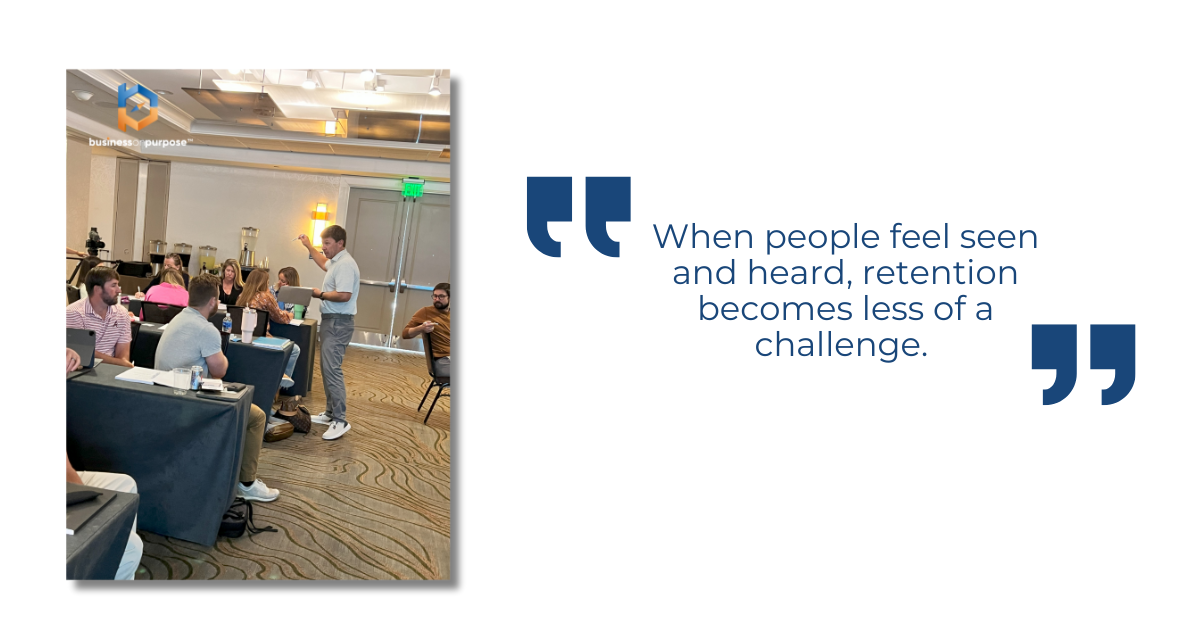
When people feel seen and heard, retention becomes less of a challenge. Yes, there will always be difficulties—we’re working with people, after all—but by creating structure and connection, you reduce turnover, increase trust, and ultimately improve your business performance.
Got questions about the details? Head to businessonpurpose.com/ask. If you’re a business with three or more employees and a million dollars or more in revenue and you’re serious about growth, go there. Each of our coaches sets aside 15–20 minutes a week to answer your questions—no strings attached. And if you want to know how to work with us? Just ask.
Scott Beebe is the founder of Business On Purpose (mybusinessonpurpose.com) and speaker for the AEC industry and author of the book Let Your Business Burn: Stop Putting Out Fires, Discover Purpose, and Build a Business That Matters. Business On Purpose works with business owners to articulate purpose, people, process, and profit to liberate owners from chaos and make time for what matters most.