Training a new employee can feel overwhelming, especially when you are balancing the daily demands of running a business. You have already spent time, effort, and resources to find the right hire. The last thing you want is for them to feel lost, confused, or unsupported.
Most new employees do not leave because they are incapable. They leave because they lack clarity.
What they want more than time off or higher pay is to know what to do and how to do it.
This is where the idea of RPM comes in:
Repetition, Predictability, and Meaning.
These three elements form the foundation of training that empowers new employees to stay engaged, contribute well, and lean into challenges rather than back away from them.
To understand the power of RPM, let’s look at a remarkable historical example of leadership under pressure.
Lead Well.
If you're looking for more resources to work ON your business, we have them.
The Leadership Example of Ernest Shackleton
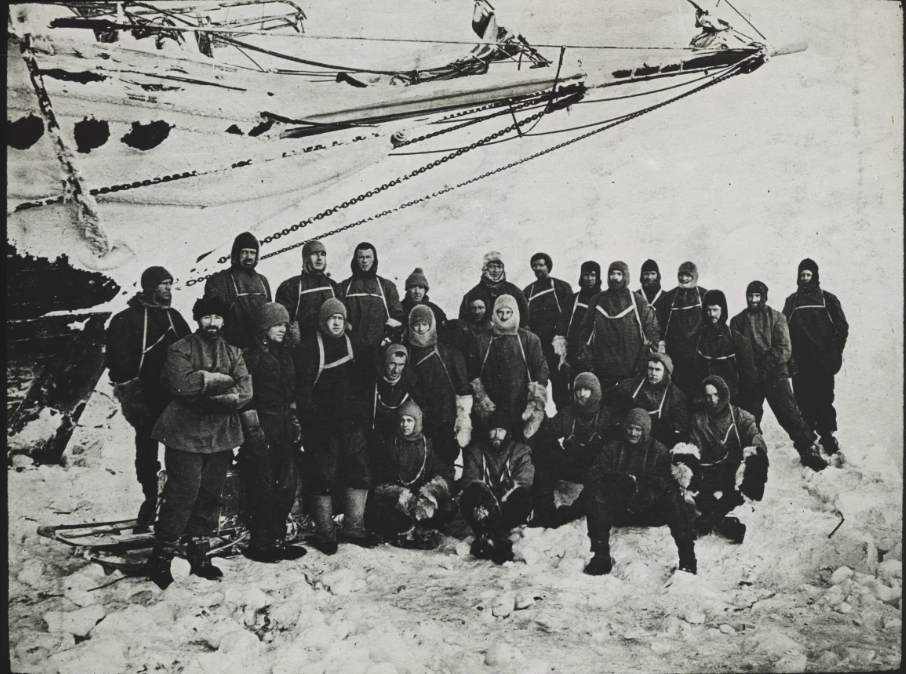
In 1915, explorer Ernest Shackleton led an expedition to cross the Antarctic continent. Early in the journey, his ship, the Endurance, became trapped and eventually crushed in the Weddell Sea ice. Shackleton and his crew of 27 men were stranded on ice floes for nearly two years with no shelter, very limited food, and no clear timeline for rescue.
Yet, not one man died.
How is that possible under such harsh conditions?
Shackleton created structure.
He could not control the environment, but he could control the daily rhythm.
He established:
- The same wake-up time each day
- Shared meals at the same time
- Chores and responsibilities (even when the task was simply digging a hole and filling it back in)
- Evenings spent together reading, talking, singing, and playing cards
These routines gave the crew:
- Stability
- Purpose
- Emotional resilience
In other words, Repetition, Predictability, and Meaning.
Applying RPM to Training a New Employee
Effective employee training begins with clarity of role. Without a clear job role, your new hire will constantly question whether they are doing the right things in the right way.
- Start With a Clear Job Role
A job role should outline exactly what the employee is responsible for and what success looks like. Most businesses either do not have job roles written down or have not reviewed them in years.
Every business, regardless of industry, operates within four core systems:
|
System |
Description |
|
Marketing |
Activities that attract attention and leads |
|
Sales |
Activities that convert prospects to customers |
|
Operations |
The work that fulfills what was sold |
|
Administration |
Billing, communication, finance, coordination |
Every job touches more than one of these.
So, write responsibilities under each category to create a complete and accurate job role.
- Turn the Job Role Into a Scorecard
Once you know what the employee is responsible for, define when each responsibility should be completed.
Break tasks into:
- Daily
- Weekly
- Monthly
- Quarterly
- Semi-annual
- Annual
This written schedule creates rhythm and prevents confusion.
You can even use AI to convert your job role into a step-by-step checklist for each time frequency. This becomes an instant training guide. When you give the employee new responsibilities, have them add the task to their scorecard. This reinforces ownership and clarity.
- Document How Work Is Done: The Master Process Roadmap
Now that you know what to do and when to do it, the next step is to explain how tasks are completed.
Create a simple spreadsheet with the four core systems as categories. Then list every process under the appropriate system. Do not write out steps at first. Just list the names of each process.
Examples under Administration:
- Accounts payable
- Accounts receivable
- Payroll
- Invoicing
- Health benefits
- Certificates of insurance
Once the list is complete, ask the person currently doing the work to record or document the steps.
This removes knowledge from your head and makes it repeatable.
It also frees your time.
Many business owners spend hours on tasks that someone else could do for a fraction of the cost. Your time is valuable and should be invested in strategy, leadership, and meaningful relationships. Reclaiming even ten hours per week can transform your work and your life.
The Big Five Feedback Loop
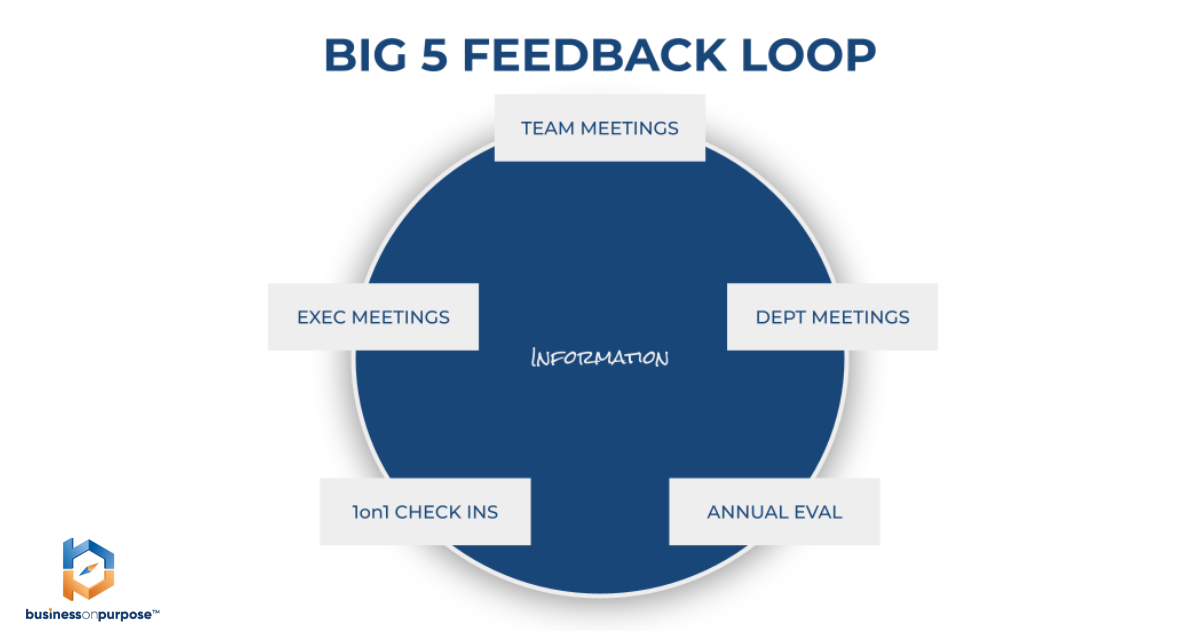
To keep clarity strong over time, establish five communication rhythms:
- A weekly, agenda-driven, leader-led team meeting (no longer than one hour)
- Weekly departmental meetings for each core system
- A monthly executive leader meeting for strategic discussion
- An annual performance review to reflect and provide meaning
- A 15-minute one-on-one check in twice a month between each employee and their manager
This includes: - A recent win
- What they are seeing or thinking
- Blind spots they notice
- What they need from you
- What you see in them and what you need from them
These rhythms create consistency and prevent communication gaps.
A Resource to Help You Start
We created a New Employee Onboarding Handbook that guides you through:
- Preparing for a new hire
- Onboarding and training
- Ongoing development using RPM and the Big Five Feedback Loop
This is the same system we use while coaching business owners weekly. It is free, simple to implement, and gives you the confidence to train new employees well.
Just enter your email and the handbook will be delivered immediately so you can start using it right away.
Final Thought
You do not need more hours in the day or a more forceful personality.
You need clarity and rhythm.
Repetition. Predictability. Meaning.
These are the foundations of trustworthy leadership and confident employees.
Our team works with business owners between three and one hundred employees to help liberate you from chaos and make time for what matters most.
Scott Beebe is the founder of Business On Purpose (mybusinessonpurpose.com) and speaker for the AEC industry and author of the book Let Your Business Burn: Stop Putting Out Fires, Discover Purpose, and Build a Business That Matters. Business On Purpose works with business owners to articulate purpose, people, process, and profit to liberate owners from chaos and make time for what matters most.