How does training affect employee retention?
At its core, this question is really about something simple. We want to keep good people.
By the end of this article, you will hear a real story about a business that invested an unbelievable amount of time and money into training and saw extraordinary results in employee retention. You might roll your eyes at first. But the lesson is powerful.
Are you building a team of one hit wonders, or are you building a legendary rock band? Is your company’s welcome mat starting to look more like a departure gate?
The Real Reason Employees Leave
We live in a post-pandemic, modern economy where people have options. Despite what we often hear, people do want to work. What they do not want is chaos.
What employees want more than money, time off, or remote flexibility is clarity. Over and over again, employees tell us the same thing in private conversations after speaking engagements.
They will actually stay at a place longer for less money if they have clarity than they would for more money if they live in chaos.
Lead Well.
If you're looking for more resources to work ON your business, we have them.
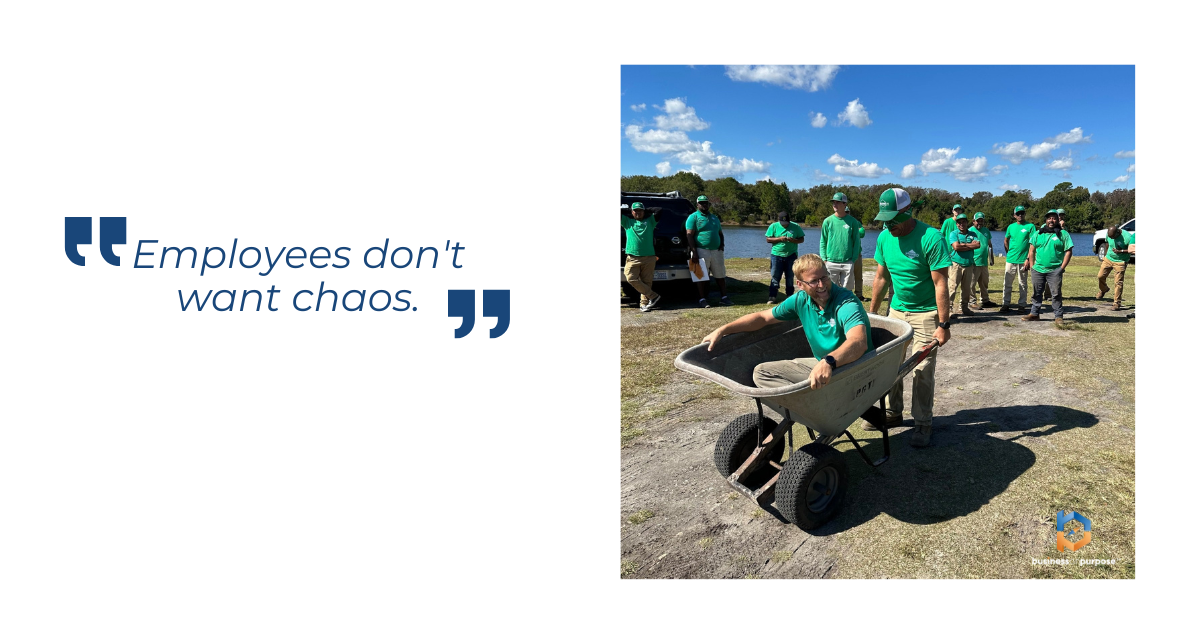
In the past, people had fewer choices. Today, they can step away, find gig work, and earn money while they search for an environment that offers clarity and structure. So the question becomes simple.
Is it really that nobody wants to work anymore?
Or is it that they just do not want to work in your chaos?
Why Training Creates Stability
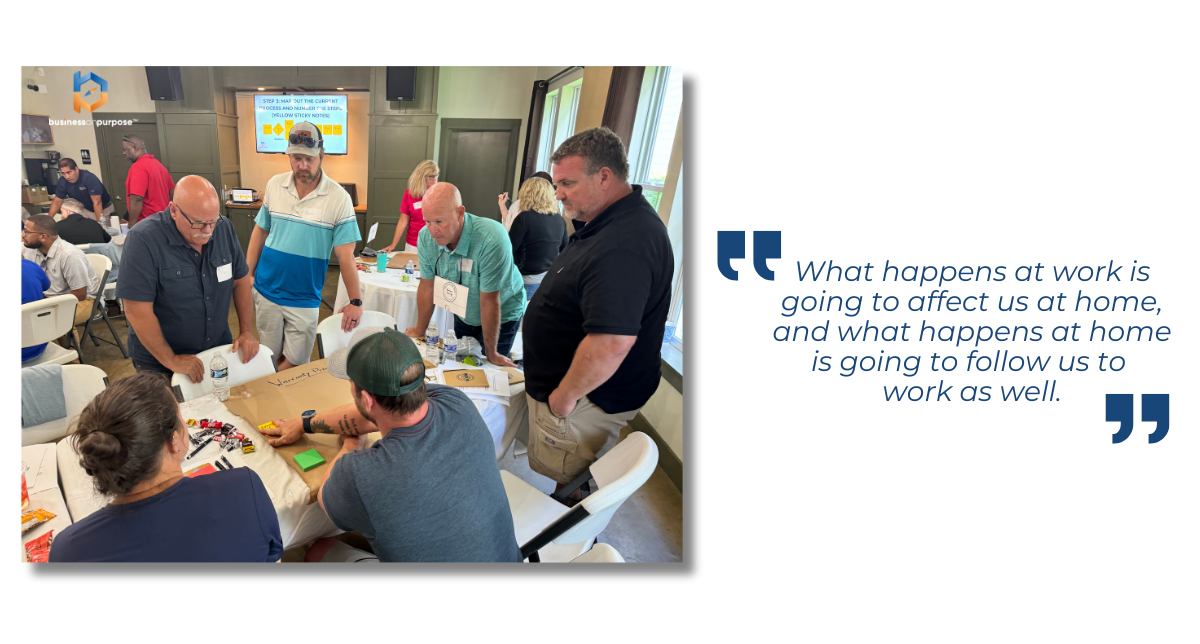
Life and work necessarily intersect. We are not robots. What happens at work affects home, and what happens at home follows us to work.
That is why great businesses intentionally create environments built on repetition, predictability, and meaning. These elements are supported by four core foundations of every healthy business.
- Purpose
- People
- Process
- Profit
As a business owner, you do not just carry responsibility for the financial side of the business. You also carry responsibility for the culture. You set the table your people sit around every day.
If you want to delegate and grow beyond doing everything yourself, clarity must exist. Otherwise, chaos will take over.
A Case Study That Changes the Conversation
Let me tell you a most peculiar story.
In eastern Tennessee and western Virginia, there is a small restaurant chain called PALS Sudden Service. They sell hot dogs, hamburgers, fries, and shakes. Nothing fancy.
They have just over 30 locations and about 1,000 team members. Most of them are part-time teenagers.
And yet, they were awarded the Malcolm Baldrige Quality Award and were written about in the Harvard Business Review.
Why?
Because of their culture and commitment to training.
The average assistant store manager turnover rate at PALS Sudden Service is about 1.2 percent. Compare that to typical fast-food restaurants where entire teams turn over within months.
Training at a Level That Feels Extreme
At PALS Sudden Service, a 17-year-old part-time employee must complete 150 hours of training before working independently.
Every month, employees take two to three pop-up quizzes. If someone fails a test on a station, they stop working that station until they retrain and pass again.
The results are astonishing.
- One mistake every 3,600 drive-thru orders
- Orders placed in about 12 seconds
- Orders delivered in about 18 seconds
The food is good. But the experience is what customers come back for.
Their corporate office has only three people. Everyone else is in the field, training constantly.
The Fear That Holds Leaders Back
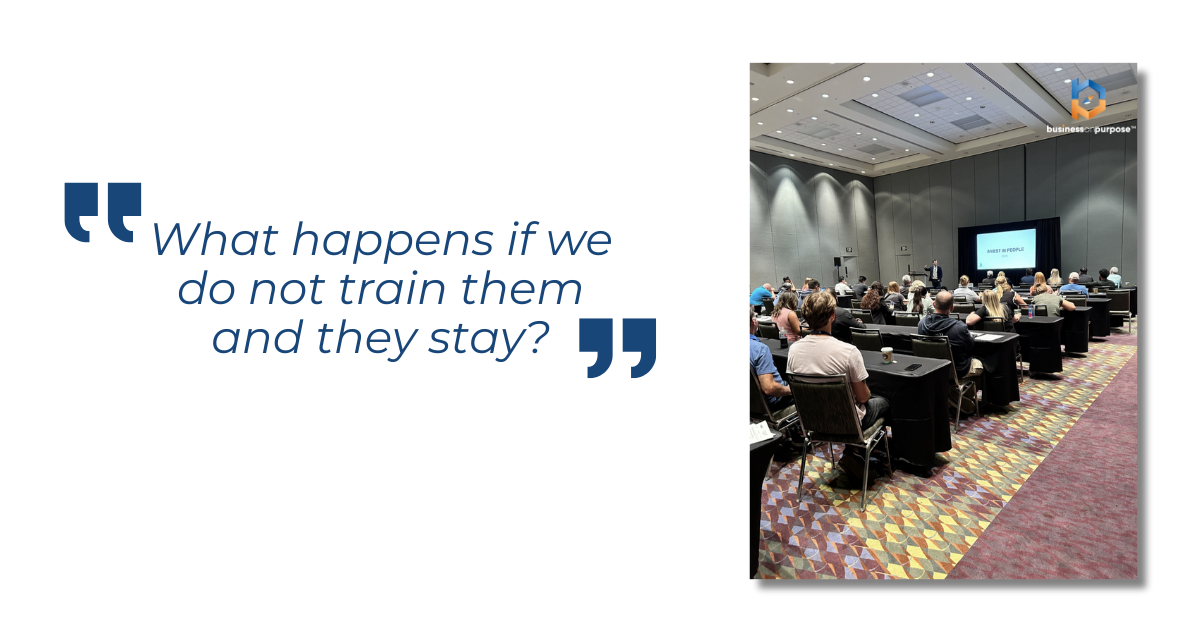
Many business owners worry about training people too well. They fear creating competitors.
Yes, some people will leave and start their own businesses. Statistically, that is normal. It probably happened to you at some point.
But when you commit to training and development, you create a culture that continues to thrive even as people come and go. Growth works the same way agriculture does.
A seed must fall and die for new life to grow.
The Silver Bullet for Retention
If you want longevity on your team, the answer is not just training. It is training with clarity.
Great leadership runs on three RPMs.
- Repetition
- Predictability
- Meaning
Like a great coach, you repeat the fundamentals again and again. The moment a coach stops coaching is the moment an athlete should be concerned.
The same is true in business.
Lean into training. Lean into development. Let your people know that coaching is a sign of belief, not criticism.
Final Thoughts and Next Steps
Much of this can be set up at the very beginning of the employee journey. A strong onboarding and training program changes everything.
If you are serious about building a team that stays, start with clarity. Build repetition, predictability, and meaning into every role.
If you want help designing a training and onboarding system that actually works, take the next step today. The culture you create now will determine whether your business thrives or constantly replaces people.
Ready to build a team that stays and grows? Start by investing in clarity-driven training and development today.
Scott Beebe is the founder of Business On Purpose (mybusinessonpurpose.com) and speaker for the AEC industry and author of the book Let Your Business Burn: Stop Putting Out Fires, Discover Purpose, and Build a Business That Matters. Business On Purpose works with business owners to articulate purpose, people, process, and profit to liberate owners from chaos and make time for what matters most.