Succession planning is one of the most delicate conversations a business owner will ever face. Move too fast and you risk creating false hope. Move too slow and you may create confusion, gossip, and frustration within your team.
Many owners rush through this process because they are eager for their exit. They dream about stepping away, relaxing, and finally getting out of the day to day grind. But transition planning requires the opposite mindset. It requires patience, discretion, and wisdom.
When it comes to succession planning, slowing down is not weakness. It is leadership.
“If you move too fast on succession planning, you have a real opportunity to create false hope.”
Lead Well.
If you're looking for more resources to work ON your business, we have them.

Why Owners Must Be Careful With Their Words
As the owner of a business, every word you say carries weight. Even casual statements or hypothetical ideas can be interpreted by employees as firm promises.
Something you say offhandedly can quickly become “gospel” inside your organization.
Consider a real example. A chief financial officer at a multi million dollar construction company has been telling people for three years that he is ready to leave the business. Year after year, the message stayed the same. He was preparing to step away.
But he had no real intention of leaving.
The result? Quiet frustration among the team.
Employees rarely confront leadership directly about this kind of thing. Instead, resentment grows quietly. Over time, that frustration can push great employees to leave the company. Ironically, those are often the very people a business owner needs for a successful transition.
There is an old proverb that captures this perfectly.
“A fool who keeps his mouth shut is considered wise.”

Sometimes the smartest move during succession planning is simply to think carefully before speaking.
The Danger of Moving Too Slowly
While moving too fast creates false hope, moving too slowly creates a different problem. Silence invites rumors.
When employees do not understand what the future looks like, they start to fill in the gaps themselves. Conversations happen behind closed doors. Assumptions spread across departments.
Proverbs 16 reminds us that gossip can separate even the closest of friends. In business, the same principle applies.
Employees who have worked together for years can become divided when uncertainty spreads throughout the company.
This is why succession planning requires both discretion and wisdom.
One word describes this balance perfectly.
Shrewd.
Being shrewd means being both wise and discreet at the same time. It means knowing when to speak, when to stay quiet, and when to provide clarity.
The Question Most Business Owners Never Ask
Before you start discussing succession with employees, there is one question you must answer first.
What do you want to cause?
This question applies to every difficult conversation you will ever have in business.
When emotions run high, people tend to speak quickly. Heart rates increase. Words come out that were never intended.
Instead, pause and ask yourself what outcome you want to create.
Do you want to create stability? Confidence? Long term commitment from your team?
Clarity should be the goal.
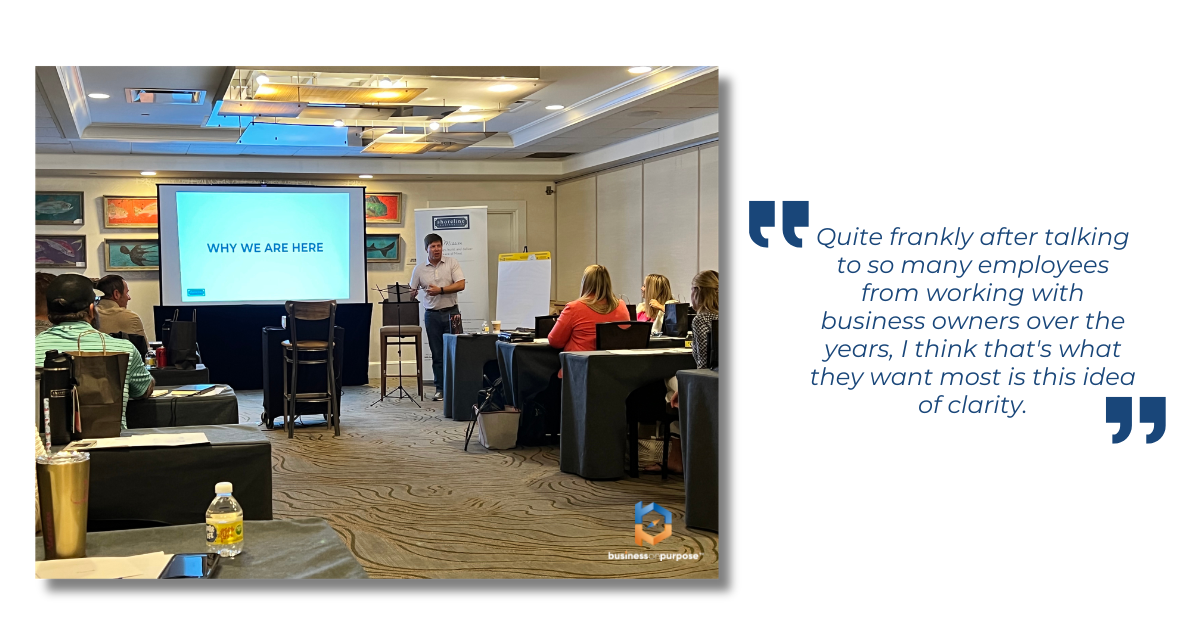
“Quite frankly after talking to so many employees from working with business owners over the years, I think that’s what they want most is this idea of clarity.”
Your employees have built their livelihoods around your business. Providing a clear future path is one of the most valuable things you can offer them.
Tool #1: Phantom Stock
One approach to succession planning is something called phantom stock.
This option allows employees to participate in the financial success of the business without actually owning shares of the company.
Phantom stock is not real equity. Instead, it mirrors the value of company stock and rewards employees based on business performance.
It has become increasingly popular because it offers flexibility while still giving employees a sense of ownership in the company’s success.
Many businesses use phantom stock as a starting point when they want to reward long term team members without transferring control of the company.
Before implementing anything like this, make sure to speak with a qualified financial advisor or CPA.
Tool #2: Non Qualified Deferred Compensation
Another strategy to consider is a non qualified deferred compensation plan.
Here is how it works.
Employees earn compensation based on performance milestones, but a portion of that compensation is deferred into the future. Instead of receiving everything immediately, part of the reward is scheduled to be paid out several years later.
This creates a strong incentive for employees to stay with the company.
For example, a portion of a bonus might be deferred two, three, or even four years into the future. If the employee remains with the company, they receive the payout.
If they leave early, that deferred compensation may return to the business.
This structure helps retain talented team members while aligning their long term goals with the company’s future.
Tool #3: ESOP (Employee Stock Ownership Plan)
An ESOP is one of the most powerful and complex succession strategies available.
It is also one of the most involved.
An Employee Stock Ownership Plan allows the owner to sell a percentage of the company to employees through a structured plan. Once certain ownership thresholds are reached, the federal government offers significant tax incentives.
These incentives can apply to ownership transfers between roughly 30 percent and 100 percent of the business.
An ESOP can allow every employee to become a partial owner of the company.
Even better, the owner can often maintain operational control while still transferring equity. The process does introduce debt into the company, but the tax advantages can help accelerate repayment.
Once the debt is paid off, the tax benefits can continue for the life of the business.
Some advisors claim that ESOPs are only for very large companies. That is not always true. Many smaller businesses qualify but simply never explore the option.
If your business generates millions in revenue, it may be worth having a conversation with an ESOP specialist.
“I actually think it’s one of the most generous ways that you can successfully transition and exit your business.”

Tool #4: Equity Buy In
The most obvious option is also the most direct.
Employees can purchase equity in the company.
Ownership stakes might range from 5 percent to 25 percent depending on the structure of the deal. But this approach requires careful planning.
Any ownership decision made today will follow the business forever.
This is why terms matter. Agreements must be carefully designed to protect the company and ensure alignment between all parties.
Many owners are tempted to simply gift shares to loyal employees or family members. While the intention is good, this approach can create problems.
Ownership should involve commitment.
A mentor once shared a simple principle that applies perfectly here.
If they are not paying, they are not paying attention.
When employees invest their own money into ownership, they become more vigilant, more engaged, and more committed to the company’s success.
Write Down Your Vision
The foundation of any successful succession plan is clarity.
That clarity begins with your vision for the future of the business.
Write it down. Document it. Build a clear strategic roadmap that explains where the company is going and how leadership will evolve over time.
Without a written vision, succession planning becomes guesswork.
With a clear vision, it becomes a strategy.
Final Thoughts
Succession planning is not just about leaving your business. It is about protecting the people who helped build it.
Your employees have invested years of their lives into your company. Thoughtful transition planning honors that commitment and creates stability for the future.
Move carefully. Speak thoughtfully. Provide clarity.
And most importantly, plan with wisdom and discretion.
If you are a business owner thinking about succession planning, start by creating your vision story. Take time to clearly define where your business is headed and how leadership will transition over time.
Grab a piece of paper, set a timer, and begin mapping out the future of your company. That simple step can bring incredible clarity to both you and your team.
A well-planned succession strategy does not just protect your exit. It protects the legacy of the business you built.
Scott Beebe is the founder of Business On Purpose (mybusinessonpurpose.com) and speaker for the AEC industry and author of the book Let Your Business Burn: Stop Putting Out Fires, Discover Purpose, and Build a Business That Matters. Business On Purpose works with business owners to articulate purpose, people, process, and profit to liberate owners from chaos and make time for what matters most.