Succession planning is one of the most important concepts a business owner can understand. At its core, it is about building a business that can run and grow with or without you.
Every owner is on a steaming train headed toward transition. The question is not if that transition will happen. The real question is whether your business will be ready when it does.
A helpful way to think about this is the difference between a job and a business.
A job requires you to be present every day for things to function.
A business runs successfully even when you are not there.
Succession planning prepares your company to move from dependence on the owner to independence through systems, people, and leadership.
Lead Well.
If you're looking for more resources to work ON your business, we have them.

Succession Is Really About Transition
When people hear the word succession, they often think about replacing leadership. But a deeper and more practical way to think about it is transition.
Transition means taking knowledge, processes, and relationships that currently live inside the owner and transferring them to others.
That requires something very important. It requires equipping people.
Imagine someone walking into your business with a tool belt. Some people arrive with empty belts. Others have tools, but the tools are scattered and incomplete. Maybe they have four hammers but are missing the tools they actually need.
Succession planning fills the tool belt. It equips people with the knowledge, systems, and structure needed to run the business.
The Four Groups You Must Equip
Effective succession planning focuses on four groups of people. When each group is equipped properly, your business becomes ready for transition.
- Your team
- Yourself
- The market
- Your customers
Each of these groups plays a role in whether a business can transition successfully.
- Equip Your Team
Many business owners unintentionally skip equipping their teams. They either give vague instructions or they micromanage every step.
Neither approach builds a team that can run a business.
Equipping a team means asking the right questions, providing the right tools, and empowering people to do their work well.
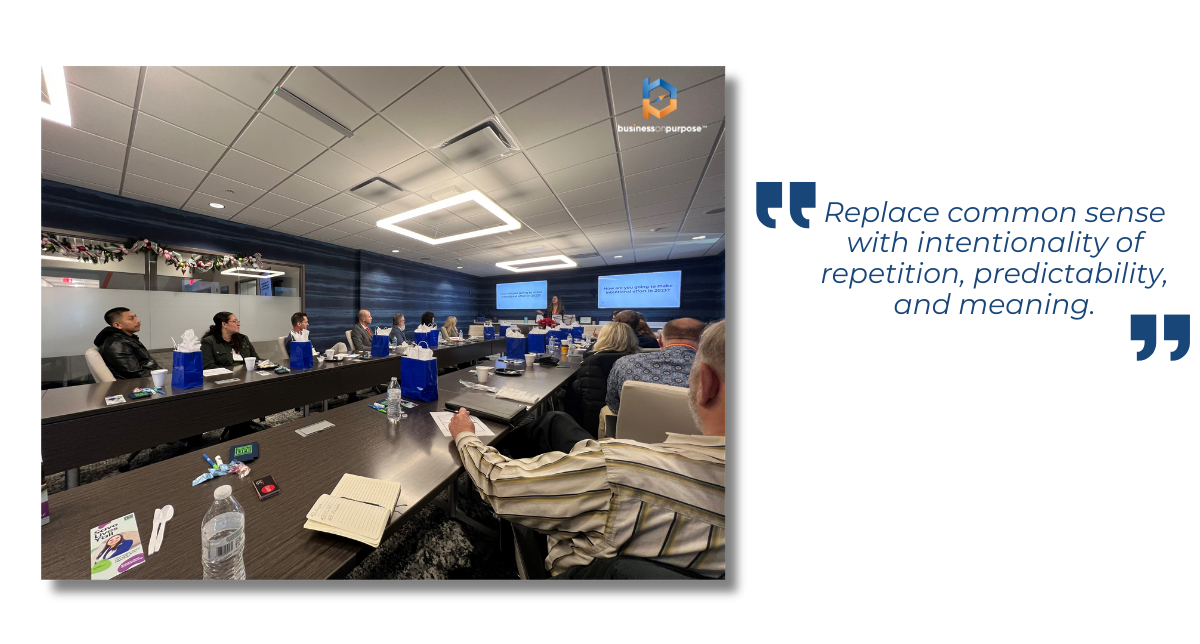
The RPMs of Great Leadership
A strong team culture is built through three leadership habits:
- Repetition
- Predictability
- Meaning
Leaders must repeat the right messages and systems. They must behave predictably rather than react emotionally. And everything they do must carry meaning and purpose.
When those three things exist, teams gain clarity and confidence.
The Four Ps Framework
Another powerful structure for equipping a team is the Four Ps:
- Purpose
- People
- Process
- Profit
Purpose includes your mission, vision story, values, and culture.
People includes org charts, defined roles, scorecards, and hiring systems.
Process focuses on the systems that keep the business running.
Profit ensures that the financial structure of the business is understood and measured.
Within the process category, every team member should understand the four core systems of business:
- Marketing
- Sales
- Operations
- Administration
When these systems are repeated, predictable, and meaningful, teams become capable of running the company without constant oversight.
- Equip Yourself
Succession planning is not only about the company. It is also about the owner.
Here is a surprising statistic. Roughly 80 percent of businesses that go up for sale never sell. Only about 20 percent successfully transition.
The biggest reason is not the market. It is the owner.
Many owners are not personally prepared for life after transition.
This preparation includes questions such as:
- How will you generate income after exiting the business?
- What will you do with the capital you receive from the sale?
- What hobbies or interests will fill your time?
- Where will your sense of purpose come from?
For many entrepreneurs, the business has been their identity for decades. Without a personal transition plan, owners often panic at the moment of exit and delay or cancel the transition.
- Equip the Market
When buyers evaluate a business, they are not just buying revenue. They are buying a system that should continue working without the owner.
If everything is locked inside the owner’s head, the business becomes far less valuable.
This is why many acquisitions include something called an earn-out.
An earn-out means the buyer pays part of the purchase price upfront and requires the owner to stay involved for several years to achieve performance targets.
For owners, this can become frustrating because:
- They are no longer fully in control
- The targets can be unrealistic
- Motivation drops once the deal is signed
A well-prepared succession plan removes the need for heavy earn-out structures. The business itself becomes the valuable asset, not the owner.
- Equip Your Customers
Customers are the final group that must be prepared for transition.
When a buyer evaluates your business, they assume that customers will continue purchasing after the transition.
If customers only trust the owner, they may leave once that owner steps away.
This reduces the value of the business dramatically.
The solution is simple but intentional. Customers must build relationships with the team, not just the founder.
As your systems improve through the Four Ps and the four core systems, your team becomes capable of serving customers at a high level.
Instead of the owner being the center of every interaction, the team becomes the trusted provider.
Over time, customers begin to depend on the organization rather than the individual.
Succession Planning Is About Equipping
Succession planning is not just about replacing leadership. It is about equipping people and systems for transition.
A business that is ready for succession has prepared four key groups:
- The team is equipped to operate the business
- The owner is prepared for life after the transition
- The market understands the value of the business itself
- The customers trust the team, not just the founder
When these four areas are strong, the business becomes transferable, valuable, and sustainable.
Your Next Step
If you want to start preparing your business for succession, begin with clarity.
Create a clear vision story for your company and build the structure around the Four Ps and the four core systems of marketing, sales, operations, and administration.
These systems provide the tools your team needs to operate confidently and prepare your business for future transition.
Take time this week to write down your vision for the future of your company and begin building the systems that will support it.
The earlier you begin, the easier the transition will be.
Scott Beebe is the founder of Business On Purpose (mybusinessonpurpose.com) and speaker for the AEC industry and author of the book Let Your Business Burn: Stop Putting Out Fires, Discover Purpose, and Build a Business That Matters. Business On Purpose works with business owners to articulate purpose, people, process, and profit to liberate owners from chaos and make time for what matters most.