The Relay Race Your Business Is Losing
Picture a relay race. One runner is already at full speed, arm stretched back, ready to pass the baton. The next runner has to be up to speed at exactly the right moment or the whole team loses. That is precisely what is happening between your marketing and sales functions every single day.
Marketing is running hard. They have prospects in the pipeline, leads warming up, and momentum building. But too often, sales is not up to full speed. There is no clean handoff. And the baton hits the ground.
The good news? You can fix this with a few intentional systems — starting with one simple meeting.
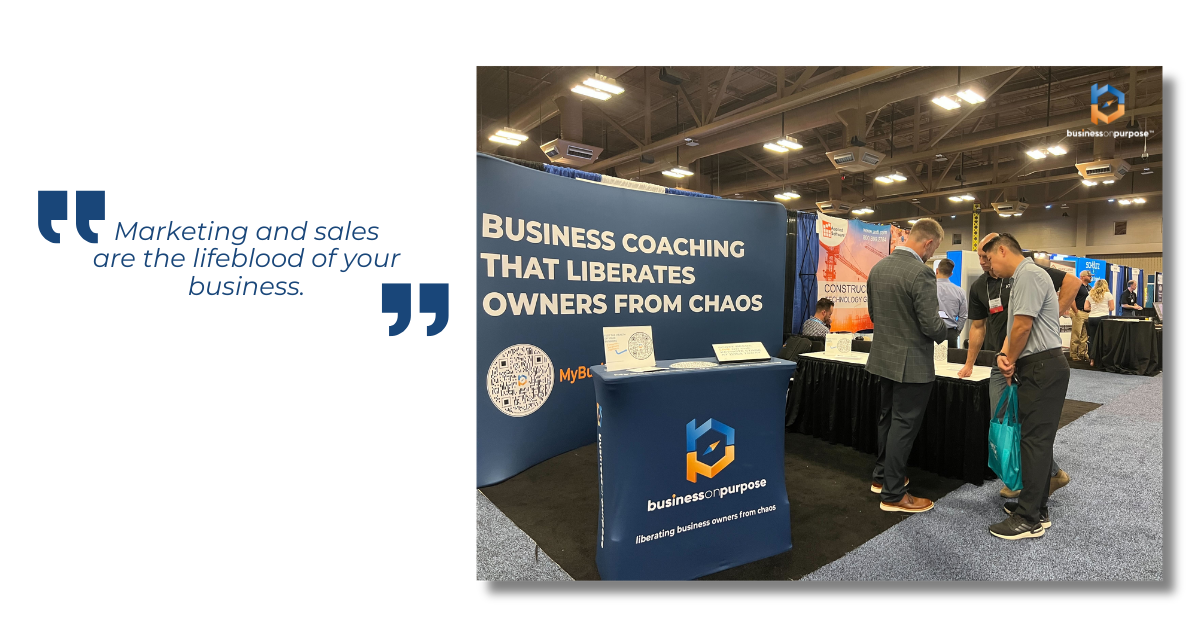
Marketing and sales are the lifeblood of your business.
Lead Well.
If you're looking for more resources to work ON your business, we have them.
The One-Hour Meeting That Changes Everything
The single most effective tool to align your marketing and sales functions is a one-hour, agenda-driven leader meeting. That is it. Grab a sheet of paper and write down these five agenda items:
1. Celebrate Big Wins — What went well in marketing and sales over the last one to two weeks? Start here. It sets the tone and reminds everyone that progress is happening.
2. Review Goals — What are your lead generation goals and your sales conversion goals for the year? Keep them visible. Keep them front of mind.
3. Marketing Update — Whoever owns marketing gives an update on marketing activity and marketing results. And yes, if that person is you, you are giving the update to yourself. It still counts. At least you stay aware.
4. Sales Update — The sales update covers both sales activity and sales results. What outreach happened? What converted?
5. Next Steps and Action Items — End every meeting with clear ownership of what happens next. No meeting should end without someone knowing what they are responsible for.
Do not roll your eyes at the meeting idea. Do not knock it until you try it. This one weekly rhythm is where alignment lives and dies.
Build a Scorecard for Each System
You cannot update on something you are not tracking. That is why alongside the meeting, each team needs a simple scorecard. Do not overthink this. You do not need expensive CRM software or complex dashboards. A basic spreadsheet works just fine.
For marketing, your scorecard tracks activities like lead generation and prospect development, alongside results — how many leads are coming in and from where.
For sales, your scorecard tracks activities like outreach, messaging, and follow-up, alongside results — how many prospects converted into clients.
Take your revenue goals for the year, work backward, and put real numbers next to each activity and result. Those numbers become your scorecard. Then bring that scorecard into the weekly meeting so every update is grounded in data, not guesswork.
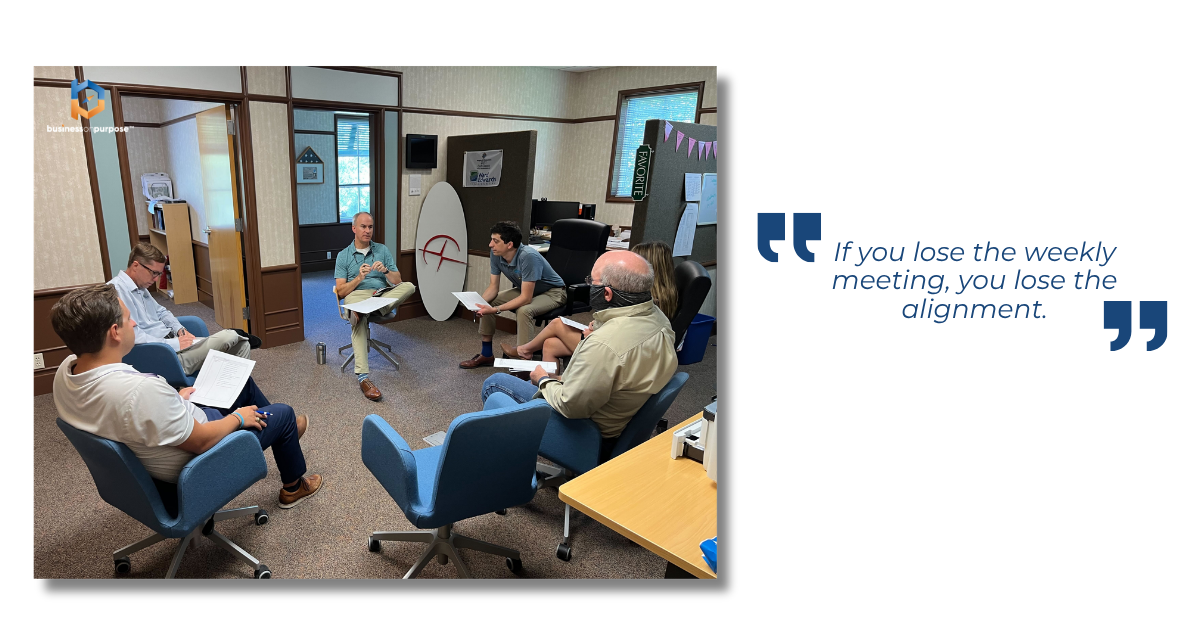
If you lose the weekly meeting, you lose the alignment.
Understand What Each System Actually Owns
One of the biggest reasons marketing and sales stay misaligned is that no one has clearly defined who owns what. Here is a clean way to think about it.
Marketing owns two types of assets:
The first is what we call air support — everything digital and distant. This includes your website, social media, and any broad advertising. Air support builds credibility. It rarely closes deals on its own, but it makes everything else work better.
The second is the ground game — anything in close proximity. Networking events, speaking engagements, one-on-one meetings. A strong marketing plan needs both air support and ground game working together.
Sales owns two things:
First, sales scripting and messaging — how your team communicates value once a prospect comes in. Second, radical follow-up — the consistent, intentional outreach that keeps warm prospects moving forward. These are the salesperson’s responsibility, full stop.
When marketing hears a question from the market, they can pass that insight to sales so the team is ready with the right response. When sales hears an objection, they can bring that back to marketing so the messaging gets sharper. That back-and-forth learning happens in the weekly meeting. Without it, both teams are flying blind.
Do Not Let Separate Systems Become Silos
Here is an important warning: once you start treating marketing and sales as truly separate, it is tempting to let them drift apart entirely. That is a mistake.
Marketing is its own system. Sales is its own system. But they are connected through a seamless handoff process. The same is true further down the line — sales and operations need a clean handoff, and operations and administration need one too. These handoffs are the connective tissue of a healthy business.
The weekly meeting is where you protect that connection. It is where you prevent silos, maintain continuity, and keep everyone pointed in the same direction. You cannot administer and bill for something you have not built. You cannot build something you have not sold. And you cannot sell something if no one knows you exist. Every part of your business depends on marketing and sales working together.
You cannot sell something if no one knows you exist.

What If It Is Just You Right Now?
Maybe you are reading this thinking, “This is all great, but I am the marketing team and the sales team.” That is okay. Put your marketing hat on, give yourself the marketing update, then switch hats and give the sales update. Yes, it is the most beautifully strange meeting in business. But it keeps you aware, accountable, and intentional — and that is the point.
And if you are ready to find the right people to take ownership of marketing and sales so you do not have to do it all yourself, that process starts with knowing how to train new hires the right way. Getting the right people into these roles is what ultimately frees you from the chaos.
It Is Time to Stop Dropping the Baton
You do not need a massive team or a complicated system to align marketing and sales. You need a clear meeting structure, a simple scorecard, well-defined ownership for each system, and the discipline to show up every week and do the work.
When the baton gets passed cleanly, marketing builds momentum and sales carries it across the finish line. That is how you build a business that actually grows — and eventually runs without you.
If you want a proven framework to build healthier systems across your entire business, visit businessonpurpose.com/healthy and take the first step toward a business that works for you instead of the other way around.