If your team keeps nodding “yes” in meetings but nothing actually gets done, the problem might not be your people. It might be your process. Real accountability does not start with a hard conversation — it starts with a clear system.
Here is exactly how to build that system using a role scorecard, so your team knows what is expected, when it is due, and how to stay on track — all without you having to constantly chase them down.
The Real Problem With Accountability
A contractor we worked with had incredible energy. He was optimistic, fired up, and constantly telling his team exactly what to do. He gave clarity, they nodded along, and then nothing happened. Sound familiar?
Here is what was missing: spoken instructions are not the same as documented expectations. His team was not defiant — they were unclear. The moment we took everything he was communicating verbally and put it into a scorecard, something shifted. Everyone was finally on the same page, and more importantly, the scorecard kept communicating the expectations even when he was not in the room.
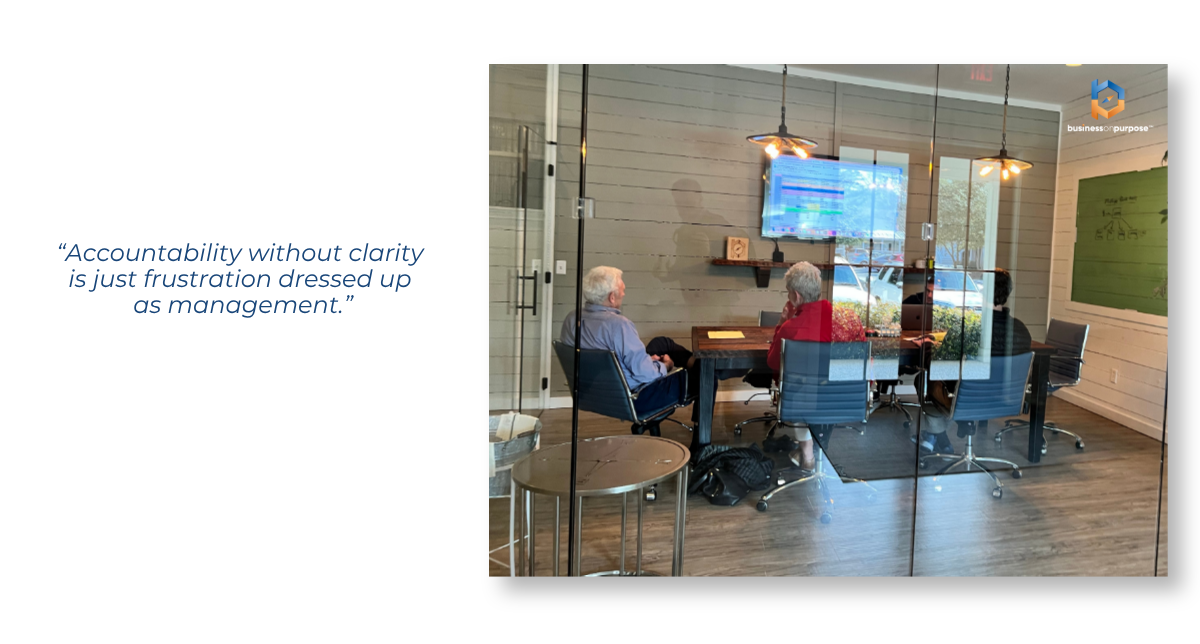
Accountability without clarity is just frustration dressed up as management.
Lead Well.
If you're looking for more resources to work ON your business, we have them.
This is the heart of why accountability breaks down in small businesses. You should not hold your team accountable to a result you never clearly defined. The solution is not more conversations — it is a better tool.
Stop Looking for a Silver Bullet
Before we get into the scorecard itself, there is something you need to understand about where it fits in the bigger picture. Too many business owners walk into a conference or watch a video like this looking for a quick fix. They tell themselves they have a marketing problem, a sales problem, or a people problem.
The truth? Almost always, what you actually have is a process problem. And putting a band-aid over a gaping wound does not work. What you need is a framework that addresses the root cause and helps your business heal and grow long term.
The role scorecard is one powerful tool, but it lives inside a larger structure. Here is a quick overview of that structure so the scorecard makes sense in context.
Your business has three major components working together:
- The Operating System: Built on four cornerstones — purpose, people, process, and profit. Think of this as the engine that runs your business.
- The Master Process Roadmap: A collection of all the processes needed to deliver your product or service — marketing, sales, operations, and administration.
- The Anchor: A 52-week calendar that puts everything you have built on repeat, so your training, reviews, and systems do not fall through the cracks.
Your role scorecard lives in the people vertical of the operating system, right alongside your org chart and job roles. Build the org chart, define the roles, and then the scorecard brings those roles to life with clear, time-bound expectations.
What a Role Scorecard Actually Looks Like
A role scorecard takes every task in a person’s job role and organizes it by how often it needs to happen — daily, weekly, monthly, quarterly, semiannually, and annually. It is not just a to-do list. It is a living document that tells your team member exactly what they are responsible for and when.
A scorecard does not just help your team — it helps you remember what you asked for.
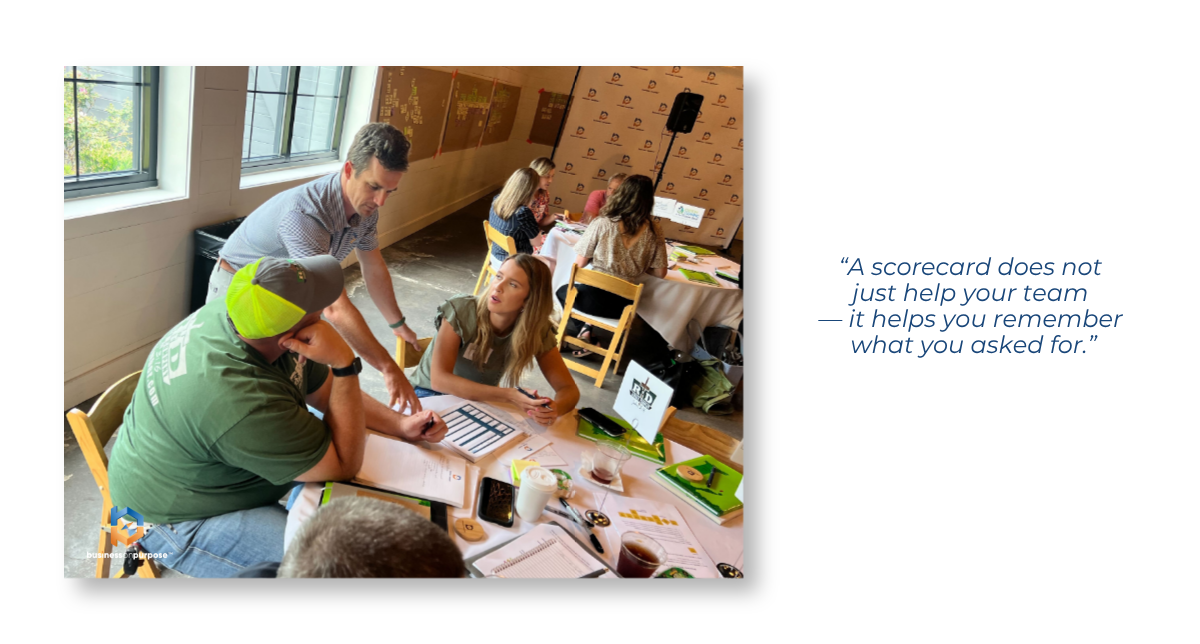
We have someone on our own team in an implementation assistant role. When you look at her scorecard, the number of tasks is remarkable. If I were just relying on memory to tell her what to do each day, things would fall apart quickly. When I pulled up her scorecard recently, I was blown away by how many tasks I had asked her to own that I had completely forgotten about.
That is the power of a scorecard. It removes the entire workload from your head and puts it somewhere both of you can reference. We call information trapped in the owner’s head a “captive process” — locked behind the bars of your own mind. The scorecard sets it free.
And if that team member ever leaves, you are not starting from scratch. The new person walks in and has complete clarity on what the role requires. You have equipped and empowered them from day one.
Repetition Is Not Optional
Building a scorecard once is not enough. This is where the anchor system becomes essential. Think of it like this: you would not have one conversation with your six-year-old about being kind to classmates and expect it to stick forever. The same is true for your team.
Repetition is the mother of all learning. One of the best coaching phrases anyone ever told me was simple: do it again. Do it again. Do it again.
So once your scorecard exists, schedule a line item in your anchor to review it weekly. Every team member should open their scorecard at the start of the week, before emails, before phone calls, before the loudest voice in the room takes over the agenda.
That last point matters more than you might think. When people do not have a scorecard to guide their day, they default to opening their inbox and letting their email become their to-do list. We call it LLVD — Latest Loudest Voice Disease. Their entire day becomes reactive rather than intentional, and your business pays the price.
A role scorecard fixes that. It gives your team a proactive framework to start the day with clarity, purpose, and direction.
Building Accountability That Actually Works
Accountability is not easy. If you came here hoping it would be, that is a fair hope — but the truth is that accountability takes upfront preparation and long-term endurance.
Vision without implementation leads to hallucination — accountability is where it gets real.
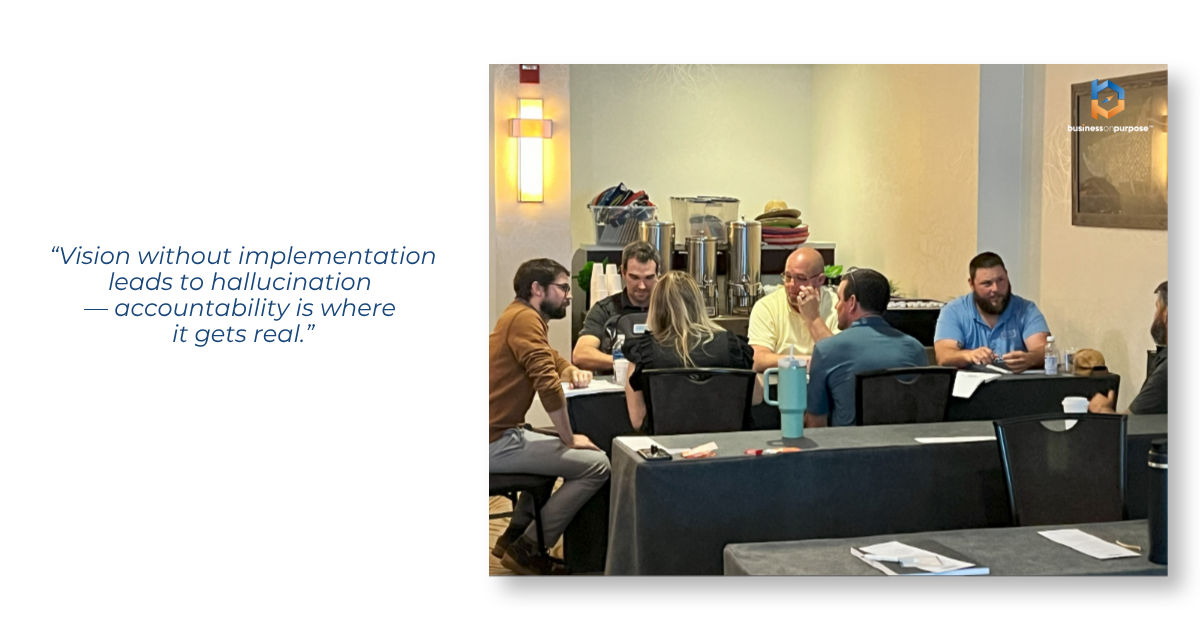
Here is how to make it sustainable. Once your team members have their scorecards, build a regular rhythm around them:
- Weekly: Each person reviews their own scorecard independently.
- Monthly or twice monthly: You do a check-in with your team member and review their scorecard together.
- Annually: The performance review uses the scorecard as the foundation.
When you do this, the scorecard does the heavy lifting for you. You are not the one showing up as the disciplinarian. The tool holds the standard, and your job becomes coaching your team toward it. That is what transforms you from the bad guy in the story to the leader your team actually wants to follow.
You are in charge of your time. Your team is in charge of their time. When you have clearly articulated what is most important through the job role and the scorecard, holding people accountable stops being a conflict and starts being a conversation.
Ready to Build a Business That Runs Without You?
The role scorecard is one of the most practical tools you can build as a small business owner. It brings clarity, creates accountability, and frees you from being the only person holding everything together in your head.
If your team is nodding along but not delivering, if your days are controlled by whoever is loudest, or if you feel like you cannot step away without things falling apart — this is exactly the kind of system that changes that.
Start with one role. Build the scorecard. Put it on repeat in your anchor. And watch what happens when your team has the tools they need to do the work without you micromanaging every step.
For more tools, frameworks, and resources to help you build a business that runs without you, visit businessonpurpose.com/healthy and take the first step toward getting your business healthy.
Scott Beebe is the founder of Business On Purpose (mybusinessonpurpose.com) and speaker for the AEC industry and author of the book Let Your Business Burn: Stop Putting Out Fires, Discover Purpose, and Build a Business That Matters. Business On Purpose works with business owners to articulate purpose, people, process, and profit to liberate owners from chaos and make time for what matters most.