If your team keeps dropping the ball, the problem might not be your people. It might be that your best processes are locked inside your head, invisible to everyone who works for you. Standard Operating Procedures (SOPs) are the key to changing that, and building them is a lot simpler than you think.
The Problem: Captive Processes
When we work with contractor business owners, we ask them questions like, “How do you handle estimating? How do you do payroll? How do you manage job costing?” They can answer every single one. But the moment we ask, “Can you show us where that’s written down?” the answer is almost always the same: “I don’t have it written down.”
That is what we call a captive process. It sounds like a positive thing, but it is anything but. A captive process is one that is locked behind the bars of your own mind. Your team cannot follow a process they cannot see. You cannot hold someone accountable to a standard that exists only in your head.
We worked with one business owner who finally committed to documenting his processes. He wrote them down, hired a new team member, and trained that person on the documentation. Over time, that new hire not only learned the job, he started building on the training himself. Eventually, that person was executing those tasks at about 120% of what the owner had been doing. He was doing them better. Yes, that is a little tough on the ego. But if you are willing to let go, you will stop living in the chaos that is exhausting you right now.
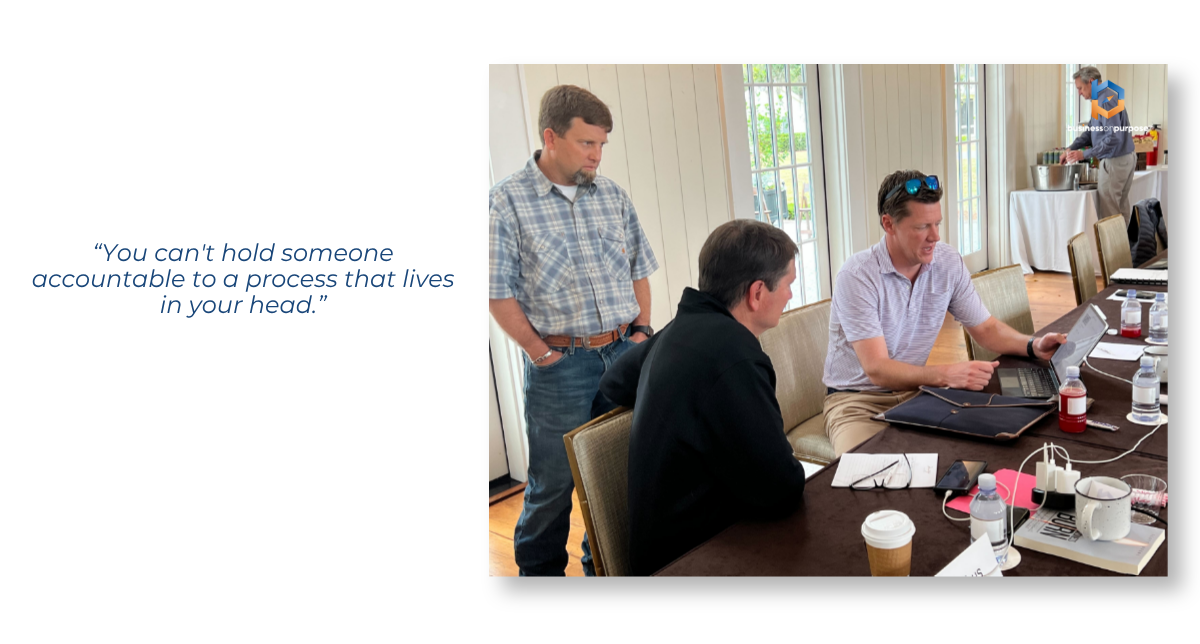
“You can’t hold someone accountable to a process that lives in your head.”
Lead Well.
If you're looking for more resources to work ON your business, we have them.
The MDT Framework: Map, Document, Train
When it comes to streamlining your business with SOPs, there is a three-letter acronym we want you to remember: MDT. Map, Document, and Train.
Most business owners who train at all skip straight to the training step without documenting anything first. Some document without ever mapping the process out. We get it. If you document without mapping, that is still better than nothing. But the ideal approach is to follow MDT in order:
- Map first. Understand the full shape of the process before you try to capture it.
- Document second. Get the steps out of your head and into a format your team can access.
- Train repeatedly. With repetition, predictability, and meaning.
To understand why this matters, you need to understand how a business is actually built. Think of it like a human skeleton or the framing of a house. Before you see the paint and the finishes, there is a foundation underneath everything. In every business, that foundation rests on four cornerstones: purpose, people, process, and profit.
Within the process cornerstone, there is what we call the Master Process Roadmap. It is organized around four core business systems: marketing, sales, operations, and administration, always in that sequence. You cannot deliver something you have not sold. You cannot sell something people do not know exists. Sequential order matters.
Once you understand those four systems, you can begin building SOPs around each one so your business runs on repeat.
The Shackleton Principle: Why Repetition Keeps Businesses Alive
There is a remarkable story about Ernest Shackleton, one of the early Antarctic explorers. In 1914, he led an expedition of 28 men on a 144-foot ship called the Endurance. They sailed from England toward Antarctica, got trapped in pack ice, and spent nine months frozen in place. The ship eventually cracked and sank. His crew lived on lifeboats for another year.
Nearly two years shipwrecked on a frozen sea. And not one man died.
How? Because Shackleton committed to repetition, predictability, and meaning. Even when his crew had nothing to do, he created structured processes for them to follow. The process was not busywork. The process was what kept them alive.
Your business is not so different. The process is what keeps it alive.
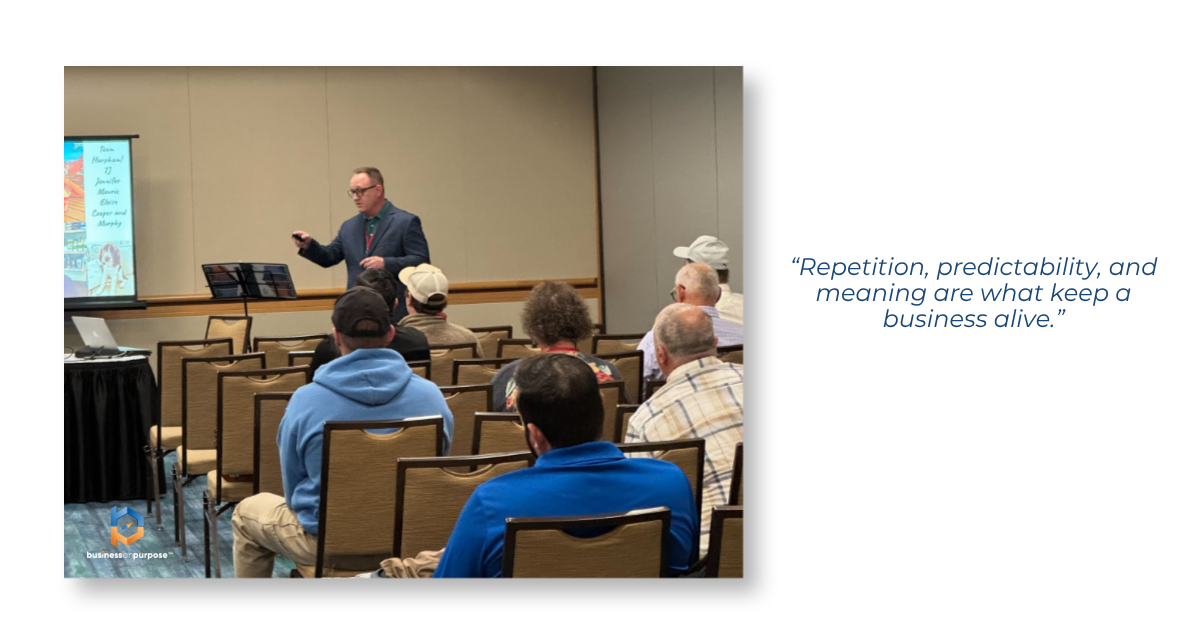
“Repetition, predictability, and meaning are what keep a business alive.”
How to Actually Build an SOP Right Now
Let’s make this practical. Pick one process from one of your four core systems. If you are in construction, a great starting point is something simple like how to pull a permit. That is an operational process you probably do over and over without any documentation.
Here is the mindset shift that makes everything easier: the next time you do a thing, capture it like it is the last time you will ever do it. Record it. Walk through every step as you do it in real time. That recording becomes the foundation of your SOP.
Then comes the modern shortcut. Use an AI tool to help you turn that recording into a formatted SOP. Have the AI interview you about the process, asking up to 20 targeted questions, or simply upload your recording and ask it to turn the content into a standard operating procedure for your business. You can instruct your AI tool on your preferred format so every SOP you create looks consistent and includes things like your mission statement, core values, and the role responsible for the task.
Once the document is created, link it to your Master Process Roadmap, which is simply a spreadsheet. Columns across the top represent your four core systems: marketing, sales, ops, and admin. Rows below list every process within each system. Your “how to pull a permit” SOP gets linked under operations. Simple.
The Anchor: How You Train What You Document
Documentation without training is just a file nobody opens. That is where the third major business tool comes in: the Anchor.
The Anchor is another simple spreadsheet. Fifty-two weeks run across the top of the year. The left column lists every ingredient you want to consistently embed in your business: team meetings, departmental meetings, executive check-ins, administrative training, operational training, and more.
Now take that “how to pull a permit” SOP and schedule it. Put it in week three under operations training. Schedule it again mid-year. Two to five times a year, you pull that document up, walk your team through it, and reinforce the standard. That is how you build repetition, predictability, and meaning into the fabric of your business.
To recap, you have three major tools working together:
- The Operating System: Built on your four foundational cornerstones of purpose, people, process, and profit.
- The Master Process Roadmap: Your four core systems with linked SOPs for every process underneath them.
- The Anchor: Your training calendar that creates the repetition and rhythm your team needs to thrive.
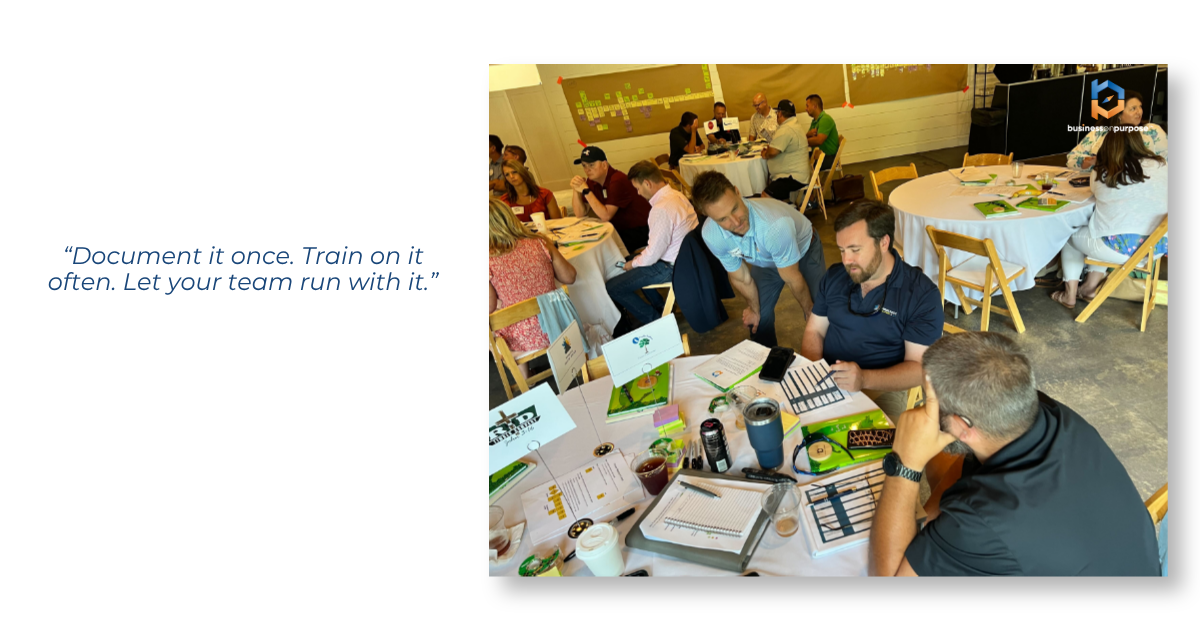
“Document it once. Train on it often. Let your team run with it.”
Your Business Does Not Have to Run on Chaos
Too many business owners wake up every day overwhelmed, answering the same questions, fixing the same problems, and feeling like the whole operation would fall apart if they stepped away for a week. That does not have to be your story.
When you map your processes, document them in a format your team can access, and train on them consistently, you begin to build a business that can actually run without you standing over it every second. You free yourself. You free your team. And you free the business to grow.
The goal at Business On Purpose is to liberate you from chaos so you can make time for what matters most, in your business and beyond it.
Ready to take the next step? Visit businessonpurpose.com/healthy to get the tools, frameworks, and support you need to build a business that runs without you.
Scott Beebe is the founder of Business On Purpose (mybusinessonpurpose.com) and speaker for the AEC industry and author of the book Let Your Business Burn: Stop Putting Out Fires, Discover Purpose, and Build a Business That Matters. Business On Purpose works with business owners to articulate purpose, people, process, and profit to liberate owners from chaos and make time for what matters most.