When you think about it, a military command and a sports team—what do those two things have in common when they’re not either in a battle or playing a game?
At the time of this recording, we’re almost at the end of March Madness and these teams have been in training, training, training. Right? So, military command—if they’re not fighting a battle, they’re training. If a sports team is not playing a game, they’re training. They’re preparing.
And yet in business… when’s the last time you actually proactively trained?
I think it’s why it leads us to have a strategy of throwing everybody to the wolves. I mentioned that in the last video, the last podcast that we did—we have this “throw them to the wolves” mentality.
So what happens when your employees stop fighting wolves and instead start being trained?
Lead Well.
If you're looking for more resources to work ON your business, we have them.

Throwing employees into a new job without proper guidance means you’re just setting them up for disaster. Not only does it waste their time and yours, but it also squanders the resources that your business has.
When employees are left to fend for themselves—or fight the wolves on their own—they struggle to understand the role, the business culture, and the necessary process. As a result, they often have very little time to actually do their job.
The Coastal Shores Story
It reminds me of a conversation I had with some dear friends of ours, Rob and Jessie Shrieve. They own Coastal Shores, a landscape business with both maintenance and construction divisions.
We met for lunch—it was probably around 2016 or 2017—to discuss their company’s challenges at that point.
Coastal Shores employed two types of crews: maintenance crews and construction/enhancement crews. The maintenance crews primarily consisted of laborers earning around $17–21 an hour. Many of these workers had limited education, with some actually unable to read or write. The turnover rate for these positions was staggering—a little bit like a fast-food joint—often reaching 30 to 50% annually. Not quite fast food, but still pretty painful and very expensive.
During our lunch, Rob asked me an incredibly pointed question.
“Scott, I understand implementing these strategies for our office team, but do we need to do all this stuff for our labor team as well? What you’re suggesting in terms of creating clarity and training is expensive.”
That was sort of his concern.

My Response
My response was intentionally provocative:
“Hey Rob, you will train them to the level that you value them. So you need to decide if you value your laborers as much as you value your office staff.”
My words were admittedly a little harsh, but I wanted to challenge Rob’s perspective and remind him that all employees—regardless of their role—deserve respect and investment.
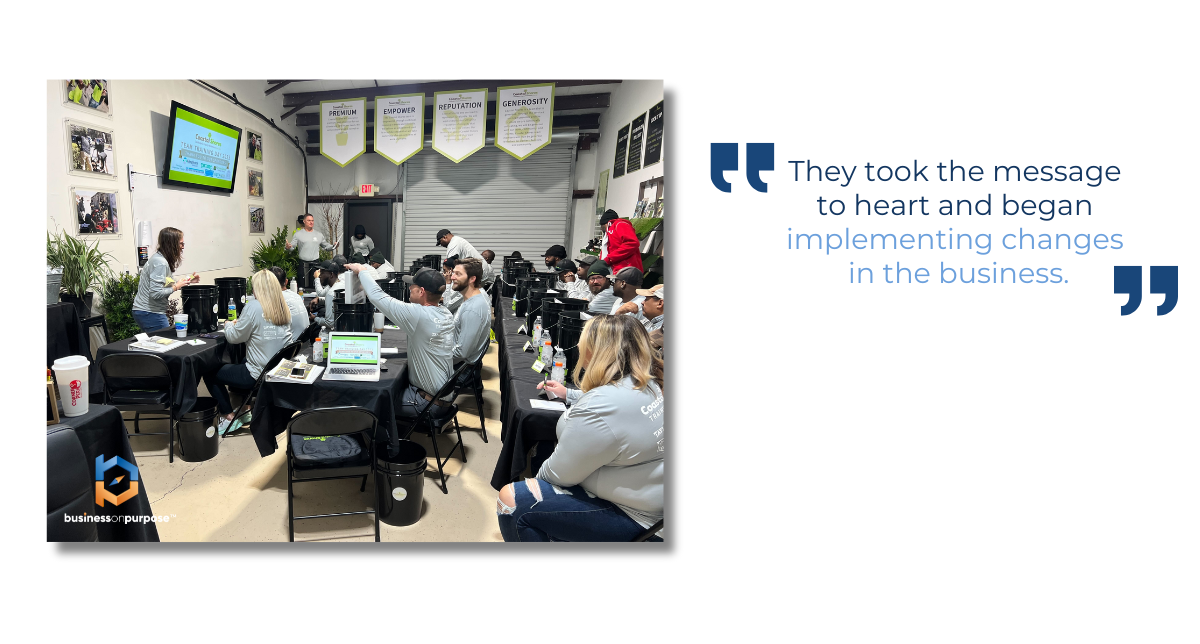
It resonated with Rob and Jessie, who both have a genuine love for people. They took the message to heart and began implementing changes in the business.
SALT Training Was Born
A couple of years later, they introduced what they called SALT Training. This was a program that alternated between technical skills and personal development.
For example, one week might focus on:
- Irrigation setup
- Chemical application
- Equipment maintenance
Then the fourth week was dedicated to what they called “Life 101.” These were lessons designed to help employees grow both personally and professionally.
The Result?
The intentional approach to training demonstrated Coastal Shores’ commitment to valuing not just a certain type of employee, but all employees. By investing in both technical skills and personal development, they showed their workers they were more than just laborers—as many other companies saw them.
They were:
- Valued members of the company
- Frontline members—the first point of contact with many customers
- Individuals with amazing growth potential
The Takeaway
The Shrieves’ experience highlights an important lesson for all of us as business owners:
When you invest in your employees at all levels, you create a more engaged, loyal, and productive workforce. This not only benefits the individuals, but also contributes to the overall success and growth of the business.
Yes, it takes time and it takes money—but when you begin to budget for these things, you can find value in both.
Ready to Start?
You can go to businessonpurpose.com/book, pick up either one of my books—or get both if you’d like—Let Your Business Burn and our brand new book The Chaos Free Contractor.
These will walk you through outlines and give you different examples of how you can begin to train your team.
So instead of throwing them to the wolves—and that being your strategy—you can have proactive, repetitive, predictable, and meaningful training.
Scott Beebe is the founder of Business On Purpose (mybusinessonpurpose.com) and speaker for the AEC industry and author of the book Let Your Business Burn: Stop Putting Out Fires, Discover Purpose, and Build a Business That Matters. Business On Purpose works with business owners to articulate purpose, people, process, and profit to liberate owners from chaos and make time for what matters most.