How much does it actually cost to train a new employee? Many business owners have wrestled with this question, and often the true cost goes far beyond dollars. By the end of this breakdown, you will have clarity on three core ideas:
- Why training a new employee matters
- The difference between hard costs and soft costs
- A framework to guide your training strategy
Let’s begin with the soft side of training, because this is where many business owners get stuck.
Lead Well.
If you're looking for more resources to work ON your business, we have them.
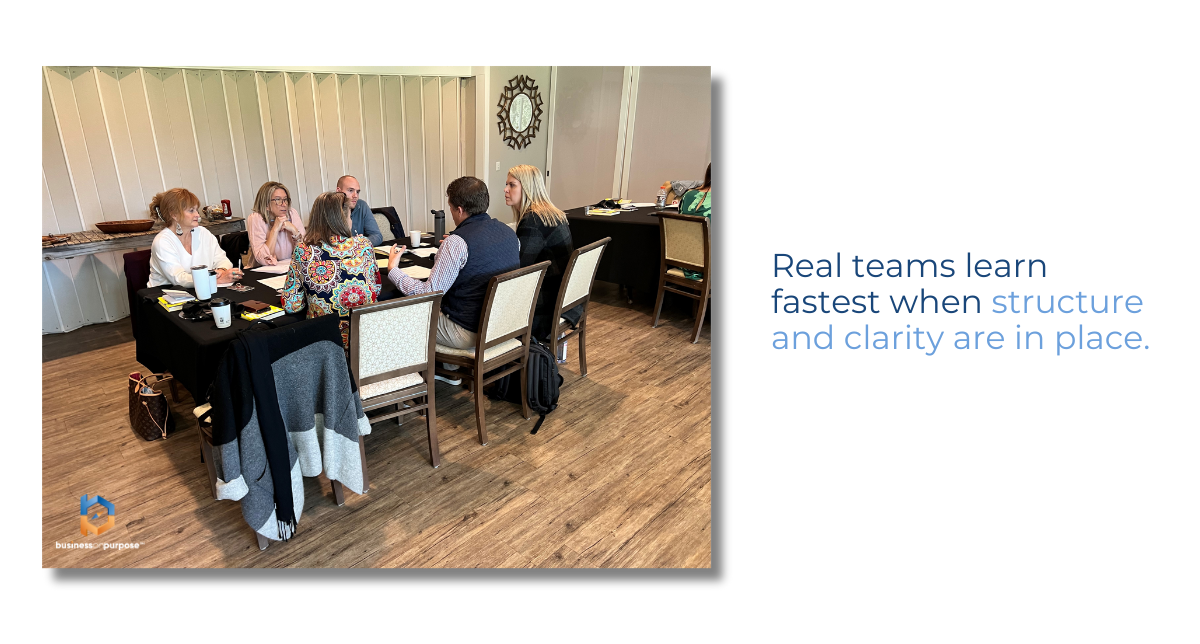
The Soft Cost of Training
Have you ever said, “Why can’t they just do it like I do it?” or wondered, “Why does nobody want to work anymore?” These reactions are common because most business owners think of training as a matter of time rather than money.
Time cannot be replaced. When it feels scarce, business owners often avoid training or rely on rushed, poor onboarding that leads to frustration and turnover.
Hiring is not an expense. It is an investment that requires intentional attention.
Soft costs show up in three key areas: time, attention, and motivation. If your daily life is filled with constant problems, crisis management, or last-minute scrambling, you will never have the margin needed to train someone effectively.
Ask yourself: Do I have the capacity to invest in this person?
Your Highest Cost: Your Attention
When a new employee joins your business, their livelihood depends entirely on the paycheck from you. They have one source of income. You may be juggling many customers, but they are trusting you with their future. If you do not have time to train them well, you are mishandling their livelihood.
You can spend money on courses, software, or materials, but those are not your highest cost. Your highest cost is your attention. For most owners, your time is worth $200 to $1,000 per hour. Poorly structured or reactive training is significantly more expensive than it looks.
The HHAT Framework
To understand your training investment, think through the HHAT framework:
- Hidden Cost: Work happening inefficiently or not producing value.
- Hard Cost: Print materials, meetings, systems, software, and paid time.
- Attention: The mental energy and focus required to train well.
- Time: The hours involved in development and onboarding.
When you see training through this lens, you can plan for it rather than react to it.

The Three Phases of Employee Training
Training a new hire effectively involves three phases: pre-hire, onboarding, and ongoing training.
Phase 1: Pre-Hire
Before you hire anyone, identify the actual gaps in your business. Create a list of tasks that are not currently being done or are being done inconsistently. This allows you to build a job role tailored to your business rather than copying a generic job description online. Every business is unique. Every role should be too.
Phase 2: Onboarding
Most businesses start onboarding unprepared, which creates confusion for the new hire and frustration for the owner. To avoid this, script the first four weeks of your new employee’s experience. Just like coaches script opening plays to build rhythm and confidence, you script the first days and weeks so they know what to do and how to succeed. This creates clarity, direction, and stability from day one.
Phase 3: Ongoing Training
Training is not a one-time event. It is a long-term rhythm. Once you know what skills the employee needs, map that training out over the course of the year with consistency and repetition. This reinforces expectations and ensures growth sticks.
The Hidden Cost of Not Training
PAL’s Sudden Service, a fast-food chain with over a thousand employees, spends heavily on pre-hire, onboarding, and continuous development. They have a turnover rate of just 1.2 percent among assistant managers. When asked what happens if they invest all that effort and the employee leaves, their answer was:
What if we do not, and they stay?
That is the real cost of neglecting training.
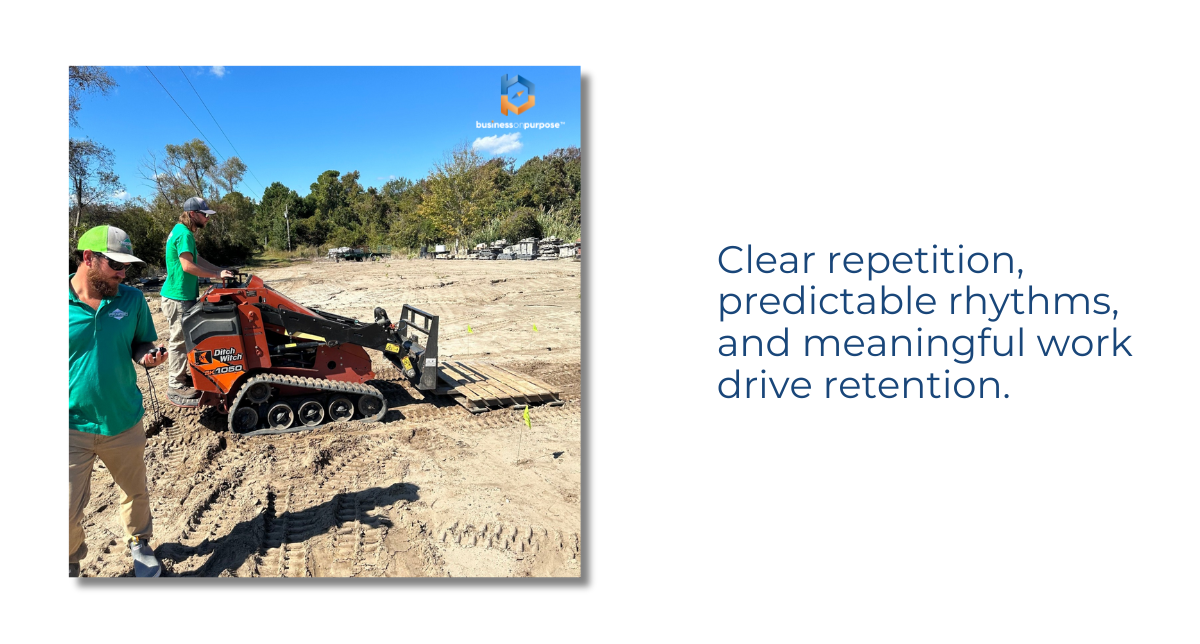
Key Principles to Build Effective Training
- Repetition
- Predictability
- Meaning
New employees should feel equipped, supported, and encouraged to grow rather than unsure and overwhelmed. When training is done well, new employees stop looking for a way out and start investing in where they are.
Final Thought
Training is not simply about teaching tasks. It is about equipping people to succeed. When you invest in your people, you create a business that is stronger, steadier, and more sustainable.
Ready to Build a Training System That Works?
We help business owners break free from chaos and create clarity and confidence in their team.
Let us help you make time for what matters most.
Scott Beebe is the founder of Business On Purpose (mybusinessonpurpose.com) and speaker for the AEC industry and author of the book Let Your Business Burn: Stop Putting Out Fires, Discover Purpose, and Build a Business That Matters. Business On Purpose works with business owners to articulate purpose, people, process, and profit to liberate owners from chaos and make time for what matters most.