Stop Treating AI Like a Toy
Most businesses today are playing with AI like it is a novelty. A smarter search engine. A quick way to write a caption or generate an idea.
But AI is not a toy.
It is more like the Wild West. Some pioneers struck gold. Others wandered without direction and paid the price.
If you want AI to actually support your business, you need to approach it with intention, structure, and awareness.
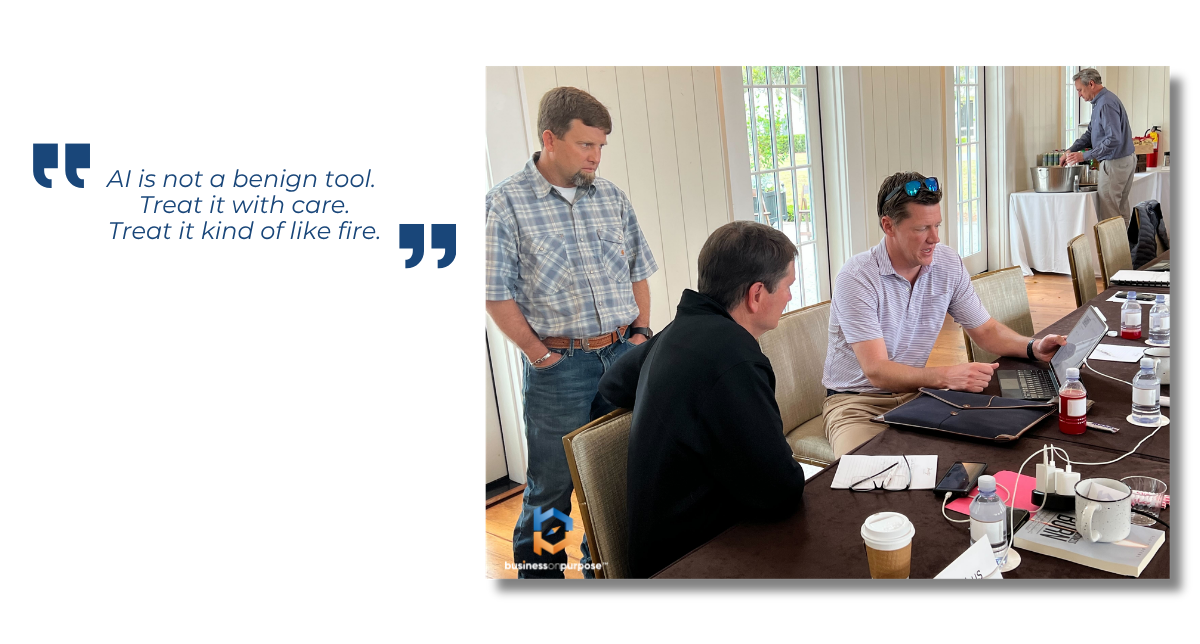
“AI is not a benign tool. Treat it with care. Treat it kind of like fire.”
Lead Well.
If you're looking for more resources to work ON your business, we have them.
The Real Problem With How Businesses Use AI
Across businesses of all sizes, there is a clear pattern.
Most people use AI as a boosted search engine.
They type something in, get an answer, and move on.
That approach misses both the opportunity and the risk.
AI can absolutely improve operations. But without structure, it creates inconsistency, dependency, and even exposure around data and decision making.
The goal is not to experiment randomly.
The goal is to implement AI strategically.
Think Like an Explorer, Not a Gambler
Early explorers did not just wander blindly. They studied, prepared, and still took calculated risks.
That is the mindset required for AI.
You cannot know everything before starting. But you also cannot afford to be careless.
There is a middle ground where smart experimentation leads to real operational value.
Step 1: See Your Business as a System
Before adding AI, you need to understand what you are adding it to.
Most businesses operate reactively. Emails dictate the day. Tasks pile up. There is no clear structure.
Instead, your business should be viewed like a system with a skeletal structure.
Every business is built on four foundational cornerstones:
- Purpose – Where you are going
- People – Who gets you there
- Process – What gets done
- Profit – The fuel that keeps everything running
These form your macro operating system.
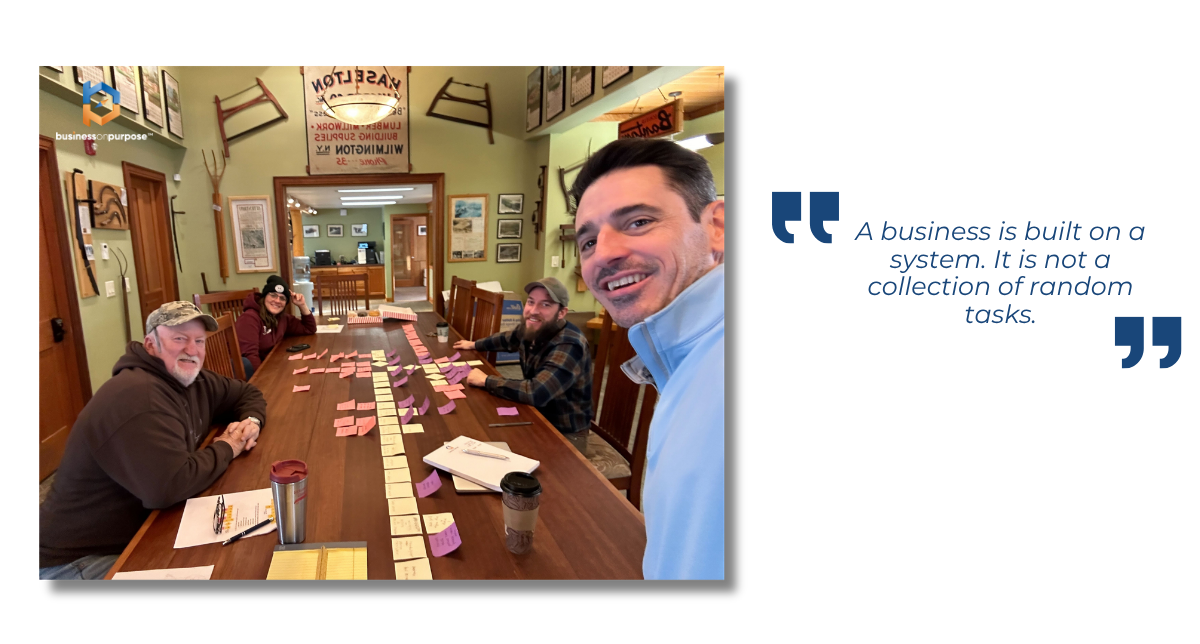
“A business is built on a system. It is not a collection of random tasks.”
Step 2: Break Down the Micro Operations
Once the macro structure is clear, you move into the micro level.
These are the actual processes that run your business:
- Marketing
- Sales
- Operations or fulfillment
- Admin, HR, and accounting
These processes must be documented.
Without documentation, AI has nothing to attach to.
With documentation, AI becomes a powerful support tool.
Step 3: Create an AI Policy for Your Business
Before rolling out tools, define how AI will be used.
Start simple.
Document your thoughts:
- What excites you about AI
- What concerns you about AI
Then refine those ideas into a clear policy.
A practical way to manage this is through a company handbook.
This handbook should include:
- Expectations for AI usage
- Boundaries around data and privacy
- Guidelines for creativity and originality
“We do not want this to create lazy people. We want AI to make us more creative, not less.”
Train your team on this consistently. Even two to three minutes per week reviewing one section builds alignment over time.

Step 4: Choose the Right AI Tools Carefully
Not all AI tools are created equal.
The biggest mistake is choosing based on popularity.
Instead, evaluate:
- How your data is handled
- How secure the platform is
- How the tool integrates with your processes
Avoid rushing this step.
The right tool supports your system. The wrong tool disrupts it.
Step 5: Apply BYOC – Bring Your Own Creativity
One of the most important principles in using AI effectively is this:
Bring Your Own Creativity.
Do not rely on AI to think for you.
Instead:
- Input your ideas
- Share your context
- Provide your direction
Then let AI enhance what you already created.
For example, when building a job role:
Do not ask AI to create it from scratch.
Instead, outline your expectations first. Then use AI to refine and structure it.
Step 6: Build a Culture of Continuous Learning
AI is evolving fast. Your team should evolve with it.
Create a simple rhythm:
- Weekly 15 to 20 minute AI discussions
- Share wins, lessons, and mistakes
- Identify new use cases and improvements
This keeps your team engaged and prevents stagnation.
The Missing Piece: The Right People
Even the best systems and tools will fail without the right people.
Your team must:
- Understand the system
- Follow the processes
- Use AI responsibly
AI does not replace people. It amplifies them.
Final Thoughts
AI can either create clarity or chaos in your business.
The difference comes down to structure, intention, and discipline.
When you understand your operating system, document your processes, and apply AI with purpose, it becomes a powerful advantage.
If you are serious about using AI to improve your business operations, start today:
- Map out your business structure
- Document one key process
- Define a simple AI usage policy
- Test one AI tool within that process
Small, intentional steps lead to real transformation.
Do not chase trends. Build systems that last.
Scott Beebe is the founder of Business On Purpose (mybusinessonpurpose.com) and speaker for the AEC industry and author of the book Let Your Business Burn: Stop Putting Out Fires, Discover Purpose, and Build a Business That Matters. Business On Purpose works with business owners to articulate purpose, people, process, and profit to liberate owners from chaos and make time for what matters most.