Believe it or not, profitable companies go bankrupt every single day.
Your profit and loss statement might say you made 200,000, but your bank account says zero. That gap is where businesses get into trouble.
Understanding why this happens comes down to one thing. Cash flow.
What Profit Really Means
Profit is not just a number on paper. It represents progress.
The word “profit” comes from the Latin proficere, which means “to advance.” Think of profit like fuel in a car. Without it, your business cannot move forward.
If there is no real profit, there is no real advancement.
Many businesses operate like nonprofits without realizing it. They generate revenue, cover expenses, and support a lifestyle, but never actually build profit that moves the business forward.
Types of Profit You Need to Know
Before addressing cash flow problems, you need to understand the different types of profit:
- Gross Profit
Revenue minus cost of goods sold. This does not include operating expenses. - EBITDA
Earnings before interest, taxes, depreciation, and amortization. - Net Profit
What is left after every expense is paid.
Each tells a different story. But none of them matter if there is no cash in the bank.
Trap #1: Mistaking Paper Profit for Real Cash
Many business owners celebrate profits that only exist on paper.
“You made 200,000 this year, but your bank account says zero.”
Lead Well.
If you're looking for more resources to work ON your business, we have them.

Paper profit lives in reports like your P&L or balance sheet. It reflects the past.
Real profit lives in your bank account. It exists in the present.
A healthy business separates money into multiple accounts. This creates clarity and control. When cash is visible and organized, decisions become easier.
Accrual vs Cash Accounting
- Accrual accounting tracks expected income and expenses
- Cash accounting tracks actual money received and spent
Accrual is useful for taxes. Cash is what keeps your business alive.
Trap #2: Not Getting Paid Fast Enough
A business can be profitable and still fail if cash comes in too slowly.
“We need to stop using tomorrow’s money to pay yesterday’s bills.”

Delayed payments create pressure. To survive, businesses often:
- Borrow money
- Use credit lines
- Dip into future revenue
This introduces risk and instability.
How to Fix It
- Improve payment terms
- Automate invoicing and collections
- Accept faster payment methods like cards and ACH
- Offer incentives for early payment
Getting paid faster is more valuable than holding out for the full amount later.
Cash flow thrives on movement. Money needs to come in and go out efficiently.
Trap #3: Assuming Money in the Bank Means Profit
Having cash in your account does not mean your business is profitable.
“If there’s money in the bank, I must be making money.”
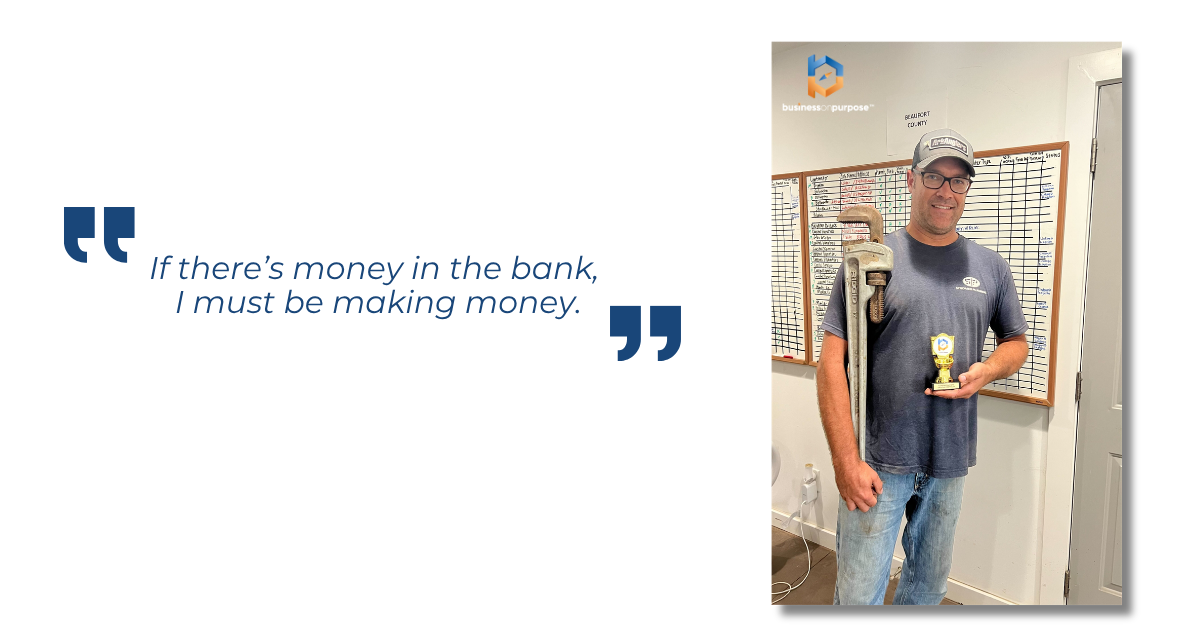
That assumption can be dangerous.
Take the example of WeWork. At one point, the company generated billions in revenue, yet spent even more.
Revenue alone does not equal profit.
If your expenses and timing are misaligned, you can run out of cash even while appearing successful.
The Real Problem: Cash Flow, Not Profit
Many businesses are not failing because they are unprofitable.
They are failing because:
- Profit exists only on paper
- Payments come in too slowly
- Spending outpaces real cash flow
Fixing these issues requires awareness and systems.
Final Thoughts
Cash flow is the lifeblood of your business.
Without it, even profitable companies collapse.
When you shift your focus from paper profit to real cash movement, everything changes. You gain clarity, control, and the ability to grow sustainably.
If you want to take control of your cash flow, start by evaluating how money moves through your business today.
- Are you relying on future income to cover past expenses?
- Do you clearly see where your money is going?
- Are your payment systems working for you or against you?
Take action now. Small changes in cash flow management can determine whether your business survives or scales.
Scott Beebe is the founder of Business On Purpose (mybusinessonpurpose.com) and speaker for the AEC industry and author of the book Let Your Business Burn: Stop Putting Out Fires, Discover Purpose, and Build a Business That Matters. Business On Purpose works with business owners to articulate purpose, people, process, and profit to liberate owners from chaos and make time for what matters most.