Cash flow problems are one of the most common — and most stressful — challenges small business owners face. The good news? Managing your cash flow does not have to be complicated, time-consuming, or mysterious. With the right system, you can get ahead of the chaos and stay there.
You Should Never Be Flying Blind
When we talk to small business owners across the country and around the world, two problems come up again and again: people and money. And when you drill down on the money side, it almost always comes back to cash flow. The question is not whether cash flow is a problem — it is whether you have a predictable system to manage it.
Pilots do not fly blind. They have a cockpit full of instruments that tell them exactly what is happening and what to do next. As a business owner, you deserve the same kind of clarity. That is exactly what we are going to walk through here: a six-step approach we call the Manage Methodology.
Step One: Build Your Dashboard and Meet with It Weekly
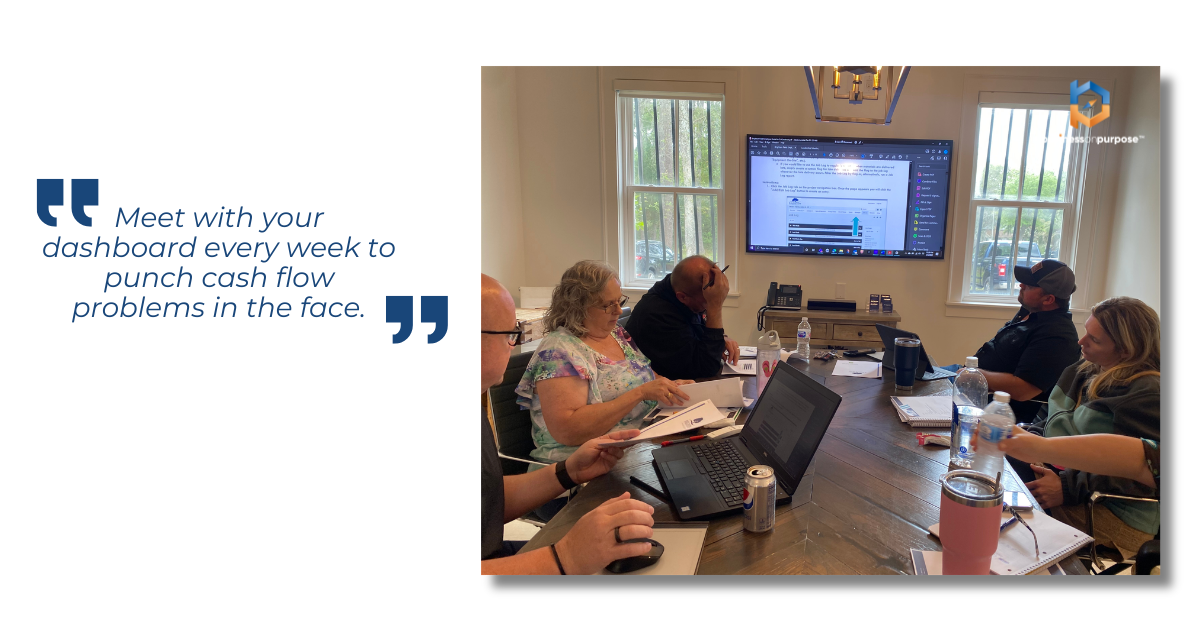
The first step is to create a financial dashboard and commit to sitting down with it every single week. Not because it is interesting, but because it will tell you what you need to do differently in your business.
Think of it as the ABCs of your financial health:
- Cash accounts — Know exactly what your bank balances look like every week. Your profit and loss statement and balance sheet are not enough for this.
- Bookkeeping — Keep it current so your numbers are trustworthy.
- Accounts receivable — How much are you owed right now?
- Accounts payable — How much do you owe right now?
- Customer metrics — What new opportunities are in your pipeline? What is your kill rate on sales? What lead generation activity is happening?
All of these numbers need to be tracked on a weekly basis. This gives you a real-time pulse on the financial health of your business.
“Meet with your dashboard every week to punch cash flow problems in the face.”
Lead Well.
If you're looking for more resources to work ON your business, we have them.
Step Two: Automate Your Subdivided Bank Accounts
Most business owners run everything through one, two, or maybe three big bank accounts. That approach keeps you in the dark. When all your money sits in one lump-sum bucket, you cannot tell what is earmarked for payroll, what needs to go to taxes, or what is actually available as profit.
Instead, go to your bank and open seven, eight, nine, or even ten separate accounts. When revenue comes in, it lands in an all-income account and then automatically sweeps out by percentage into each dedicated account. For example:
- 7% to profit
- 8% to taxes
- 23% to operating expenses
- 38% to cost of goods
(Those percentages are illustrative. Your numbers will be specific to your business.) The key is that the allocation happens automatically, by percentage, every time money comes in. This is not something you can replicate on a spreadsheet. You need the actual separate accounts working for you.
Step Three: Navigate with a Revolving 13-Week Forecast
Once your dashboard and bank accounts are in place, you are ready to build a 13-week rolling cash flow forecast. Why 13 weeks? Because there are 52 weeks in a year, and 52 divided by four quarters equals 13 weeks per cycle. Running a revolving forecast means you are always looking 13 weeks ahead, updating it every week.
This is where the real power shows up. We have helped clients spot cash flow crunches three to six months in advance. Because they saw it coming, they were able to make different decisions in the moment and never felt the impact of the problem. They were simply too far ahead of it.
Your 13-week forecast should pull from your dashboard: What does your pipeline look like? How much are you owed, and when will it come in? What bills are due and when? Keeping all of this in a rolling weekly view keeps you in the driver’s seat.
Step Four: Assign Percentages to Every Cash Account
We touched on this with the bank accounts, but it deserves its own focus. Every cash account needs a defined percentage, not a fixed dollar amount. Here is why that matters.
If you say you will put $5,000 into profit every month, you have no idea whether your revenue can actually support that. But if profit is a fixed percentage of whatever comes in, then the math works at any revenue level. When an account runs dry, it signals that your percentages are off or your costs are higher than you thought. When an account builds up, it signals you can reallocate.
Think of the percentages as levers. If you raise the profit percentage by 1%, something else has to come down. This discipline is exactly what prevents most of the financial surprises business owners walk into.
“Percentages on bank accounts are levers — raise one and another must come down.”
Step Five: Guard Your Terms Fiercely
You can have the best dashboard and the most beautifully structured bank accounts in the world, but if you are not guarding your payment terms, cash flow will still bite you.
When you send an invoice, are your terms crystal clear? Does your customer know when payment is due? And just as importantly, do you have a reminder structure in place? Something like:
- 14 days before due: friendly reminder
- 7 days before due: follow-up
- 3 days before due: another nudge
- 1 day before due: final reminder
- Overdue: penalty notice
One of the biggest cash flow killers is when 30-day terms creep into 45, 60, or even 90 days. When customers hold onto your cash, you lose options. That is what drives business owners toward hard money lenders and revolving lines of credit that just keep revolving. Communicate your terms upfront and enforce them consistently.
Step Six: Rage Over Your Numbers and Run Lean
The final step is what we call Rage Slim Pants — and yes, that is exactly as memorable as it sounds. You want to rage over your money and run lean enough to fit into slim pants.
Raging over your money means you, the owner, know your numbers cold. Can you tell me right now what your total projected revenue is for this year? What is your cost of goods percentage? What is your gross margin? If those answers are fuzzy, that is where you start. A 1% change in cost of goods has downstream effects on everything else in your business. You have to know.
Running lean means obsessing over the things that drain cash unnecessarily: schedule efficiency, labor costs, inventory, and mistakes like callbacks and warranty work. We call the lean side of this PANTS:
- P — Pricing reviewed on a regular basis
- A — Accounts receivable and payable managed tightly
- N — New equipment and capital expenses planned with intention
- T — Taxes set aside consistently
- S — Servicing debt strategically, with a goal of eliminating it
On that last point: you can build a personal line of credit inside your own business. Set up one of your dedicated bank accounts as a reserve fund. Over 12, 24, or 36 months, you can fund projects and weather downturns with your own money, not a bank’s. That is true financial freedom.
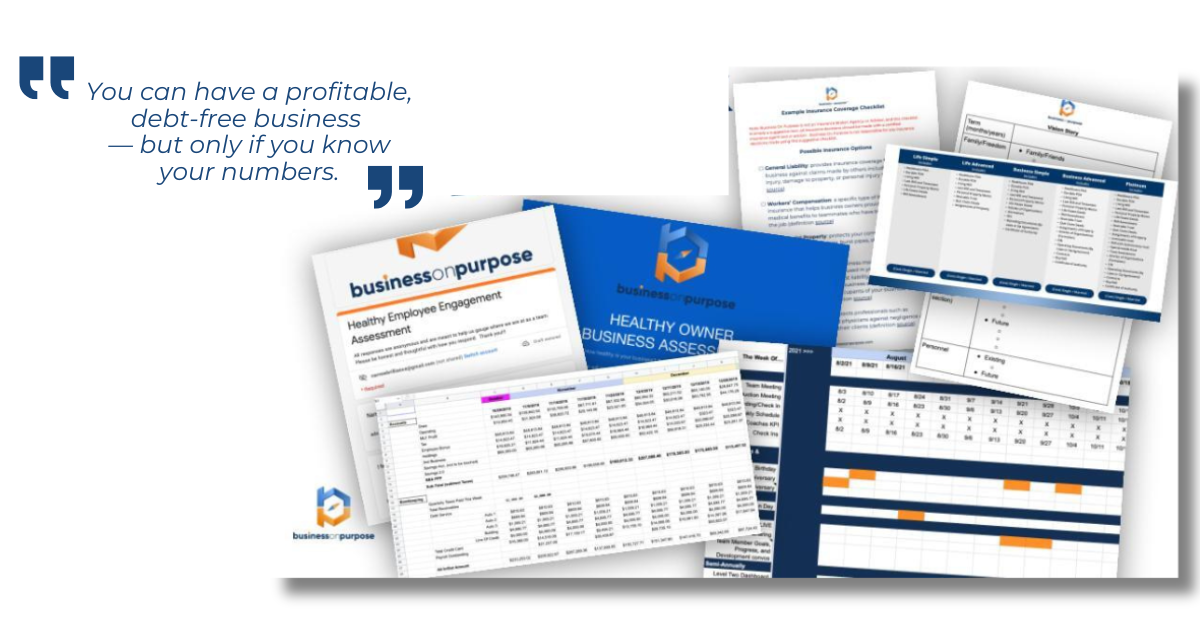
“You can have a profitable, debt-free business — but only if you know your numbers.”
Vision Without Implementation Is Hallucination
Thomas Edison said it well: vision without implementation is hallucination. Reading this article and nodding along is not enough. What moves the needle is repetition, predictability, and meaning. That means sitting down with your dashboard every week, updating your forecast, reviewing your percentages, and making decisions based on real numbers.
Managing cash flow does not need to consume your life. With this system, it takes about 30 minutes a week. What it gives you in return is clarity, confidence, and the freedom to stop reacting and start leading.
Ready to Take the Next Step?
If you want step-by-step guidance to build out this entire system in your business, we have put together a resource specifically for you. Visit http://solvecashflow.com/ to get the tools, templates, and support you need to build a business that runs without you — starting with your cash flow.
Stop flying blind. Build your cockpit. Take control.
Scott Beebe is the founder of Business On Purpose, author of Let Your Business Burn: Stop Putting Out Fires, Discover Purpose, And Build A Business That Matters. Scott also hosts The Business On Purpose Podcast and can be found at mybusinessonpurpose.com.