I’ve worked with plenty of people who carried the title of “leader.” Maybe you have too. But sometimes, the results of their work didn’t quite match the title. What we often saw instead was micromanagement.
So how do we tell the difference?
Let’s take a few minutes to unpack this. I think it will be really helpful in understanding how you can motivate your team, empower your workforce, and clearly separate leadership from micromanagement.
Because let’s be honest, we all have weak moments where we slip into micromanagement. It happens. The key is to understand that effective leadership requires clarity.
Leadership Is Practical, Not Abstract
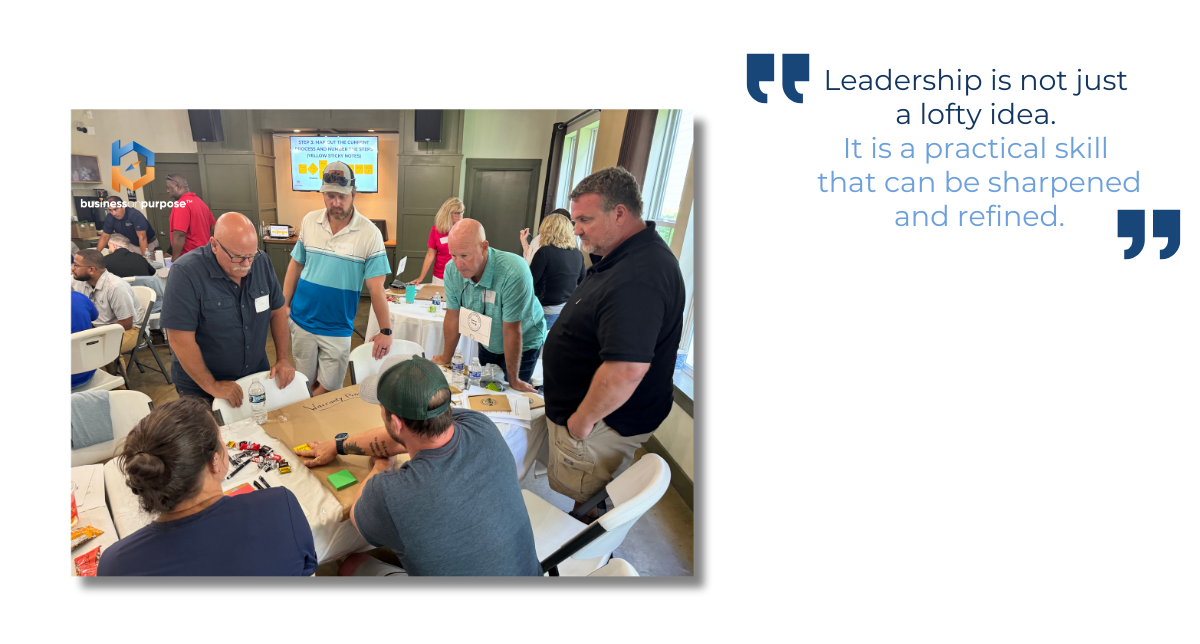
Leadership is not just a lofty idea. It is a practical skill that can be sharpened and refined. In fact, it is essential for the success of any business.
Lead Well.
If you're looking for more resources to work ON your business, we have them.
As a leader, your primary role is to equip your people with the knowledge and tools they need to manage ongoing challenges. You must also help them keep those tools sharp through what we call the RPMs of great leadership:
- Repetition
- Predictability
- Meaning
Chaos Is the Real Enemy
Here’s the reality: most problems in business are not one-time events. They are cyclical. They resurface again and again.
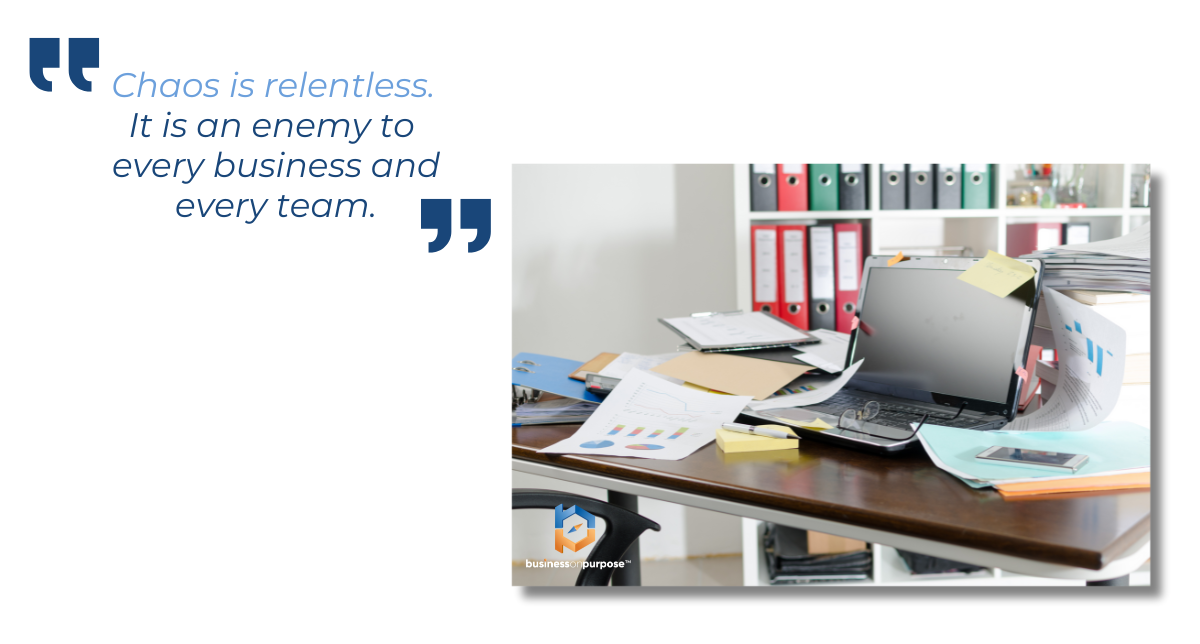
You might “punch chaos in the mouth,” but it does not disappear. It slips away, disguises itself, and comes back through another door. Chaos is relentless. It is an enemy to every business and every team.
That means instead of hoping problems vanish, a wise leader prepares their business to manage those recurring issues.
A Lesson from European Soccer
Think about a European soccer match. At the time of this recording, the Premier League had just crowned a champion. If you have ever watched one of those matches, you have seen the stewards and security staff everywhere, bright yellow coats dotting the stadium.
Last year, we visited a top-league match in Greece and were struck by the number of armed guards on site. Why were they there? Because the organizers anticipated problems. They knew rowdy behavior was predictable.
Instead of hoping fans would behave perfectly, they developed systems and trained personnel to manage the issues when they arose.
The same principle applies in business.
Equipping Your Team
As a leader, your role is to outfit your team with the tools and knowledge they need to tackle recurring problems. Think of it like filling an empty tool belt for each team member.
You are not just giving them tools. You are showing them how to use those tools and reminding them to keep them sharp.
Here is a simple definition you may want to write down:
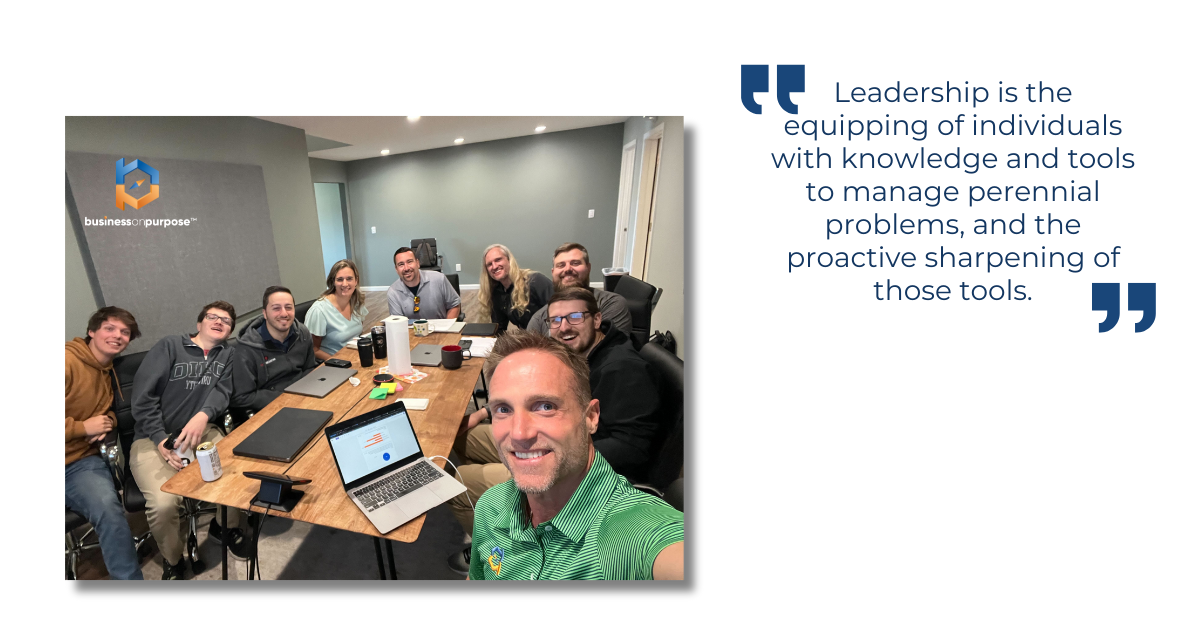
Leadership is the equipping of individuals with knowledge and tools to manage perennial problems, and the proactive sharpening of those tools.
Notice the key word: manage. Leadership is not about solving every problem once and for all. It is about preparing your team to handle problems that will inevitably return. That is the RPM cycle in action: preparation and improvement.
Leadership vs. Micromanagement
It is important to draw a clear line between the two.
- Leadership empowers people to solve problems independently, using the tools and knowledge you have given them.
- Micromanagement stifles growth. It relies on excessive control and often comes from a failure to document and share the systems, processes, and methods stuck in the leader’s head.
I’ll admit, I have been guilty of this. Instead of laying out the ethos of the business, leaders sometimes default to demanding things be done their way, every time, at 120 percent.
That is not leadership. That is micromanagement.
At Business On Purpose, we follow a principle called 85/15. The business provides 85 percent in the form of systems, tools, and clarity. The team member provides the remaining 15 percent with their creativity, problem-solving, and initiative. That is how leadership works through RPMs: repetition, predictability, and meaning.
Becoming an RPM Leader
When you adopt this style of leadership, you create a resilient organization that can navigate recurring challenges without falling apart.
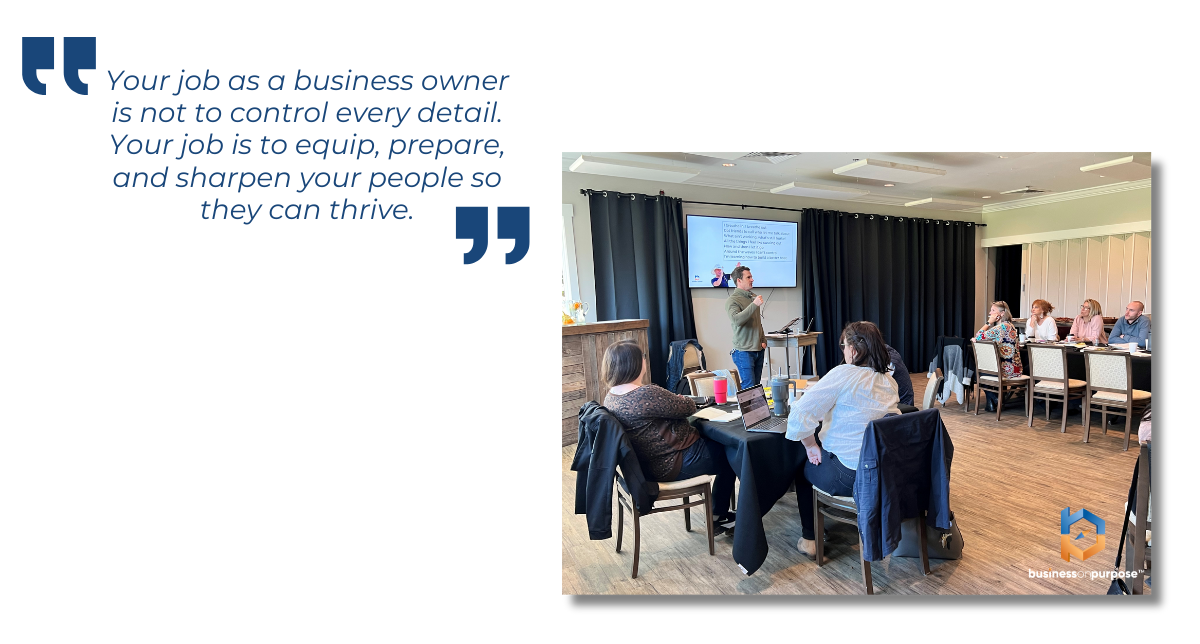
The truth is simple: your job as a business owner is not to control every detail. Your job is to equip, prepare, and sharpen your people so they can thrive.
Want to Talk Through It?
If you are struggling with the difference between leadership and micromanagement, we would love to help. Each week, our coaches set aside a few 15-minute slots for business owners who want clarity on this topic.
And if you want to know how you can work with us on a deeper level, just ask. We will walk you through it.
businessonpurpose.com/ask
Scott Beebe is the founder of Business On Purpose (mybusinessonpurpose.com) and speaker for the AEC industry and author of the book Let Your Business Burn: Stop Putting Out Fires, Discover Purpose, and Build a Business That Matters. Business On Purpose works with business owners to articulate purpose, people, process, and profit to liberate owners from chaos and make time for what matters most.