Most small business owners say they want to empower their team, but without the right framework, that “empowerment” quietly turns into chaos. If you have ever handed off a task only to find yourself doing it again a week later, this is for you.
True delegation is not about letting go and hoping for the best. It is about transferring authority with clarity, building real accountability, and finally freeing yourself from the tasks that are keeping you stuck.
Empowerment Without Clarity Is Not Empowerment
We worked with a business owner who told her team, “You are empowered to go make the decisions,” and then turned right around and kept making every decision herself. The result? Her team was frustrated. She was frustrated. And as she hired more people, her stress only grew. She thought she was delegating. She was actually abdicating.
There is a critical difference between the two. Abdication is throwing someone into the deep end and walking away. Delegation is a deliberate, structured transfer of authority paired with the tools and training to succeed.
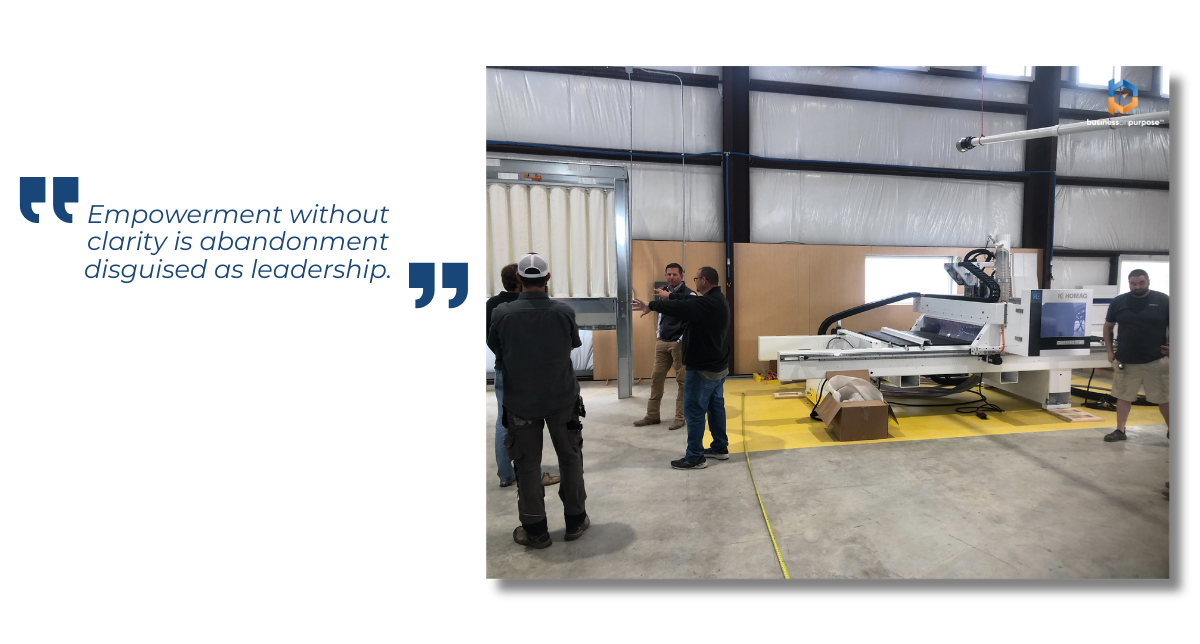
“Empowerment without clarity is abandonment disguised as leadership.”
Lead Well.
If you're looking for more resources to work ON your business, we have them.
Above the Line or Below the Line: Where Do You Lead From?
Brené Brown describes two modes of leadership: above-the-line and below-the-line. Below-the-line leaders fall into one of three traps. They become the villain, criticizing their team without offering real guidance. They become the victim, quietly resenting how hard they work while their team seems oblivious. Or they become the hero, swooping in to save the day and unintentionally stealing authority back from the people they delegated to.
Above-the-line leaders, on the other hand, operate from what Ed Freeman calls a well-differentiated, self-regulated emotional state. They do not get swept up in the anxiety of the moment. Instead, they respond through co-creation, coaching, and healthy challenge.
Ask yourself honestly: the last time you gave someone authority and then took it back, were you playing hero, villain, or victim? If you are struggling to think of an example, the answer is probably yesterday. The good news is awareness is the first step to change.
The ACA Framework: What Empowerment Actually Looks Like
Here is a simple acronym that turns the buzzword “empowerment” into something you can actually use: ACA.
A stands for Authority. C stands for Clarity. The second A stands for Accountability.
Authority without clarity is just noise. Clarity without accountability is wishful thinking. When you put all three together, you have a real system for delegation that sticks. Give your team the authority to act, make sure they are crystal clear on what that means in practice, and then hold them accountable in a coaching-forward way rather than a critical one.
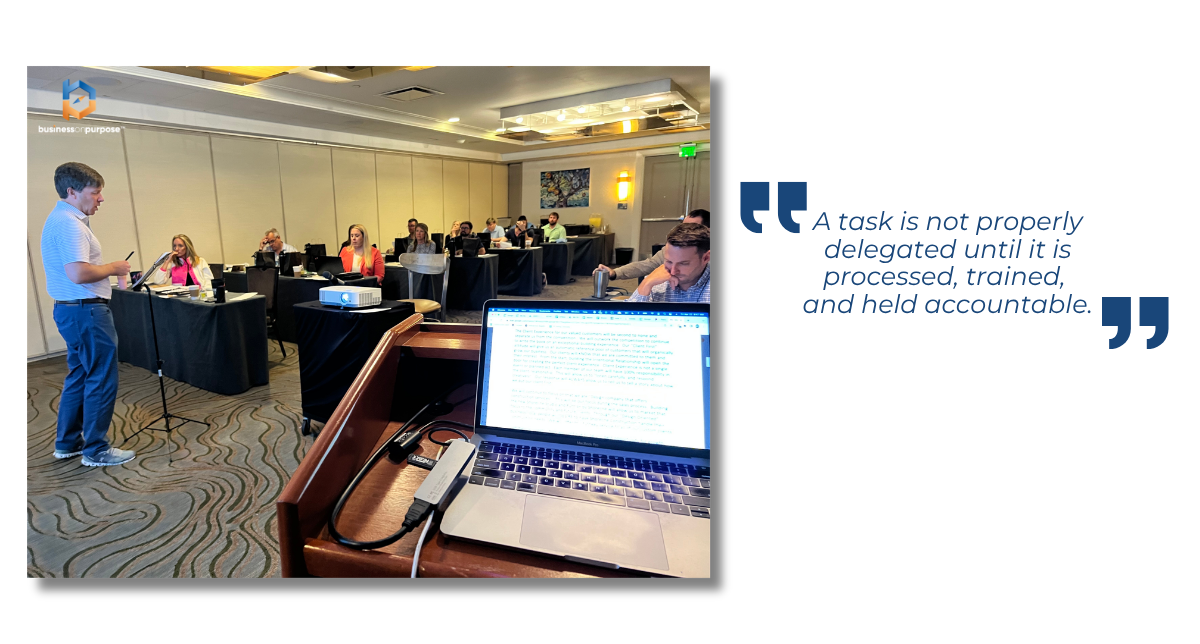
“A task is not properly delegated until it is processed, trained, and held accountable.”
The Delegation Roadmap: A Practical Tool to Get Started
Now for the practical part. This is a step-by-step exercise you can do today. Set a timer for 15 minutes and write down every single task you currently do in your role. Go back to last week and walk through each day. Include the phone calls, the emails, the reports, the texts, the quick decisions. No task is too small for this list. If you leave something off, you will still be doing it a month from now and wondering why nothing has changed.
Once you have your full list, set a timer for five minutes and estimate how much time each task takes you on average per week. For tasks you only do monthly or annually, simply divide the time by the number of weeks. You want a weekly average for everything.
Next, rate each task on energy. Think of it like a Roman emperor in the coliseum: thumbs up if the task gives you energy, neutral if it is just fine, and thumbs down if it drains the life out of you. Most business owners are surprised by just how many thumbs-down tasks they are carrying around every week. This exercise turns what you feel in your gut into something visible and actionable.
Finally, assign each task a delegatability score of one, two, or three.
- 1 means only you can do this. Full stop.
- 2 means you could pass this off with enough training and trust.
- 3 means you should have delegated this a long time ago and just have not gotten around to it.
Here is the honest truth: most of your tasks should be twos and threes. Your importance as a leader is not measured by how many tasks only you can do. It is measured by your ability to raise up other people to do those tasks well.
The PTA Model: Process, Train, Accountability
Knowing what to delegate is only half the equation. You also need a rhythm for making it happen. That is where the PTA model comes in: Process, Train, and Accountability.
First, build the process. Document how the task gets done so there is a clear, repeatable system in place. Once you have the process, you automatically have your training material.
Then, train on the process using what we call the Anchor. Picture a simple spreadsheet with 52 columns, one for each week of the year, and rows representing the training topics across your four core business systems: marketing, sales, operations, and admin. Each week during your team meeting, you open the Anchor, look at the scheduled training for that week, and go through it together. Week after week, you are consistently building your team’s capability rather than leaving it to chance.
Finally, hold your team accountable in a healthy, coaching-forward way. Accountability is not punishment. It is the follow-through that makes everything else work.
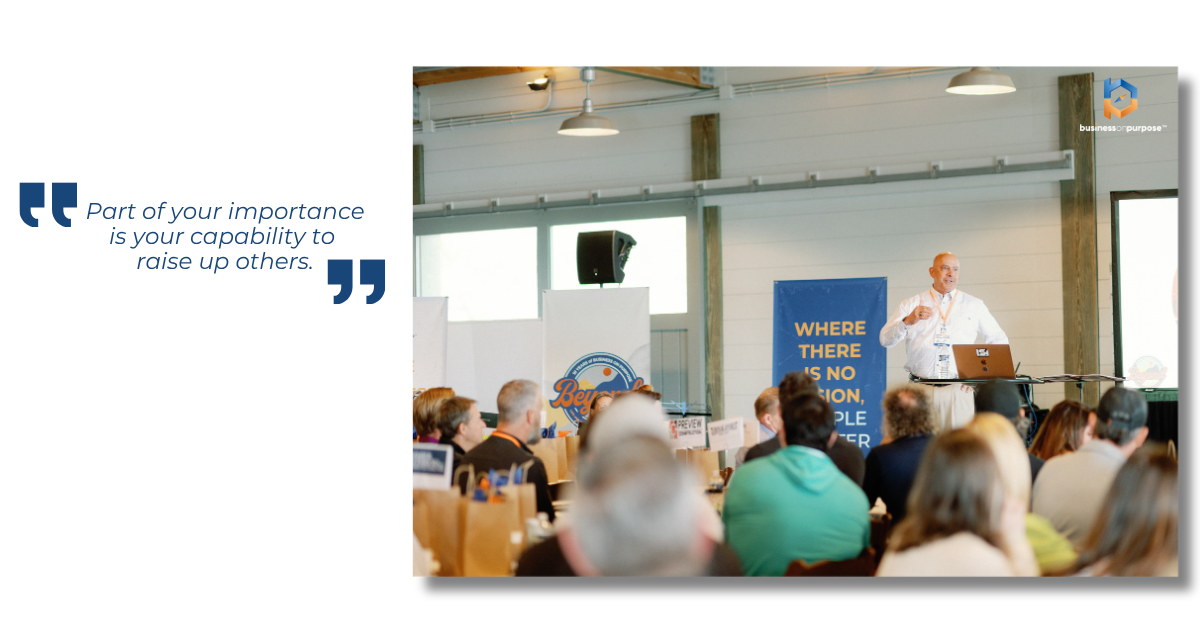
“Part of your importance is your capability to raise up others.”
You Do Not Have to Stay Stuck in the Chaos
Here is the bigger picture behind all of this. So many business owners feel trapped in their own companies, buried under tasks they cannot seem to hand off. That is not sustainable, and it is not why you started your business.
The mission at Business On Purpose is simple: to liberate owners from chaos and make time for the things that matter most. The Delegation Roadmap, the ACA framework, and the PTA model are not complicated theories. They are practical tools you can start using this week to build a business that runs without you having to be the one running it at all times.
Start with the 15-minute task list. Rate your tasks. Score your delegatability. Build the process. Train your team. And watch what happens when clarity replaces chaos.
Ready to Take the Next Step?
If you want a healthier business, a more empowered team, and more margin in your life, we have built a resource specifically to help you get there. Visit https://trainnewhires.com/ to get access to the tools, templates, and frameworks that will help you stop doing everything yourself and start leading with purpose.
Scott Beebe is the founder of Business On Purpose (mybusinessonpurpose.com) and speaker for the AEC industry and author of the book Let Your Business Burn: Stop Putting Out Fires, Discover Purpose, and Build a Business That Matters. Business On Purpose works with business owners to articulate purpose, people, process, and profit to liberate owners from chaos and make time for what matters most.