Most business owners know they need an employee training manual. Very few are excited to build one.
If you have ever forgotten a new hire’s start date, thrown someone into the deep end and hoped they would figure it out, or taken tasks back because it felt easier to do it yourself, you are not alone. But you can do better, and your team deserves better.
By the end of this post, you will understand how to build a simple, effective employee training manual using five free tools that invite people into meaningful, challenging work instead of overwhelming them.
Why Employees Really Leave
One of the most common phrases we hear is, “Nobody wants to work anymore.”
Here is the hard truth. Most employees do not leave because of money, perks, or benefits. They leave because they lack clarity, challenge, and direction.
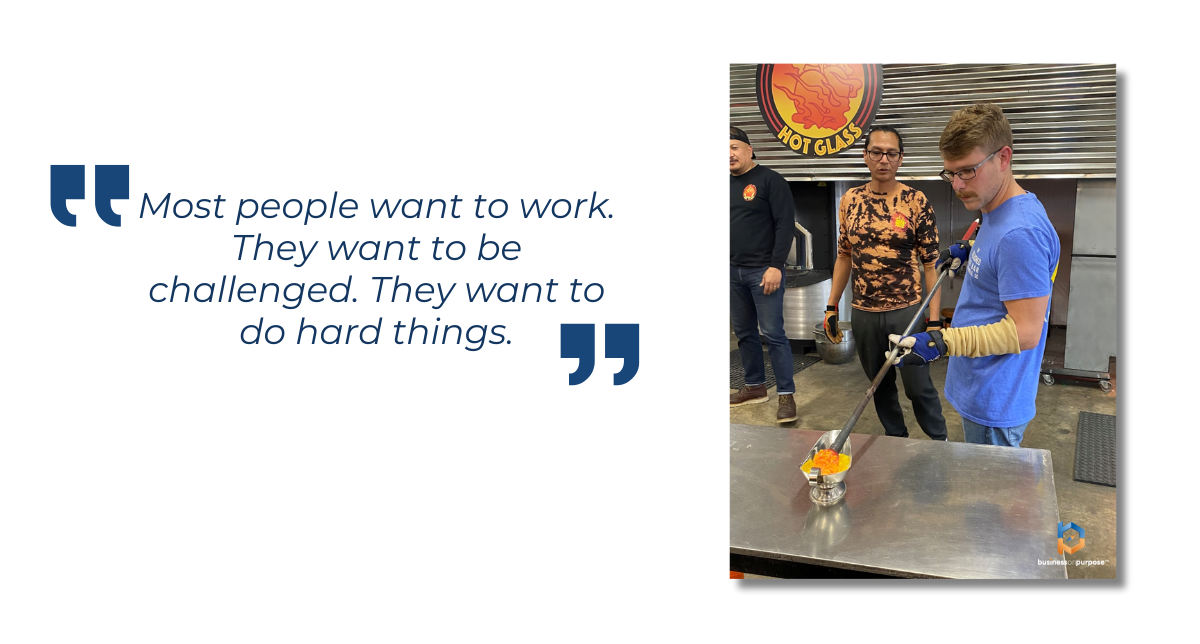
The majority of people want to work. They want to be productive. They want to do hard things that matter. What drives them away is chaos, constant firefighting, and starting from zero every single day.
Lead Well.
If you're looking for more resources to work ON your business, we have them.
An effective employee training manual solves this problem by giving people structure, confidence, and a clear path forward.
Tool #1: The Job Role
Every employee walks in with two core questions.
Where do I fit in this organization?
What exactly are you asking me to do?
The first question is answered visually with an org chart. The second is answered with a clear job role.
To build a job role, forget Google templates. Start from scratch. Ask yourself what 20, 30, or even 40 tasks this role needs to accomplish for your business to succeed. Write them all down. Use a spreadsheet or a simple list.
Once you have clarity, you can use AI to format it into a professional job description. The key is to bring your own thinking first.
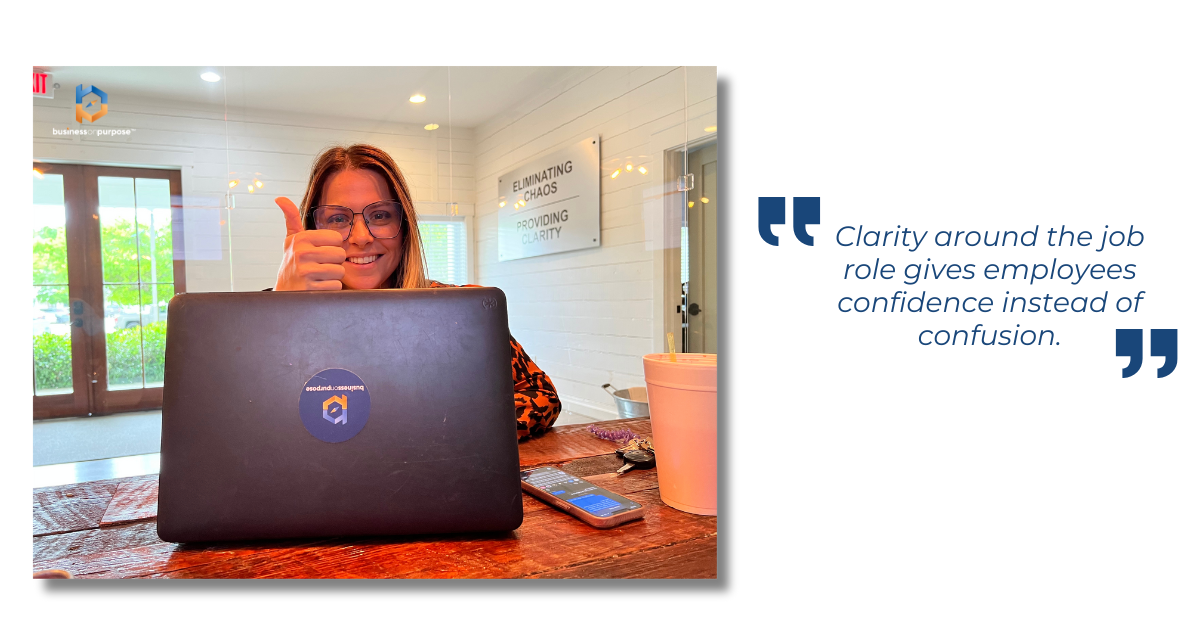
When the job role is clear, expectations are clear.
Tool #2: The Job Role Scorecard
A job role explains what someone does. A scorecard shows how they are doing.
Take the tasks from the job role and ask AI to create a daily, weekly, monthly, quarterly, semi-annual, and annual checklist. Make it specific and descriptive. Paste it into a spreadsheet.
Now your employee knows exactly what success looks like day by day and week by week. The scorecard shows progress and removes ambiguity.
This is where accountability becomes empowering instead of stressful.
Tool #3: Scripted Onboarding
No one wants to be babysat, and no business owner wants to babysit.
Instead of winging onboarding, script the first four weeks of a new employee’s experience. Think about how football teams prepare. Under Coach Bill Walsh, the San Francisco 49ers pioneered scripting the first 15 plays of a game to eliminate jitters and mistakes.
Apply the same idea to onboarding.
Script Week 1, Day 1.
Script Week 1, Day 2.
Decide what tasks repeat and what builds over time.
This gives new hires confidence, reduces anxiety, and allows you to lead instead of micromanage.
Tool #4: The Company Handbook
Most frustration comes from repeat questions.
Time off. Benefits. Travel. Credit cards. Maternity leave.
A handbook creates clarity even when the answer is “handled on a case-by-case basis.” That is still clarity.
The simplest way to build a handbook is to build it as you go. When a question comes up, add it. Review one section per week during team meetings so it becomes a living, breathing document.
Tool #5: The Master Process Roadmap
This is where everything comes together.
Every business runs on four core systems: Marketing, Sales, Operations, and Administration. When you map every process inside those systems, you can see your entire business on one sheet of paper.
This master process roadmap shows how work gets done with or without you. Add it to job roles, scorecards, onboarding, and the handbook, and suddenly your business is no longer trapped in your head.
You have built a training system that scales.
Track What You Build
A training manual only works if it is implemented.
As Thomas Edison famously said, “Vision without implementation is hallucination.”
Track employee training using something as simple as a spreadsheet. Measure progress. Review it consistently. Improvement follows what gets tracked.
Final Thoughts
When you combine a job role, scorecard, onboarding plan, handbook, and master process roadmap, you create an environment where employees know what is expected and feel invited into meaningful work.
That is how you stop chaos and start building a team that leans in.
If you want help building Purpose, People, Process, and Profit in your business, this is exactly the work we do.
Ready to stop winging employee training and start leading with clarity? Begin by writing one job role this week and build from there. Momentum follows action.
Scott Beebe is the founder of Business On Purpose (mybusinessonpurpose.com) and speaker for the AEC industry and author of the book Let Your Business Burn: Stop Putting Out Fires, Discover Purpose, and Build a Business That Matters. Business On Purpose works with business owners to articulate purpose, people, process, and profit to liberate owners from chaos and make time for what matters most.