
If you keep redoing tasks you’ve already handed off, the problem isn’t your team — it’s the handoff itself. Most delegation fails not because people aren’t capable, but because nobody ever defined what “done” looks like. Here’s a practical, four-part system that fixes that fast.
The Delegation Problem Nobody Talks About
At Business On Purpose, we work primarily with business owners in companies with fewer than 100 employees. One owner we worked with wanted to delegate her weekly client updates — a core part of her business that went out every Friday. She handed the task to an administrative team member and expected it to run smoothly.
Three weeks later, she was frustrated. The updates were either not going out at all or were inconsistent and confusing when they did. When we asked if she had shown the admin how to do it, she said, “No, I just told her to do it. It’s common sense.”
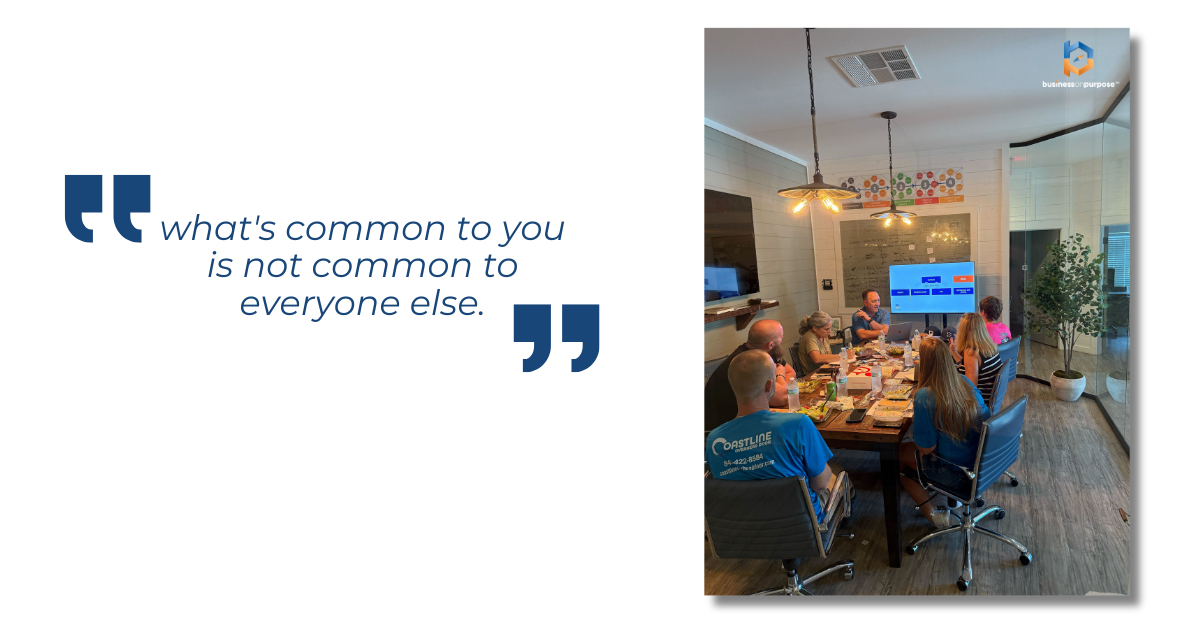
Here’s the truth we had to share with her: what’s common to you is not common to everyone else. You could grow up on the same street, in the same town, go to the same school, and still think completely differently about how a task should be done. Assuming shared understanding is one of the biggest reasons business owners become bottlenecks in their own businesses.
Once we helped her build out a simple master process roadmap, the client updates were going out on time within two weeks. They were on point, covered everything they needed to, and looked exactly like she had done them herself.
What’s common to you is not common to everyone else.
Lead Well.
If you're looking for more resources to work ON your business, we have them.
Start With a Master Process Roadmap
Before you can delegate anything well, you need to know what you’re working with. That starts with what we call a Master Process Roadmap — a master list of every process in your business, organized around four core systems: marketing, sales, operations, and administration.
Here’s how to build yours right now. Grab a sheet of paper, set a timer for 15 minutes, and write down every process you can think of across all four areas. You should be able to map out 50 to 70 processes in that time. If you only come up with five or ten, you haven’t gone deep enough yet.
To get you started, here are some examples by category:
- Administration: payroll, accounts receivable, accounts payable, insurance certificates
- Marketing: website updates, social media channels, content creation
- Operations: product fulfillment, service delivery, inventory management
- Sales: lead follow-up, proposals, contract processing
This master list becomes the foundation for everything else. It’s your cheat sheet for building a delegation roadmap that actually works.
Build Your Delegation Roadmap
Now take that master list and rank every task three ways. This ranking process is what separates real delegation from random task dumping.
Rank by Time
How many minutes per week does each task take? If a task is monthly, divide the time by four. Quarterly, divide by twelve. Yearly, divide by 52. Convert everything into minutes per week so you can see the full picture of where your time is actually going.
Rank by Energy
Does the task give you energy, drain you, or feel neutral? Mark each one as up, down, or neutral. This matters because the tasks that drain you are exactly the ones slowing you down even when you do complete them.
Rank by Delegatability
Score each task on a scale of one to three:
- One: Only you should do this task.
- Two: You thought only you could do it, but it might be delegatable.
- Three: You should have handed this off a long time ago.
Once you’ve ranked everything, look for the overlap: tasks that take a lot of time, drain your energy, and score a two or three on delegatability. Those are your highest-priority items. Package them into an existing role or use them to define a new one.
Delegation without a process is just spreading chaos.

How to Actually Hand Off a Task
Identifying what to delegate is only half the battle. The other half is doing the handoff well. Here’s how it works:
Step One: Process It
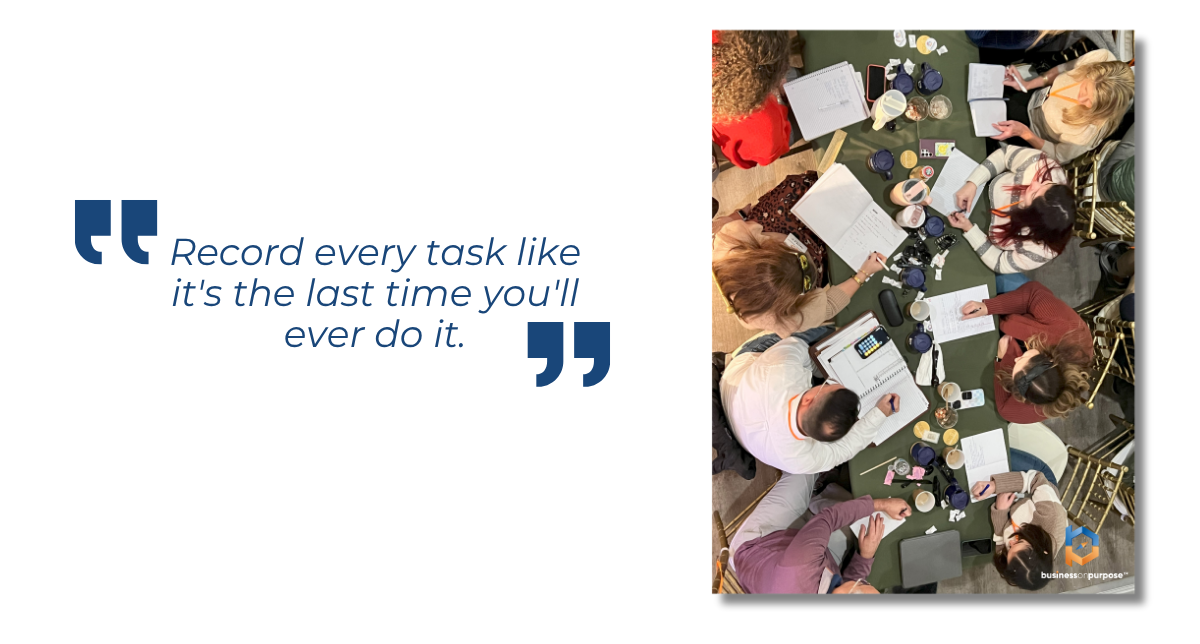
The next time you do the task, treat it like it’s the last time you’ll ever do it. Record yourself walking through it. You can use a voice memo app, an AI transcription tool, or simple written notes. The goal is to capture every step clearly enough that someone else can follow it without asking you questions.
Step Two: Train It
Don’t just hand over the document and walk away. Walk your team member through the process. Let them do it with you watching. Answer questions and refine the steps based on what comes up.
Step Three: Hold Accountability
Delegation without accountability becomes abdication. You need a consistent way to check that tasks are being done correctly and on time without micromanaging every detail.
To keep training consistent all year, use a simple tool we call The Anchor. It’s a spreadsheet where the columns represent weeks of the year and the rows represent your four core systems plus meetings. Each week, you train one process in each core area and hold a weekly accountability meeting. It keeps the team sharp and keeps standards high without requiring you to be involved in every single task.
The Four-Part System in Summary
Here’s the full framework in plain terms:
- Identify all processes using the master process roadmap.
- List the tasks you’re currently doing and rank them by time, energy, and delegatability.
- Process, train, and hold accountability for every task you hand off.
- Repeat weekly training all year long using The Anchor.
That’s it. If you follow this system consistently, you will delegate effectively and your team will deliver results that actually meet your standards.
Record every task like it’s the last time you’ll ever do it.
What About Your Team?
All of this works beautifully when you have the right people in place. But if you’re struggling with your current team or looking to grow it, the system still has to start with you doing the work of documenting and defining what good looks like. You can’t hire your way out of unclear expectations.
At Business On Purpose, our entire mission is to liberate small business owners from chaos and give them back time for what matters most. Too many owners are trapped in the daily grind of their own business, doing work that their team could handle — if only someone had taken the time to show them how.
You don’t have to live in that chaos. The four-part delegation system works, and it doesn’t take as long as you think to get started.
Ready to Get Your Business Running Without You?
If you’re serious about building a business that doesn’t depend on you being present for every task, the next step is getting the right tools and support in place. Visit https://trainnewhires.com/ to take the first step toward a business that works for you — not the other way around.
Scott Beebe is the founder of Business On Purpose (mybusinessonpurpose.com) and speaker for the AEC industry and author of the book Let Your Business Burn: Stop Putting Out Fires, Discover Purpose, and Build a Business That Matters. Business On Purpose works with business owners to articulate purpose, people, process, and profit to liberate owners from chaos and make time for what matters most.