Employee training often feels like a long road trip with impatient passengers in the back seat.
Are we there yet?
Just five more minutes.
That impatience is exactly why many business owners treat training like a nice to have instead of a need to have. We assume people should just figure it out because we did. That belief is a myth, and it is holding businesses back.
By the end of this post, you will know exactly how long employee training should be, what should go into it, and how to structure it so your business can run and grow with or without you.
Why Training Really Matters
Think about elite sports teams or military units. When they are not playing a game or fighting a battle, they are training. Repetition and predictability prepare them to perform when it matters most.
Training is not about micromanaging. It is about leadership.
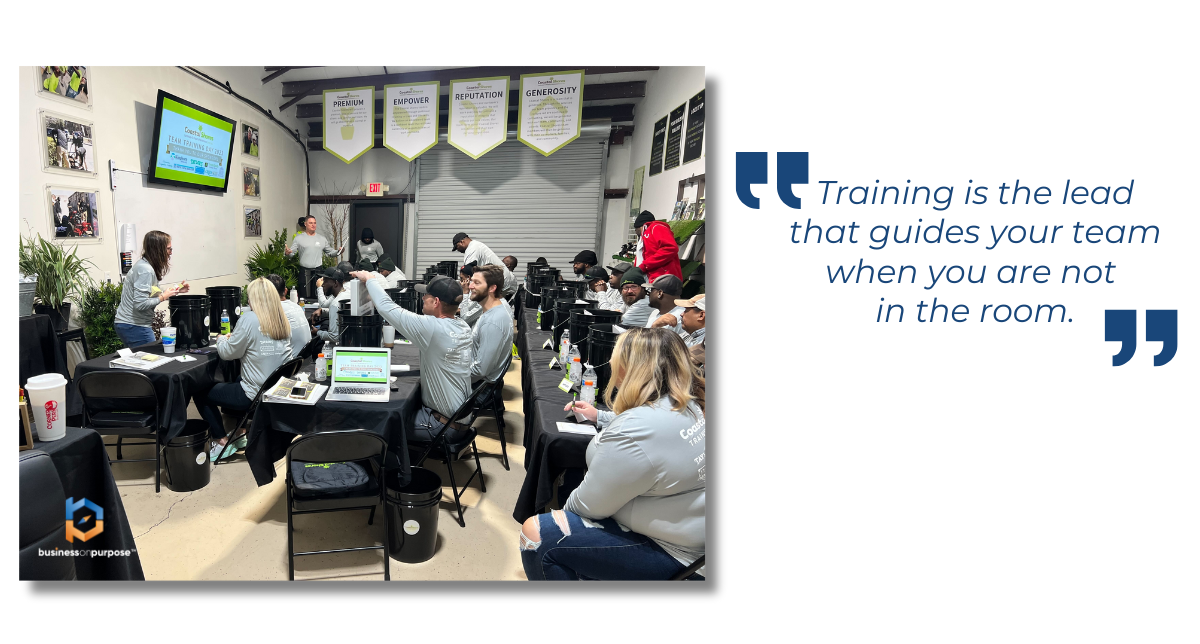
The word train literally means to lead. Picture a horse with reins guiding its direction. Training is the lead that helps your team make the right decisions whether you are present or not.
Lead Well.
If you're looking for more resources to work ON your business, we have them.
The Ideal Length of Employee Training
When business owners ask how long training should be, the answer depends on the level of training. There are three key variations.
- Micro Training: 2 to 5 Minutes
For individual processes or tasks, keep training extremely short. Aim for two to five minutes per topic.
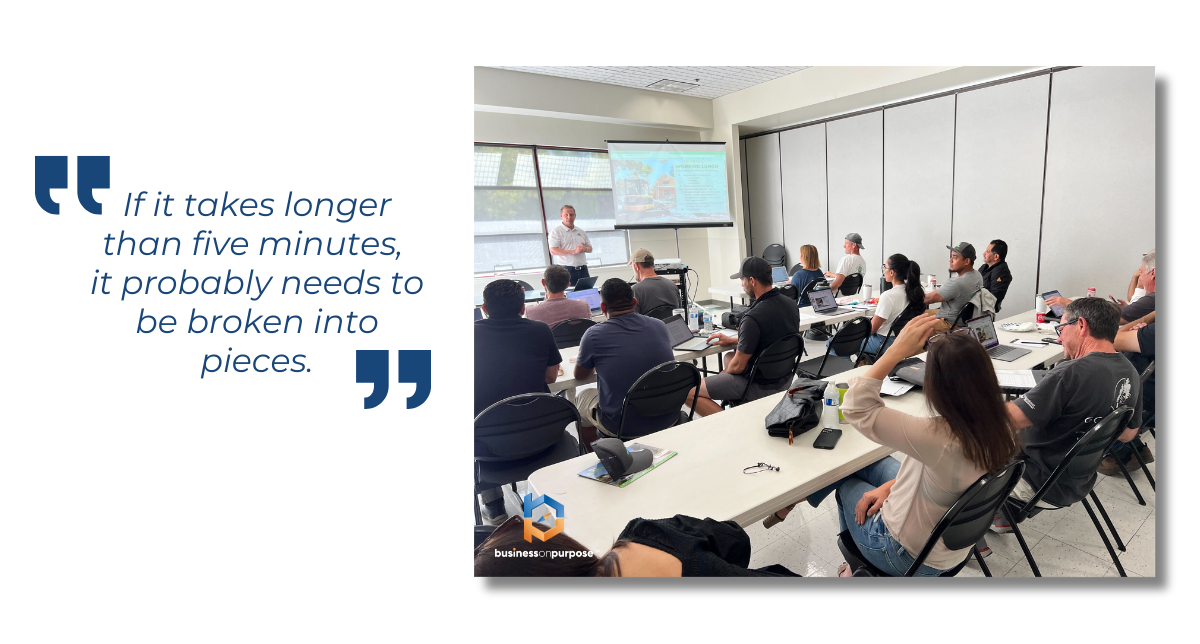
This could be a quick walkthrough of a handbook policy or a screen recording that shows how to complete a task. Short training forces clarity. If it cannot be explained in five minutes, break it into multiple segments.
Each task gets its own short training.
Meetings Should Never Exceed One Hour
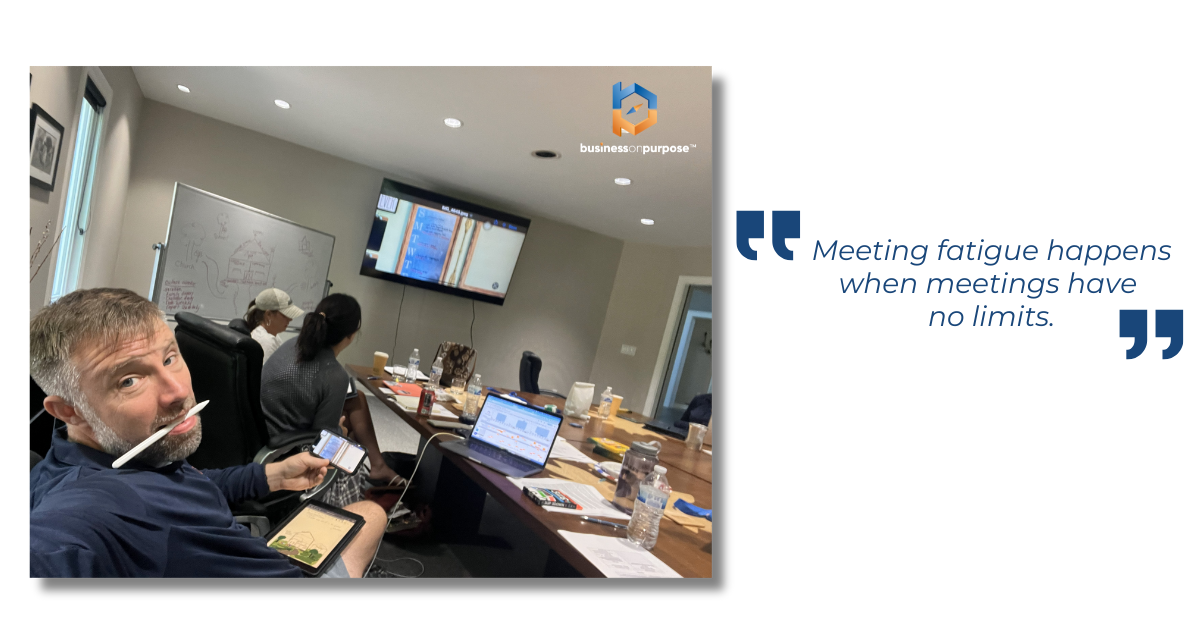
Any team meeting, department meeting, or executive meeting should be capped at one hour.
Long meetings create frustration, reduce productivity, and lead to poor follow through. If you cannot finish everything in an hour, schedule the next session and improve next time.
You control the meeting. Put an artificial limit on it and respect it.
Training Over Days, Weeks, Months, and Quarters
Effective training is not a one time event. It is a system.
Weekly Training Rhythm
Every business is built on four foundational cornerstones.
- Purpose
- People
- Process
- Profit
Within the process category, every business runs on four core systems.
- Marketing
- Sales
- Operations
- Administration
Each week, train one small item from each system. Marketing, sales, ops, and admin. Each item should take only two to five minutes.
Over time, these small sessions compound into deep understanding and consistency.
Monthly and Quarterly Training
Once a month, focus on bigger picture topics like vision or alignment. Once a quarter, address major items such as budgeting, performance reviews, or strategic planning.
Short sessions build the habit. Long term cycles reinforce direction.
The Business Owner Is the Chief Training Officer
If you own the business, you are the chief training officer.
That does not mean you personally deliver every training. It does mean you are accountable for ensuring training happens consistently across purpose, people, process, and profit.
Training cannot be outsourced as a responsibility. If you are not driving it, it will not get done.
Leadership means influencing direction. Without training, there is no lead guiding your team forward.
Start Training the Right Way From Day One
The best long term training begins the moment someone becomes a new employee. Clear onboarding sets expectations, builds confidence, and accelerates performance.
If you want to create effective long-term training for your team, start with new employee onboarding. Click the link below for the complete training guide outlining actionable ways to train new hires the right way from the beginning.
Scott Beebe is the founder of Business On Purpose (mybusinessonpurpose.com) and speaker for the AEC industry and author of the book Let Your Business Burn: Stop Putting Out Fires, Discover Purpose, and Build a Business That Matters. Business On Purpose works with business owners to articulate purpose, people, process, and profit to liberate owners from chaos and make time for what matters most.