Here is a practical, step-by-step framework to build a scorecard-driven system that brings clarity, consistency, and real accountability to your sales and marketing team.
The Real Problem Is Not Sales. It Is Process.
When we talk to contractor owners and small business owners who have a team responsible for sales or business development, we hear the same thing over and over: “I gave them the goalposts and let them run.” It sounds great at a conference. It makes for a good book title. But in reality, life and business run on repetition, predictability, and meaning.
Too many times, business owners show up to an expo or a convention looking for a band-aid to fix a gaping wound. But the wound is rarely a sales problem or a marketing problem. Almost always, it is a process problem.
Think about it this way. Sales is like jet fuel. If you pour jet fuel on a fire that is already raging out of control, you do not fix the fire. You make it bigger. If you pour the gasoline of sales onto a chaotic business that is low on accountability, you do not solve the chaos. You multiply it.
Sales poured onto a chaotic business just creates more chaos.
Lead Well.
If you're looking for more resources to work ON your business, we have them.

Step One: Map Out Your Business Development Workflow
Before you can hold anyone accountable, you need to map out exactly what your business development workflow looks like. From this point forward, think of it as your bizdev workflow because the goal is to develop business, not just take orders.
Here is a quick but important reality check. During the pandemic, the construction industry boomed. The phone never stopped ringing. Business development people stopped going outbound and started sitting behind the counter, taking orders. It made them comfortable. Now that the market has shifted, many of those same people are pushing back on owners saying, “I did not have to do this three years ago. Business just came to me.” That is on the owner. You have to develop the process and the expectation now.
So here is your homework. As soon as you finish reading this, hit record on the voice memo app on your phone. Start talking. Walk through your entire business development process from left to right, marketing through sales. Do not worry about perfection. Just do a full brain dump.
Think about your four core systems in this order:
- Marketing comes first. People need to know who you are before you can sell them anything.
- Sales comes second. They need to sign a contract before you deliver a service.
- Operations comes third. You deliver the work after the contract is signed.
- Administration comes last. You account for and manage everything after the work is underway.
Start at marketing. Imagine no one knows who you are. What is the very first thing that happens? Maybe it is a trade show. Maybe it is a YouTube video. Maybe it is someone referring you from a job you did two years ago. Walk through every step until you reach a signed contract. This exercise could take you 30 to 45 minutes. That is fine. Get it all out.
Once you have that recording, take it into a paid AI tool and use this prompt: “Turn this into a full business development workflow that my marketing and sales team can see.” What you will get back is a visual workflow your team can actually follow, and a starting point for your accountability scorecard.
Step Two: Build a Scorecard Around the Right Metrics
Track one number in marketing and one number in sales.
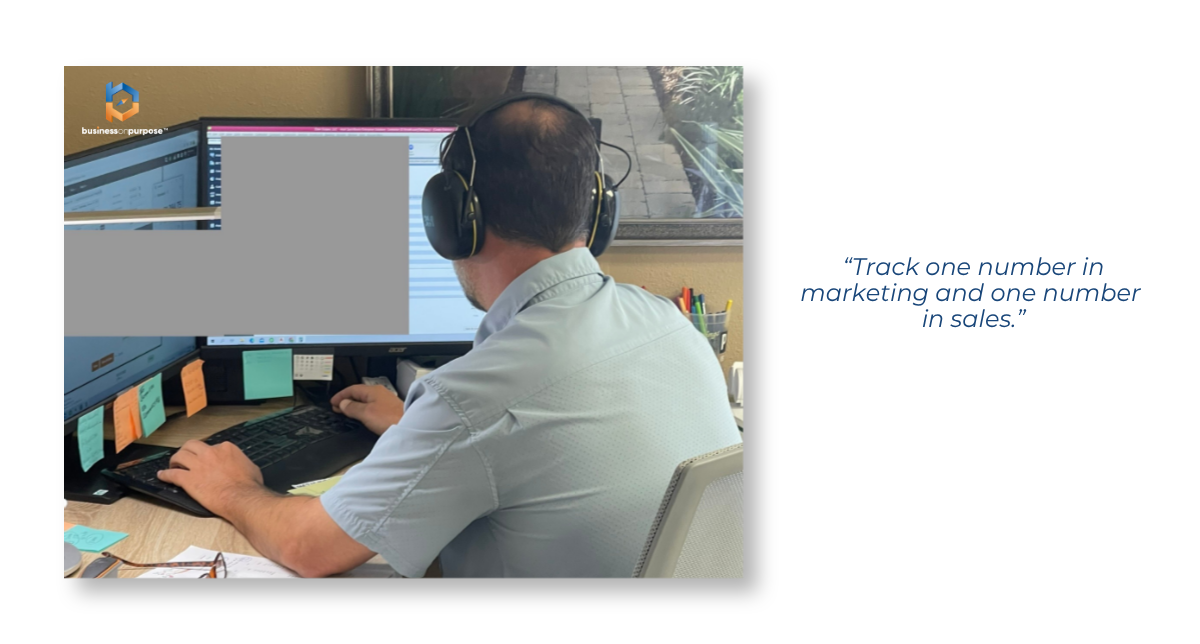
Here is the key principle: identify one core number for marketing and one core number for sales.
For marketing, that number is likely the number of booked appointments. For sales, it is the number of closed contracts or new clients. That is it. Those are your north stars.
But here is the important nuance. The right metric for your business depends entirely on how your business actually generates revenue. If 80 percent of your business comes from word-of-mouth referrals, tracking website contact form leads is an irrelevant metric for you. What you should be tracking is the number of word-of-mouth referrals received each week and where they are coming from. Make sure your metrics reflect your actual business development workflow, not someone else’s.
Once you have your one number for each area, back it up with the key tactics and activities that drive those numbers. Those tactics become the items on your scorecard, tracked daily, weekly, monthly, and quarterly.
Here is a real example from inside the Business On Purpose team. We are a team of 12, and about seven of our people carry both coaching and business development responsibilities. In marketing, we track the number of booked appointments. The tactics that drive that number include lunch-and-learns completed in a month and speaking engagements secured in a month. In sales, we track the number of closed clients. The tactics include how many people actually showed up to their booked appointments and whether the coach followed our six core discovery questions on the sales call.
Those six questions are:
- Tell me about your business.
- What do you want?
- What are the roadblocks?
- What does life look like in three years?
- What are you willing to invest?
- What questions do you have for me?
That is a real sales script you can adapt for your own team right now.
Step Three: Run a Weekly Marketing and Sales Meeting
A scorecard without a consistent review cadence is just a document that collects dust. You need a weekly, one-hour, agenda-driven marketing and sales meeting every single week, 50 weeks a year.
Notice the order. It is a marketing and sales meeting, not a sales and marketing meeting. Marketing comes first because it feeds sales.
Here is a simple meeting structure that works:
- Start with big wins from the week. Keep it brief and energizing.
- Move into marketing metrics. Review the scorecard numbers and tactics.
- Move into sales metrics. Review the scorecard numbers and tactics.
- End by asking: Where are you stuck? What do you need help with?
That final question is where the real leadership happens. It turns the meeting into a mastermind where your team can problem-solve together and you can remove the obstacles standing between your people and their results.
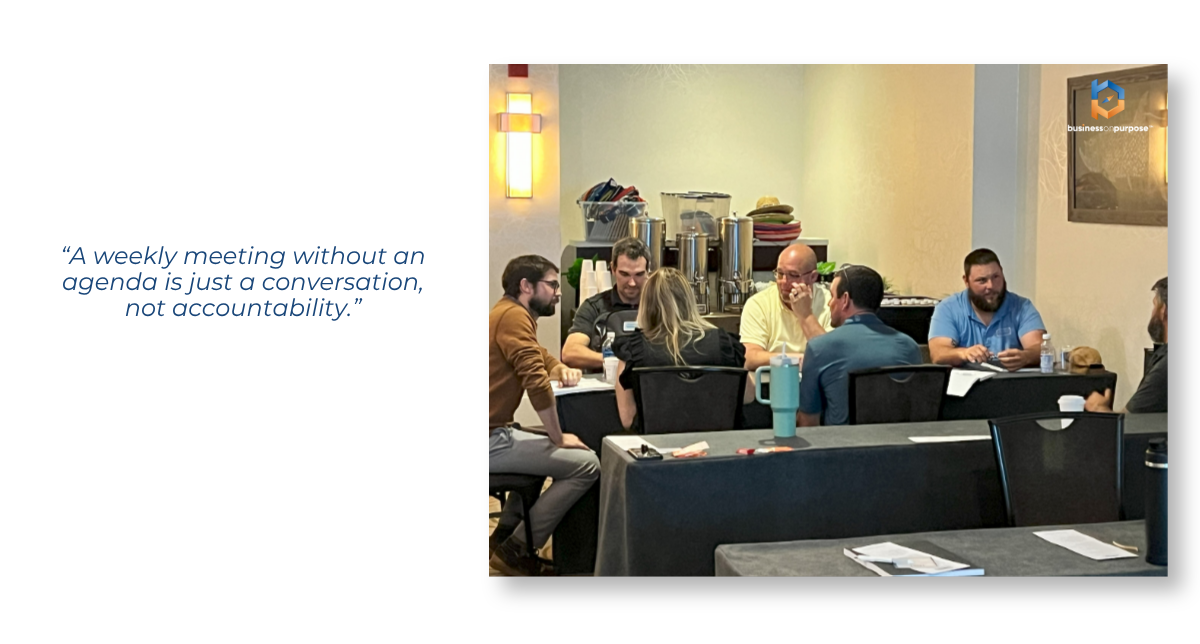
A weekly meeting without an agenda is just a conversation, not accountability.
Vision Without Implementation Is Hallucination
Thomas Edison said it best: “Vision without implementation is hallucination.” You can watch videos, read books, and attend conferences all day long. But none of it matters until you implement.
Here is your action plan broken down simply:
- Hit record and brain dump your entire business development workflow.
- Use AI to turn that recording into a visual workflow document.
- Identify one core metric for marketing and one for sales.
- Build a scorecard with the tactics that drive those numbers.
- Schedule and run your weekly marketing and sales meeting starting this week.
That chaos you felt before reading this? It does not have to stay. A clear process, a documented workflow, and a consistent scorecard will liberate you from that chaos so you can spend your time on what matters most, including a business that can actually run without you.
Ready to Go Deeper?
If this resonated with you and you want the full framework for building systems, scorecards, and accountability inside your business, visit businessonpurpose.com/healthy to take the next step. We help small business owners build businesses that run without them, and we would love to help you do the same.