If you’re working 60-hour weeks and everything still depends on you, the problem probably isn’t your team. The problem is the system you never got around to building. The good news? You can build your first real business system in under 30 minutes, and this post will show you exactly how.
What McDonald’s Can Teach Every Small Business Owner
Here’s something worth thinking about. McDonald’s doesn’t hire professional chefs. Not in Tokyo. Not in New York. Not in the smallest town in South Carolina. And yet, that fry tastes exactly the same no matter where you go.
That consistency isn’t magic. It’s a system.
The layout of every McDonald’s is fundamentally the same. The fry machines are in the same spot. The process for making every item is documented and repeatable. That predictability allows team members at every skill level to pick up the process and deliver the same product every single time.
Now, the goal here isn’t to turn your business into McDonald’s. But there is one page worth borrowing from their playbook: when you systematize your work, you give average people the ability to deliver exceptional results.
“The process by which you deliver the product is the product you’re actually selling.”
Lead Well.
If you're looking for more resources to work ON your business, we have them.
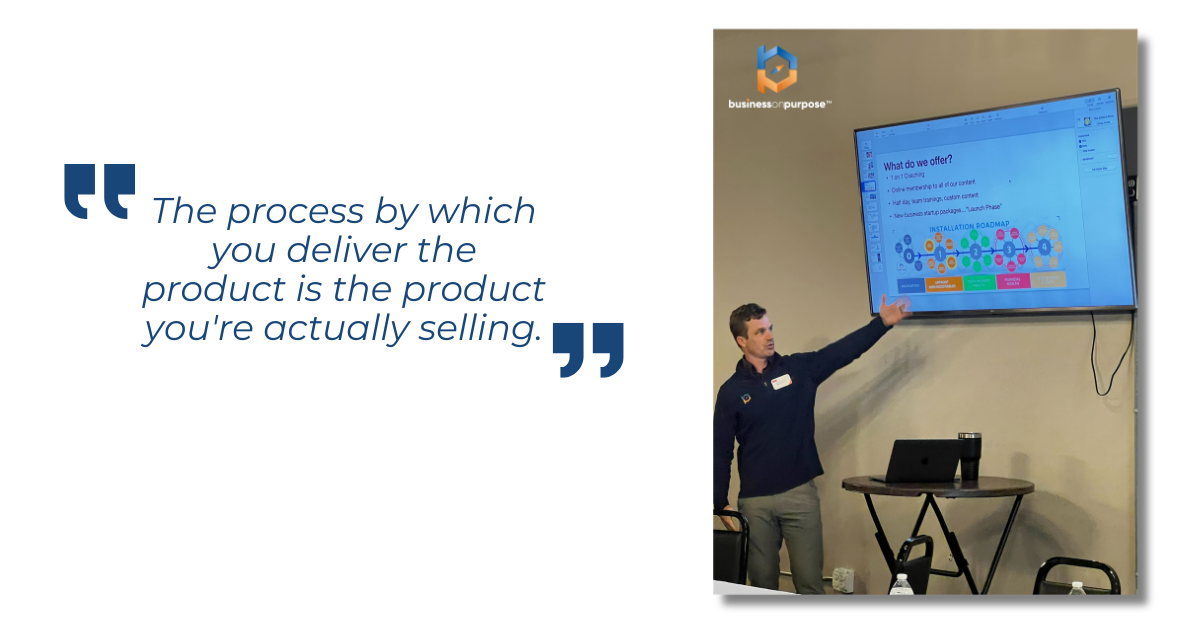
Most business owners obsess over their product. But the real product your customer is buying is the experience of how that product gets delivered. When delivery is inconsistent, trust erodes. When delivery is systematic, trust compounds.
The Four Cornerstones of Every Business
At Business On Purpose, we’ve spent years essentially autopsying businesses to understand how they actually work. What we found is that every business is built on four foundational cornerstones: purpose, people, process, and profit.
Inside the process cornerstone, there are four core systems:
- Marketing
- Sales
- Operations
- Administration
The order matters. You can’t account for something you haven’t sold. You can’t sell something you haven’t built. And you can’t build something if nobody knows you exist. Think of these four systems like the electrical system in a house. We call it one system, but inside it there are wires, switches, plugs, and lights. Each of those individual components is a process. Together, they make up the larger system.
The biggest mistake business owners make is trying to build all four systems at once. Don’t do that. Pick one. Start there. For most businesses, the best place to begin is operations, because most owners are already experts in what they deliver. That expertise just needs to be extracted from their head and put on paper.
How to Build Your First Business System Step by Step
Step 1: Do a Five-Minute Brain Dump
Set a timer for five minutes. Think about every single step involved in fulfilling your product or service. If you’re a home builder, that might include pulling permits, pouring foundations, scheduling subcontractors, and managing inspections. If you run an ice cream shop, that’s facility cleanliness, ice cream production, storage, and freezing schedules.
Don’t filter. Don’t organize. Just list every process that currently lives in your head.
Step 2: Isolate the Most Painful Process
Once you have your full list, identify the one process that causes you the most headaches. The one that’s hardest to delegate. The one you’ve been holding onto because you’re not sure anyone else can do it right.
That’s the one you start with.
“Document every step as if you’re teaching a kindergartener.”
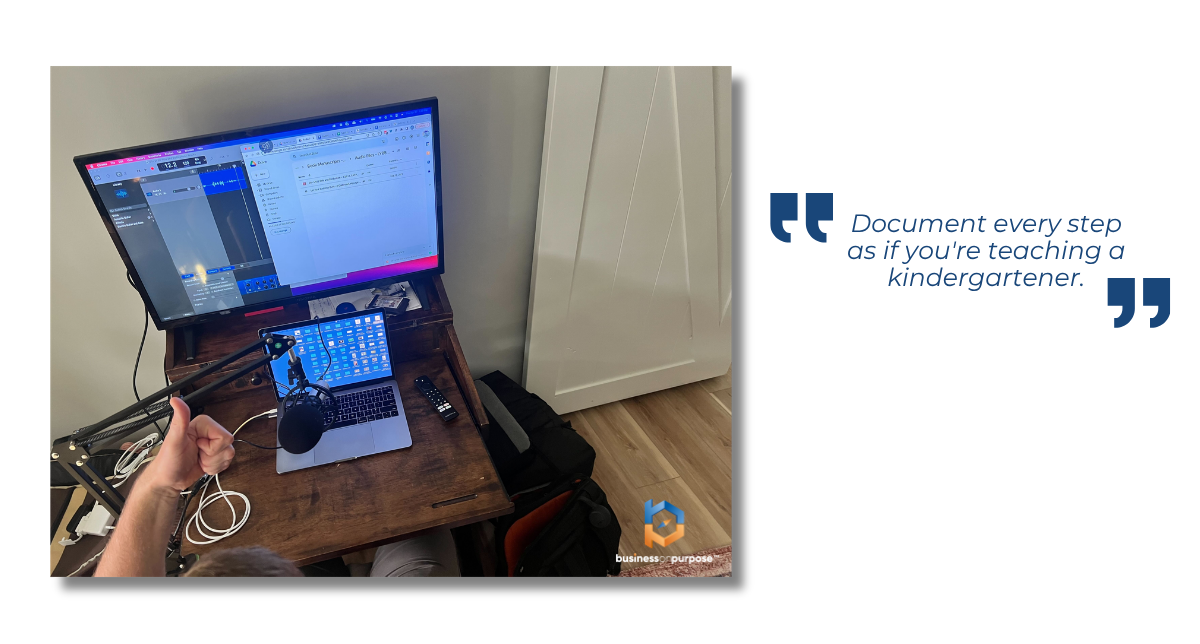
Here’s the key insight: don’t go off into isolation and try to write the perfect process document from memory. Instead, the next time you actually do that task, document it in real time. Write down every step as you go, as if you’re explaining it to someone with zero experience. That’s the most accurate and useful version of the process.
Step 3: Assign Ownership and Define Success
Once the process is named and documented, two things need to happen. First, assign ownership. Decide who is going to own this process going forward. Second, define what success looks like. What are the measurable outcomes? What does “done right” actually mean?
This is where the IPO methodology comes in: Input, Process, Outcome. The person you’re delegating to needs to understand not just what to do, but what a successful result looks like at the end. When you do this across multiple processes and assign them to one person, you’ve essentially just written a job role. That’s two powerful things accomplished at once.
Step 4: Use the MAWL Method to Hand It Off
Too many business owners either micromanage forever or hand something off and hope for the best. Both approaches fail. The better path is a framework called MAWL: Model, Assist, Watch, and Leave.
Here’s how it works in practice. At Business On Purpose, training team members to speak and teach is part of scaling the business. The founder can’t be the only one on stage. So the process looks like this:
- Model: Do the thing yourself. Record it. Let them watch how it’s done.
- Assist: Help them as they prepare to try it themselves.
- Watch: Observe them doing it without jumping in to take over.
- Leave: The next time, they do it completely on their own.
“Walk with them, then part ways so they can grow their own ethos.”
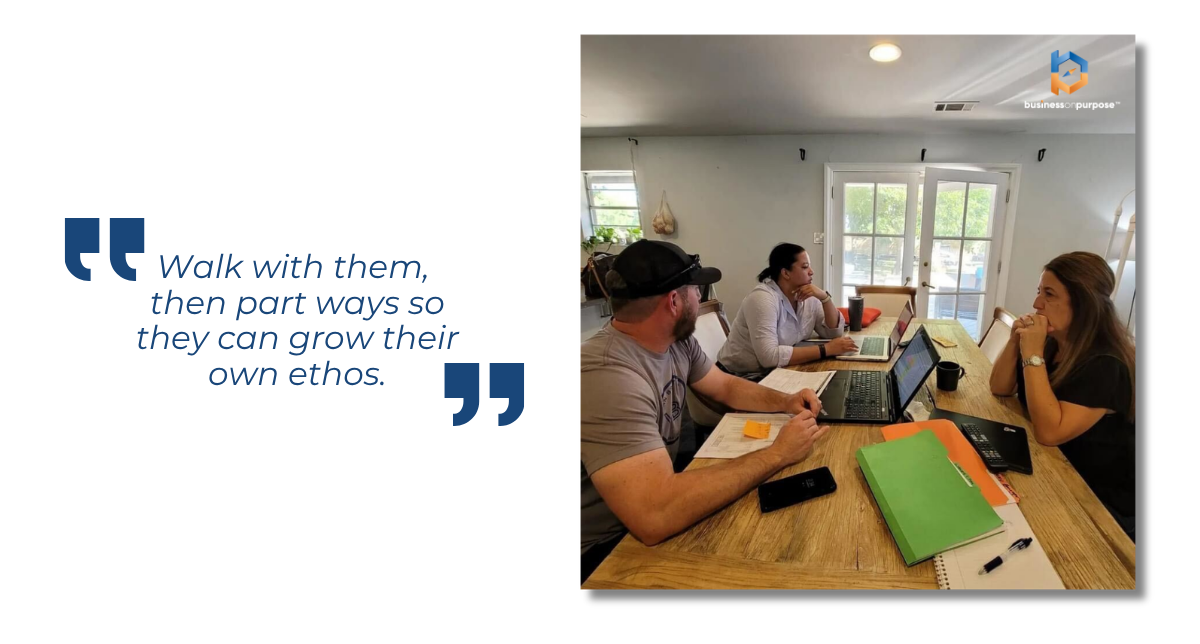
This is not abdication. Abdication is handing something off without preparation and crossing your fingers. MAWL is intentional investment. You walk alongside someone until they can run on their own, and often they end up doing it better than you did.
You’ve Built Your First System. Now What?
The process is simpler than most business owners expect. Brain dump every step. Isolate the most challenging process. Document it in real time. Assign it to a person with clear success metrics. Train them using the MAWL framework. That’s it.
The real transformation isn’t in the document you create. It’s in the person you invest that system in. When your team has clear processes, clear ownership, and clear outcomes, they don’t need you looking over their shoulder anymore. And that’s when a business really starts to run.
If your business still depends entirely on you, it’s not a business. It’s a job. Building systems is how you change that, one process at a time.
Ready to Take the Next Step?
If you want a full framework for building a business that runs without you, including how to hire, train, and set your team up for success, head over to http://solvecashflow.com/ You’ll find the tools and resources you need to stop being the bottleneck in your own business and start building something that works without you in the middle of everything.
Scott Beebe is the founder of Business On Purpose (mybusinessonpurpose.com) and speaker for the AEC industry and author of the book Let Your Business Burn: Stop Putting Out Fires, Discover Purpose, and Build a Business That Matters. Business On Purpose works with business owners to articulate purpose, people, process, and profit to liberate owners from chaos and make time for what matters most.