If your marketing and sales results feel like a rollercoaster — 15 clients one year, two the next, then 87 the year after — you do not have a hustle problem. You have a systems problem. The good news is that it is completely fixable, and you do not have to do it alone.
Improving your marketing and sales department does not come from working harder. It comes from being intentional, building the right structure, and executing with consistency over time. Here is exactly how to do it.
Start With the Order: Marketing Always Comes Before Sales
Before you can fix anything, you need to get the order right. Every business is a collection of systems, and every system is a collection of processes. There are four core systems in every business: marketing, sales, operations, and administration. And the order matters.
Marketing always comes before sales. Sales always comes before operations. Operations always comes before administration. Think about it this way: you cannot build something you have not sold. You cannot sell something when nobody knows you exist. When we blur the line between marketing and sales by lumping them together, we lose the clarity that makes each one work.
So step one is simply this: separate them. Treat marketing and sales as two distinct systems with their own goals, their own activities, and their own results. That single shift in thinking will change how you approach everything else.
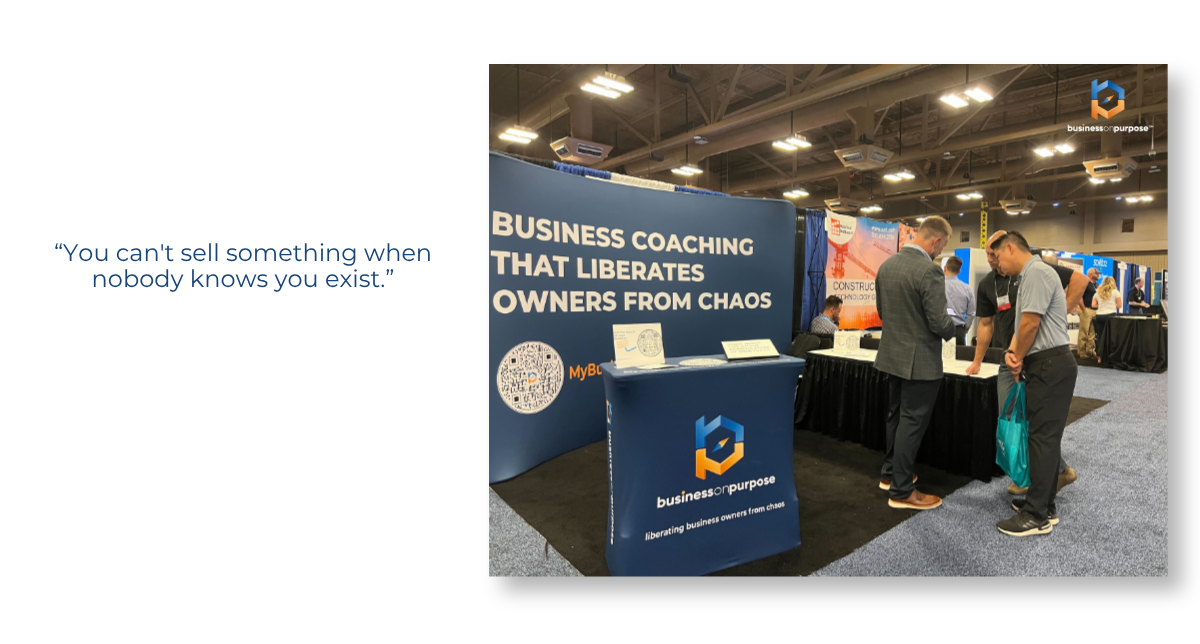
You can’t sell something when nobody knows you exist.
Lead Well.
If you're looking for more resources to work ON your business, we have them.
Build a Scorecard for Each Department
Once you have separated marketing from sales, the next step is to create a scorecard for each one. Not one combined scorecard — two separate scorecards that track what are commonly called KPIs, or key performance indicators.
Here is a simple way to structure each scorecard. Use two columns. The first column is activities and actions. The second column is the result. Notice the result is singular, not plural. In each system, you are really only chasing one result at a time.
For your marketing scorecard, that one result is almost always booked appointments — one-on-one conversations with qualified prospects. For your sales scorecard, that one result is new clients or closed contracts. Everything else in the scorecard feeds those two outcomes.
To figure out your marketing activities and actions, ask yourself one simple question: where has 80% of your business come from in the past? The answer tells you exactly which actions to prioritize. From there, list the three, five, or eight activities that will consistently and cumulatively lead to that one result of booked appointments.
For your sales scorecard, the activities might include things like conducting excellent discovery appointments, using a proven sales script, and doing relentless follow-up with every prospect. These are not glamorous tactics. They are repeatable ones. And repeatable is what creates results.
Consistent results come from repeatable actions, not random bursts of effort.

Give Your Scorecard a Home: The Weekly Meeting
A scorecard that lives in a drawer does nothing. The next step is to give it a regular, consistent home — and the best way to do that is with a once-weekly, one-hour, agenda-driven, leader-led marketing and sales meeting.
Here is what that meeting agenda looks like:
- Celebrate big wins. Go around the room and share one marketing or sales win from the past week.
- Review annual goals. Keep both marketing and sales goals visible and top of mind every single week.
- Review marketing scorecard. Walk through your activities, actions, and the result.
- Review sales scorecard. Same process for sales.
- Assign next steps and action items based on the discussion.
Then everybody is deployed, and you come back and do it again next week. This meeting is where the scorecard becomes real. It creates the repetition, predictability, and meaning — what we call the RPMs of great leadership — that turn your marketing and sales from a guessing game into an actual functioning department.
You do not need a massive team to pull this off. At Business On Purpose, this approach runs with a team of 12 people and no full-time marketing director. The meeting is the engine. The scorecard is the fuel.
Add Training to Accelerate Your Results
If you want to put serious momentum behind your marketing and sales department, add regular, recurring training to the mix. This is where most businesses leave significant results on the table.
One practical way to do this is to send a short weekly marketing tip to your team before each Monday meeting. Over the course of a year, your team receives 50 focused, practical marketing insights. That kind of consistent, dripped training builds skill and confidence without overwhelming anyone.
Another powerful tool is what we call the anchor — a 52-week training spreadsheet that maps out every topic you want your team to learn throughout the year. This includes marketing processes, sales processes, CRM usage, follow-up strategies, prospect sourcing, and more. Each week, one training item gets covered. Not everything at once. Just one thing, done consistently, week after week.
The key is to document every process first. Once your marketing and sales activities are documented, you can train on them repeatedly. And here is something important to remember: documenting a process does not mean you will always remember it. Even the person who wrote the documentation forgets. That is exactly why you train on it continuously throughout the year.
Document your processes, then train on them relentlessly all year long.

You Were Not Built to Do This Alone
At this point, you might be thinking: this is a lot. And you are right. But here is the thing — you are not supposed to do all of this by yourself. That is actually the whole point of building systems.
When you build a properly structured marketing and sales department with scorecards, weekly meetings, and recurring training, you create the foundation to delegate those responsibilities to the right people. Not just to hand off tasks, but to develop team members who will eventually do it better than you ever could. That frees you from the chaos, creates margin in your schedule, and puts you back in a position to focus on the things that matter most in your business and your life.
The goal is a business that runs without you — and a healthy marketing and sales department is one of the most important building blocks to get there.
Ready to Build a Healthier Business?
If you are serious about creating systems that give you freedom instead of more chaos, this is just the beginning. Business On Purpose has the tools, frameworks, and coaching to help you build every part of your business the right way.
Visit businessonpurpose.com/healthy to take the next step toward a business that works for you, not the other way around.
Scott Beebe is the founder of Business On Purpose (mybusinessonpurpose.com) and speaker for the AEC industry and author of the book Let Your Business Burn: Stop Putting Out Fires, Discover Purpose, and Build a Business That Matters. Business On Purpose works with business owners to articulate purpose, people, process, and profit to liberate owners from chaos and make time for what matters most.