Most small business owners treat marketing and sales like they’re the same thing. They’re not, and that one mistake could be quietly costing you growth, consistency, and the ability to ever step away from your business.
Whether you’re a solo operator or leading a growing team, understanding the difference between these two systems, and knowing when to separate them, is one of the most important decisions you’ll make as a business owner.
The Swiss Army Knife Stage of Business
When Scott Beebe started Business On Purpose back in 2015, it was just him. No marketing department. No sales team. No outsourcing. Just one person wearing every hat, doing everything from creating the vision and mission to advising clients and building what would eventually become a full-scale operating system for small business owners.
Sound familiar? That’s what we call the Swiss Army knife stage. When you’re just starting out, or when there are only two or three of you, everyone does a little bit of everything. You have to. But as your business grows, you have to start delegating the authority over specific systems, and one of the hardest areas to hand off is marketing and sales.
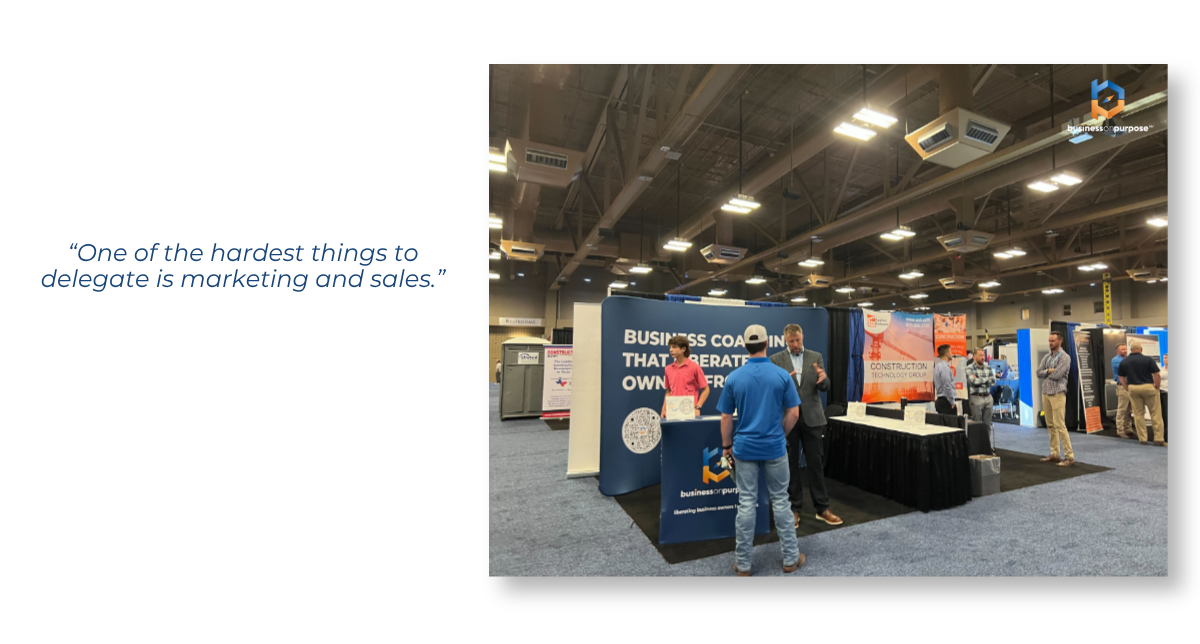
“One of the hardest things to delegate is marketing and sales.”
Lead Well.
If you're looking for more resources to work ON your business, we have them.
The Four Core Systems Every Business Runs On
At Business On Purpose, we teach that every business has four foundational cornerstones: purpose, people, process, and profit. Operating within the process cornerstone are four core systems: marketing, sales, operations, and administration.
And here’s something critical to understand. Marketing always comes first. You cannot account for something you have not delivered. You cannot deliver something you have not sold. And you cannot sell something if no one knows you exist. Marketing has to come before the sales process, every single time.
As your business grows, you can begin to have people devoted to each of these systems. But here is the order most owners naturally follow when letting go of responsibilities:
- Bookkeeping – Most owners dislike the books and pass this off first.
- Operations – Hiring someone to help with production, whether that’s a paralegal, a site superintendent, or an ice cream scooper.
- Marketing – Specifically social media and digital marketing, while still holding on to the in-person, relationship-based side.
- Sales – The conversion of a prospect into a client is almost always the very last thing an owner lets go of.
Why do owners hold on to marketing and sales the longest? Because deep down, most of us believe nobody can market like we market and nobody can sell like we sell.
Marketing and Sales Have Always Been Separate Systems
Here is the truth that changes everything: marketing and sales have always been two separate systems. Even when it was just you doing everything, you were still performing two distinct types of activities.
Your marketing actions had one result: qualified prospects. Your sales actions had one result: closed leads. The activities that drive each of those results are completely different.
“Marketing and sales are always separate. You just haven’t been able to segment them yet.”
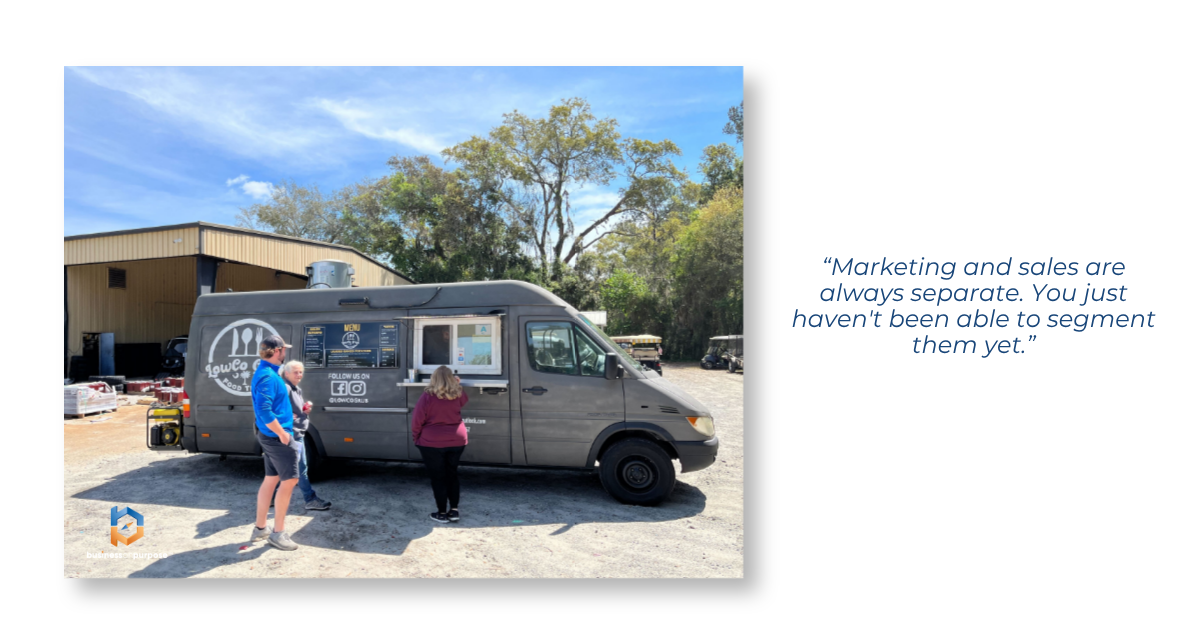
Marketing activities look like this: updating your website, attending networking events, speaking engagements, creating one-pagers, managing print materials, and running social media.
Sales activities look entirely different: writing sales scripts, doing radical follow-up, and nurturing qualified prospects who have not yet converted.
The danger in combining them is that sales always feels sexier. Closed deals feel like results. So when you lump the two together, you naturally over-prioritize sales activities while the long-term, compounding work of marketing gets neglected.
You Don’t Have a Marketing Problem. You Have a Process Problem.
When business owners come to Business On Purpose frustrated with their revenue, they often say things like, “We have a marketing problem,” or “We have a sales problem.” The honest, kind response is: no, you don’t.
What you have is a process problem. You have not identified marketing as its own system made up of documented, repeatable processes. And because of that, those processes either are not being worked consistently, or they cannot be handed off to someone else to work with repetition and predictability.
The investment you make in marketing and sales, and notice the word is investment, not cost, is a compounding return. You put a dollar in today and you may see nothing tomorrow. But in a month you get a little back. In three months a little more. In twelve months, twelve years, you are building something with real momentum.
Albert Einstein called compounding interest the eighth wonder of the world. That same principle applies to your marketing and sales systems when you give them the time and consistency they deserve. But you will never get there if you keep treating them like one messy, blended responsibility instead of two distinct systems.
What Every Marketing and Sales System Should Include
Regardless of whether you are a team of one or a team of twenty, here is what both your marketing system and your sales system should have in place:
- KPIs (Key Performance Indicators) – Know exactly what actions, activities, and results you are tracking for both systems separately.
- A Marketing and Sales Meeting – Yes, this can be a combined meeting, but you discuss marketing and sales as separate topics because they connect at the handoff point between generating a qualified prospect and closing a deal.
- Ongoing Repetitive Training – The best way to build training is to document while you do. The next time you update your website, record it like it is the last time you will ever do it. The next time you run a sales call, do the same. Then run those recordings through AI to generate ongoing, structured training content your team can use week after week.
“Record every sales call like it’s the last one you’ll ever make.”
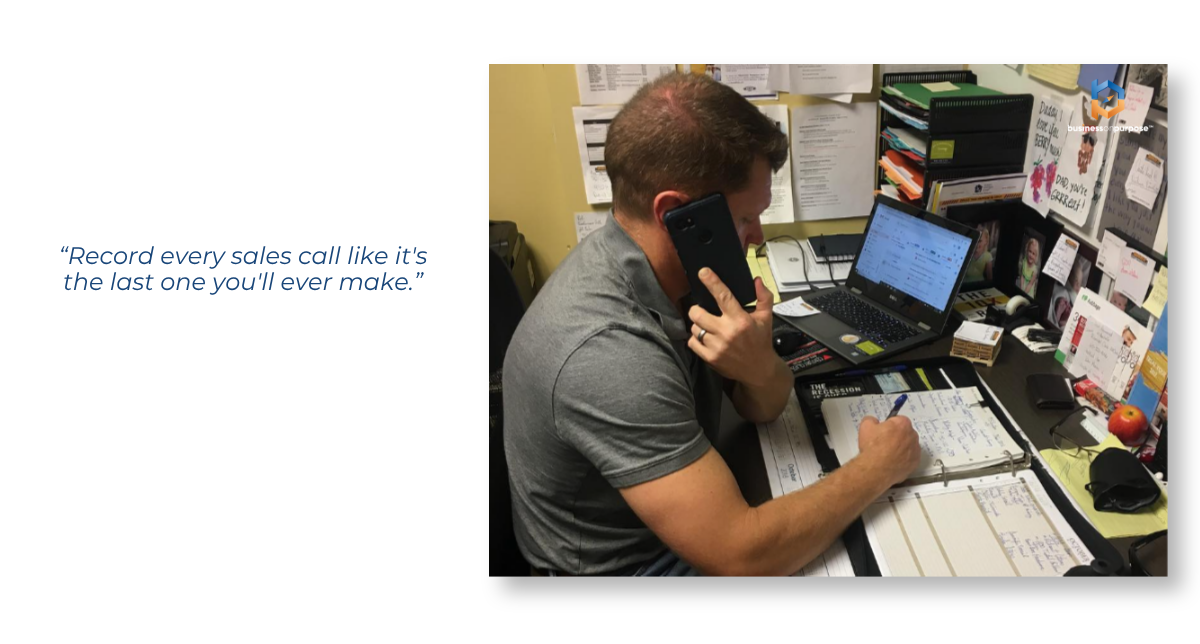
When you have clear KPIs, you know exactly what you are tracking. When you have a strategy, you know where you are headed. When you have a regular meeting, your team stays aligned. And when you have training, your people are consistently sharpening the processes that lead to real, lasting results.
Separate the Systems. Scale the Business.
Whether you are just getting started or you are leading a growing team, the principle is the same. Marketing is its own system. Sales is its own system. They are not the same, they are not interchangeable, and treating them as one is one of the most common reasons small businesses plateau.
Start by seeing them separately. Document the processes within each. Build KPIs, a meeting rhythm, and ongoing training around both. And when the time comes to hand them off, you will have a system someone else can actually run.
That is how you build a business that does not depend entirely on you being in it every day.
Ready to take the next step toward a healthier, more systemized business? Visit businessonpurpose.com/healthy to get the tools and resources you need to start building a business that runs without you.
Scott Beebe is the founder of Business On Purpose (mybusinessonpurpose.com) and speaker for the AEC industry and author of the book Let Your Business Burn: Stop Putting Out Fires, Discover Purpose, and Build a Business That Matters. Business On Purpose works with business owners to articulate purpose, people, process, and profit to liberate owners from chaos and make time for what matters most.