By the end of this article, you will understand how harmful it is to operate a business without proper training and development. You will also learn who carries the responsibility for training and discover two simple strategies to begin building training programs from resources already inside your business.
When finger-pointing begins around who has or has not been trained, the only thing that suffers is the business itself. There is an African proverb that says, “When two elephants fight, it is the ground that suffers.” The same is true in your organization when development is ignored.
You already know your team needs to grow. The real question is: Who is responsible for making that happen?
Why Training and Development Matter
Without training, your team defaults to doing whatever seems right in the moment. Each person relies on personal experience rather than a proven process. Productivity becomes unpredictable.
A powerful example of this came from a builder conference where attendees were given identical small bags of Lego bricks and told to build a duck in two minutes. Every duck looked different. Then they were handed a step-by-step guide and only forty-five seconds to build it again. This time every duck looked exactly the same.
The difference was training and documented processes.
Lead Well.
If you're looking for more resources to work ON your business, we have them.
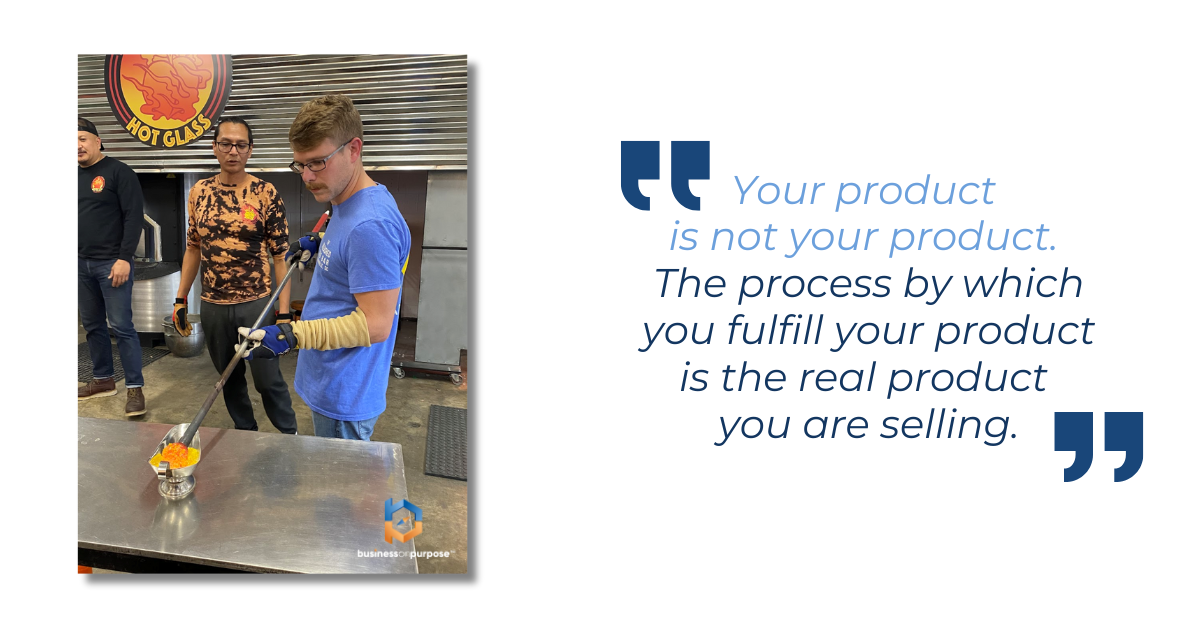
If your processes remain in your head instead of being documented, the business becomes chaotic and inconsistent. People say, “No one wants to work anymore,” but often the truth is that no one wants to work inside an unpredictable environment.
So Who Is Responsible for Training?
- You, the Business Owner
If you own the business, you are the CTO, the Chief Training Officer. This does not mean you spend eight hours a day on training. It means you hold ultimate responsibility for ensuring training happens.
Even if you only have two or three employees, now is the best time to build a training culture. When you grow to ten, twenty, or fifty employees, you will already have a strong foundation.
- The Employee Doing the Work
Every employee carries responsibility for capturing the processes in their role. This is called the systems mindset:
Whatever you are about to do, document it as if it were the last time you will ever do it.
This creates redundancy and prepares the business for transitions. Employees often say, “No one can do it like I can.” The real reason is usually that they have never trained anyone else to do it.
- The Rest of the Team
A great culture models training and expects growth. Everyone contributes by capturing processes and helping create consistency across the organization.
- Your Clients
Customers provide the most honest feedback on your experience. Every business already has a client experience process, whether written or accidental. Companies like Disney and Chick-fil-A operate intentionally and repetitively. Others simply hope things work out.
Their consistency is not an accident. It is the result of continuous training.

Action Steps to Build Your Training Program
If you want a simple place to start, grab a sheet of paper or open a spreadsheet. Write four categories:
Marketing
Sales
Operations
Administration
Set a five-minute timer and do a brain dump. List every process that comes to mind under each category. You are not mapping the processes, just writing their titles. When the timer ends, you will have created your first training outline.
A Helpful Hack
If you already have an employee handbook, you have a training program that is simply collecting dust. Break the handbook into sections and teach one section per week during team meetings. It takes about two minutes. By doing this consistently, you will train through your entire handbook once or twice a year.
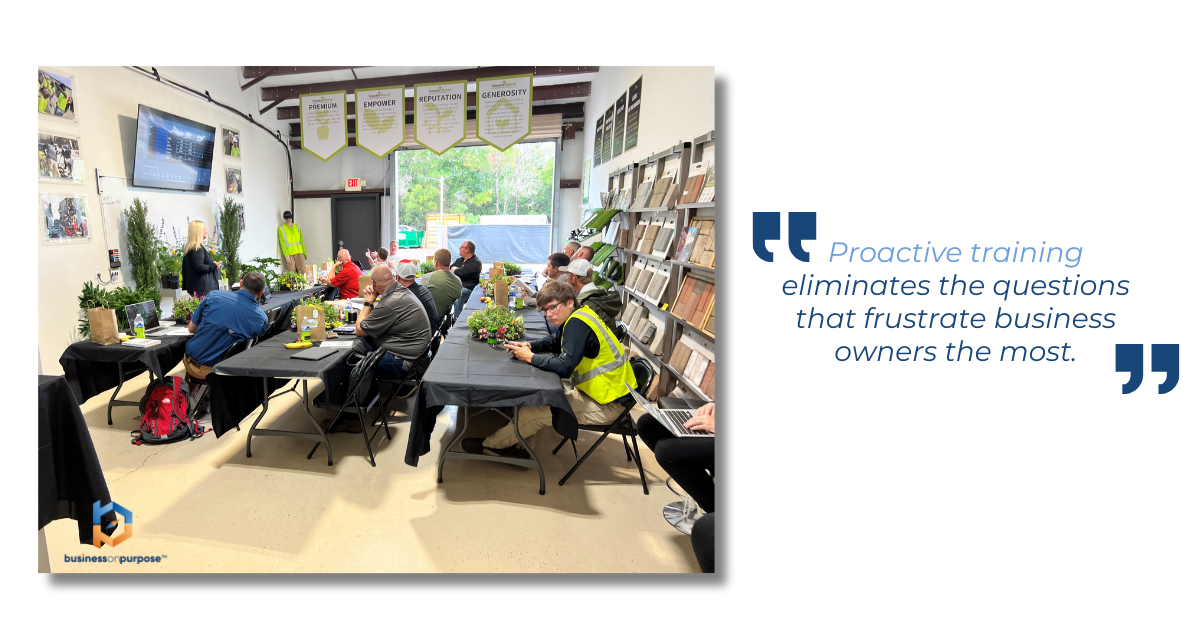
Whenever someone asks you a frustrating question, write it down and add it to the handbook. This is how a practical training system grows.
Final Thoughts
Training and development are not optional. They are leadership responsibilities that ultimately rest on the business owner. When you take ownership, you build a company that is predictable, repeatable, scalable, and attractive to top talent.
Scott Beebe and the team work with business owners who have between three and one hundred employees to help them build purpose, people, process, and profit so they can be liberated from chaos and make time for what matters most.
Ready to build your own training and development program?
Start by completing the four-category brain dump today. Then watch the companion video that walks you step-by-step through developing a complete training system. Take action and begin transforming your organization.
Scott Beebe is the founder of Business On Purpose (mybusinessonpurpose.com) and speaker for the AEC industry and author of the book Let Your Business Burn: Stop Putting Out Fires, Discover Purpose, and Build a Business That Matters. Business On Purpose works with business owners to articulate purpose, people, process, and profit to liberate owners from chaos and make time for what matters most.