The “Groundhog Day” Problem Every Contractor Knows
We work with a lot of builders and contractors, and we get to know them well. One of the most common frustrations we hear sounds something like this: “I feel like I’m waking up and recreating the wheel every single day. Isn’t there a way to just set it and forget it?”
The answer is yes — and not only do you want that kind of business, your team wants it too. Your employees do not want everything to rest on your shoulders. They want to grow in their roles just like you want to grow in yours. A business that runs without you does not just free the owner. It empowers every single person on the team.
Here is a real example. A few weeks ago, my wife and I were away with friends for a few days. I woke up from a nap and she told me we had just landed a new client. I was asleep. That is what a streamlined business looks like in practice. It did not happen by accident. It happened because we built systems that run and grow with or without me.
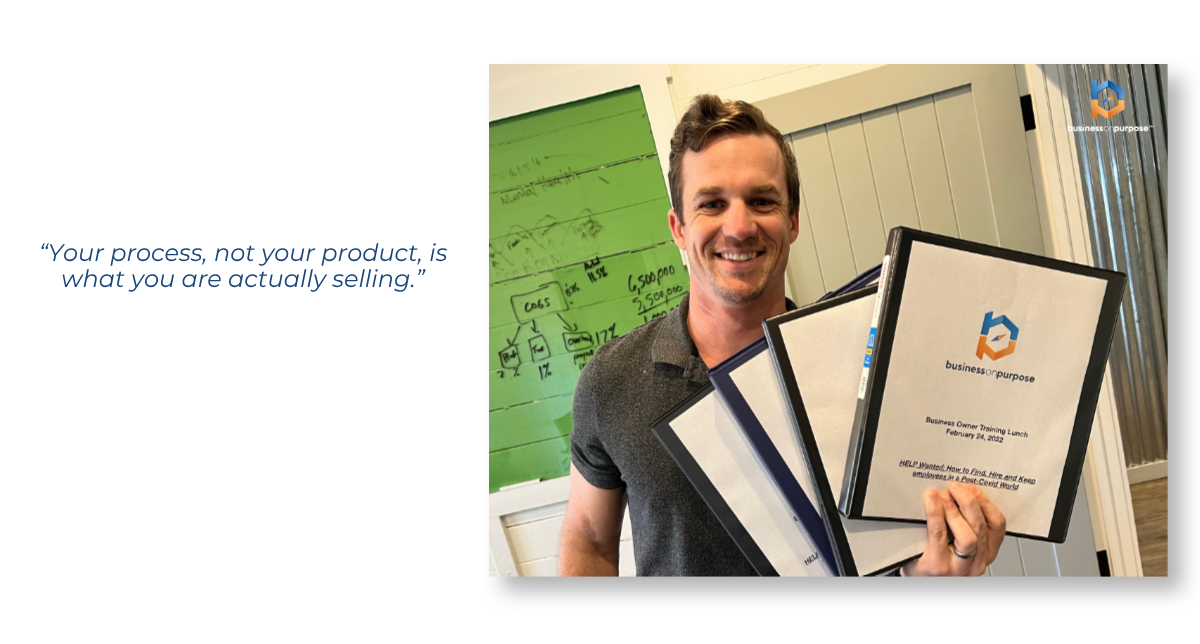
“Your process, not your product, is what you are actually selling.”
Lead Well.
If you're looking for more resources to work ON your business, we have them.
The Three Macro Tools Every Business Needs
Let’s start from the top and work our way down. Every business — including yours — runs on three major tools.
Tool One: The Operating System
Think about your phone or your computer. When you hit the power button, an operating system kicks on and everything works. You could not do anything on that device if the operating system were not coded and functioning properly.
Your business needs the same thing. As the business owner, you need to code your business — not in computer language, but in an operating system that serves as the skeleton of everything you do. That operating system is built on four foundational cornerstones: purpose, people, process, and profit.
Within those four areas, there are roughly 30 tools to run the business — things like a vision story, mission statement, core values, a culture calendar, employee handbook, hiring process, org charts, and financial dashboards. These are the tools that keep the business running at a structural level.
Tool Two: The Master Process Roadmap
Most contractors think their product is their product. If you are a home builder, I can drive down any street and see beautiful homes. But I cannot tell which one you built. Why? Because home building is a commodity. Coffee beans are a commodity. Teaching is a commodity. Videography is a commodity. There are a lot of people who do what you do, but very few who do it the way you do it.
That means your process — the way you deliver your product — is the actual product you are selling. And that process needs to be documented.
Right now, most contractors have what we call captive processes. You know how to pull a permit. You know how to run payroll. You know how to clean a job site. But that knowledge is locked behind the bars of your brain. It has never been written down or handed off properly.
So you hire someone, give them a login, say a few words, and then wonder why it was not done right. It was not done right because they were never actually taught your way of doing it. They may have experience running payroll — but they have experience running payroll the way they learned it somewhere else, not the way you run it.
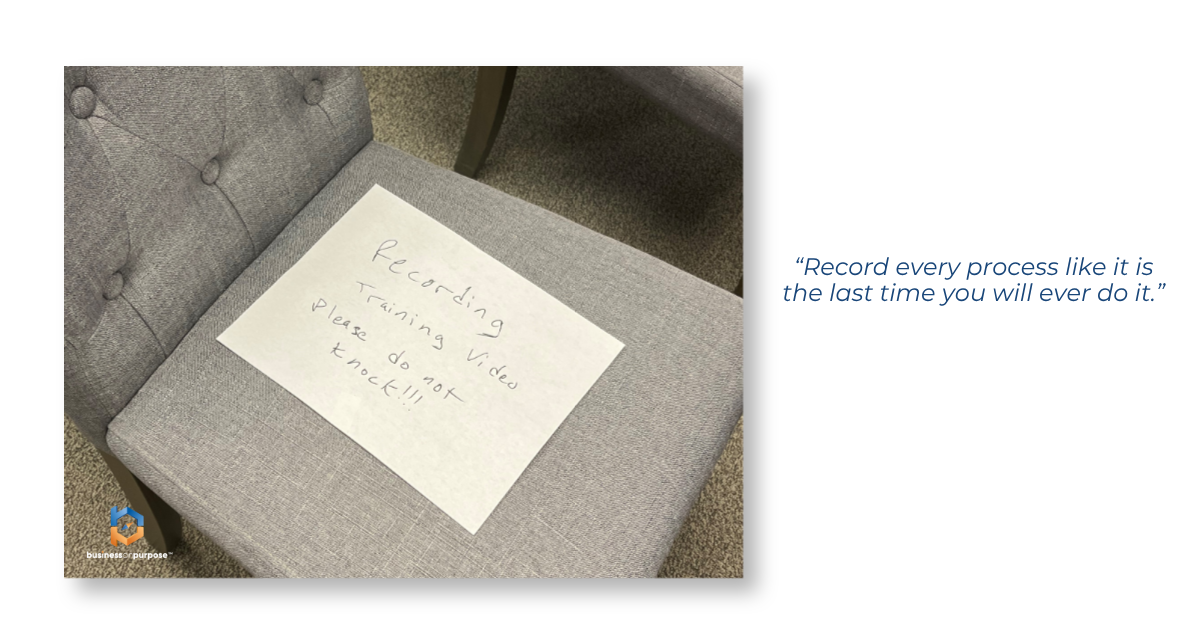
“Record every process like it is the last time you will ever do it.”
How to Get Processes Out of Your Head
Here is a simple, practical approach that works right now. Open the voice memo app on your phone. The next time you do something — run payroll, clean a job site, collect certificates of insurance from subcontractors — just talk through what you are doing while you do it. Set up a video camera if that helps. Narrate every step.
When you are done, upload that recording into an AI tool. But do not just say “give me a job site cleanliness process.” Give it context. Tell it: “I want a process I can hand off to our superintendent so they know how to manage job site cleanliness.” You can even ask the AI to ask you clarifying questions to sharpen the output. Tell it to format the result using your brand standards — your logo, fonts, and colors — so it looks like it belongs to your company.
The result is a documented process you can actually train on, hold people accountable to, and repeat over time. That is the difference between telling someone how to do something once and building a system that teaches them again and again.
Tool Three: The Anchor
Once you have a documented process, the work is not done. You have to train on it repeatedly. That is where the anchor comes in.
The anchor is a 52-week calendar spread across a spreadsheet that includes all the ingredients you want to embed in your business: training sessions, team meetings, culture moments, birthdays, anniversaries, and recurring process reviews. Once a new process is documented, it goes into the anchor. Then, every six, ten, twelve, or fifteen weeks, you train on it again.
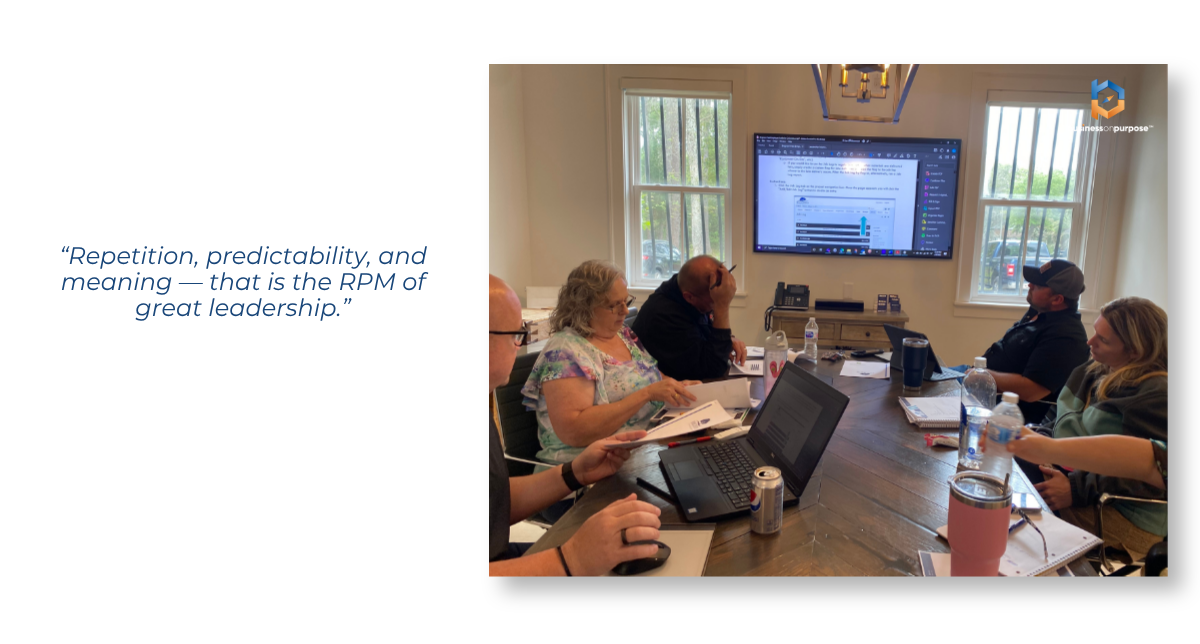
We call this the RPMs of great leadership: repetition, predictability, and meaning. Your team does not learn something once and lock it in forever. They learn it through consistent, intentional repetition.
“Repetition, predictability, and meaning — that is the RPM of great leadership.”
Your Homework: Start the Brain Dump Today
Here is where to begin. Grab a scratch sheet of paper and write these four categories across the top: marketing, sales, operations, administration. Set a timer for 15 minutes and brain dump every single process you can think of inside those four buckets.
Do not overthink it. Write down “certificate of insurance process.” Write down “job costing.” Write down “website update.” Whatever comes to mind, get it on paper. That list becomes your starting point.
From there, the next time you perform any one of those processes, record yourself doing it. Upload it to an AI tool with specific instructions. Link the output to your master process roadmap. Drop it into your anchor. Train on it every few weeks. That is the full loop — and it is how you build a business that does not need you in every moment to keep moving forward.
Why This All Matters
Contractors live in chaos. That is not a criticism — it is just the reality of the industry. Jobs change. Weather happens. Subs fall through. The goal is not to eliminate all unpredictability. The goal is to build enough structure around the things you can control so that the chaos does not take the whole business down with it.
Our mission at Business on Purpose is to liberate you from that chaos and give you back time for the things that matter most — your family, your health, your community, and the long-term vision for your business.
You deserve a business that works for you. Your team deserves a business with clear expectations and repeatable systems. And your clients deserve a business that delivers a consistent experience every single time.
Start with the brain dump. Record the next process you do. Get it out of your head and into a system. That one step is how it begins.
Ready to go deeper? Visit businessonpurpose.com/healthy to take the next step toward building a business that runs without you.