Strategy Without a Scorecard Is Just Wishful Thinking
Here’s the hard truth: if your marketing and sales plan only exists in your head, it is not a plan. It is wishful thinking. And wishful thinking does not grow businesses.
Think about a football team. Every offensive and defensive player carries a playbook. Those big binders are filled with plays the team studies, memorizes, and executes with precision. The goal is clear: score touchdowns, win games. Nobody runs onto the field wondering which direction to go.
Your business deserves the same clarity. The question you need to ask yourself is this: Where is the playbook that not only I can use, but that I can train others to use so they can deliver marketing and sales results?
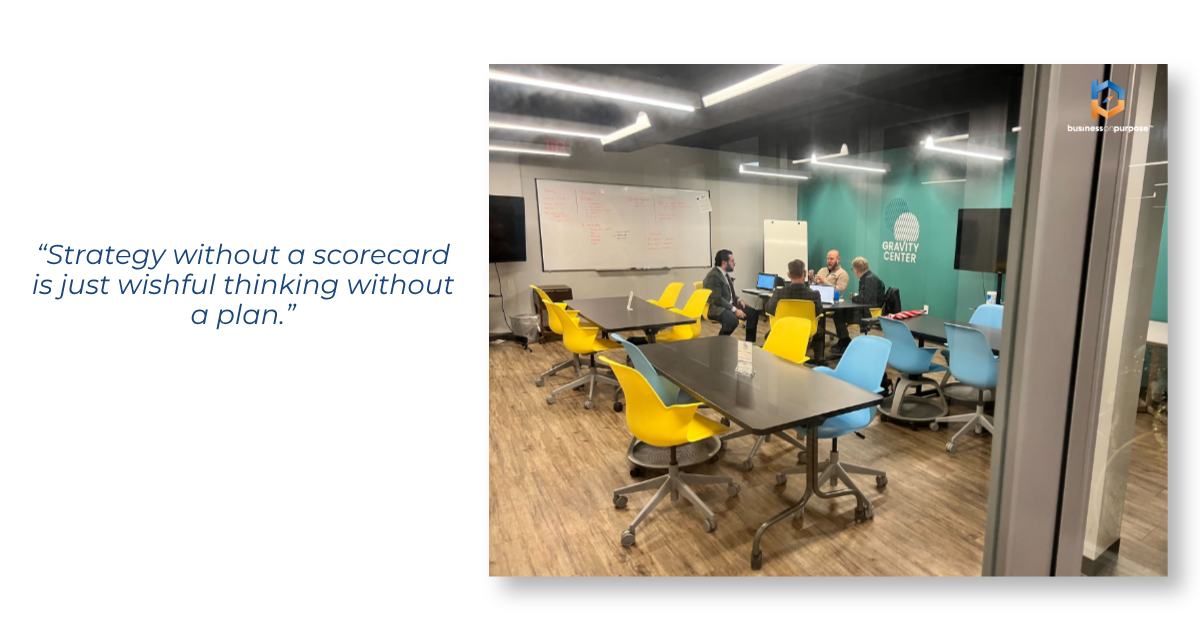
“Strategy without a scorecard is just wishful thinking without a plan.”
Lead Well.
If you're looking for more resources to work ON your business, we have them.
Marketing Always Comes Before Sales
Before you build anything, you need to understand the order of operations inside your business. There are four core systems every business runs on. We call it the MSOA: Marketing, Sales, Operations, and Administration.
Marketing always comes before sales. Sales always comes before operations. Operations always comes before administration. Here is why that order matters:
- You cannot administer something you have not built.
- You cannot build something you have not sold.
- You cannot sell something if nobody knows you exist.
These systems are sequential, and skipping steps is exactly why so many owners feel like their marketing and sales are a tangled mess. They are treating two distinct systems like one chaotic blur.
Step One: Articulate the Goal
The first step in building your marketing and sales strategy is not complicated, but it is non-negotiable. You have to articulate the goal. Where are you actually aiming?
There is an old proverb that says, “Where there is no vision, people scatter.” The reason is simple: when you don’t write down and share your direction, every person on your team fills in the blank with their own version of what success looks like. That is a recipe for chaos.
Write the vision down so that those who read it may run. Some people will run toward it. Some may run away from it. That is a good thing. Clarity is divisive, and divisive clarity is exactly what you need to build a focused team around a focused goal.
Step Two: Define Your Target Market
Once you know where you are headed, the next step is identifying who you are going there with. Not every customer is the right customer, and pretending otherwise will drain your energy and your resources.
Think about the worst client you have ever worked with. They probably popped into your head immediately. Now here is the key insight: it is not that specific person you want to avoid. It is the attributes they brought to the relationship.
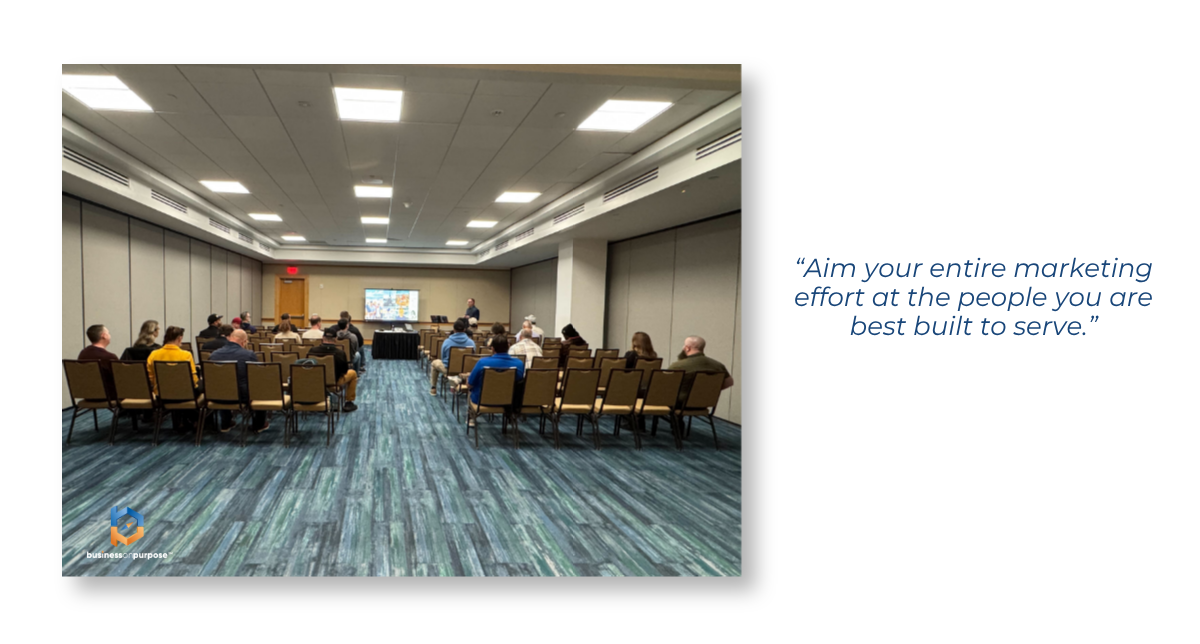
You need to define who you are built to serve and who you are not. That does not mean you will never work with someone outside your ideal profile. It means you will aim your entire marketing effort at the people you serve best. That is how you fill your funnel with the right people instead of just warm bodies.
“Aim your entire marketing effort at the people you are best built to serve.”
Building the Marketing Funnel
Now the real work begins. Start with marketing, and ask yourself one powerful question: Where have 80% of your customers come from in the past?
Look at the primary channels. Was it in-person interactions? Social media? Your website? Partner and vendor relationships? Identify where most of your clients have actually come from, and then build activities around those channels to generate more of the same.
Here is a practical framework. Take a sheet of paper and draw two columns. Label one column “Actions” and the other “Results.” Fill in the marketing activities that feed your pipeline and identify the one result you are aiming for. You can have multiple activities, but you should have a single, clear result.
For example, at Business On Purpose, about 50% of clients come through speaking and live event engagement. The actions are reaching out to event managers, delivering educational content, and following up with attendees. The result? Booked appointments. One result. Clear target.
Building the Sales Funnel
Once your marketing funnel delivers a qualified prospect, your sales funnel takes over. And just like marketing, it needs a system with defined activities and a defined result.
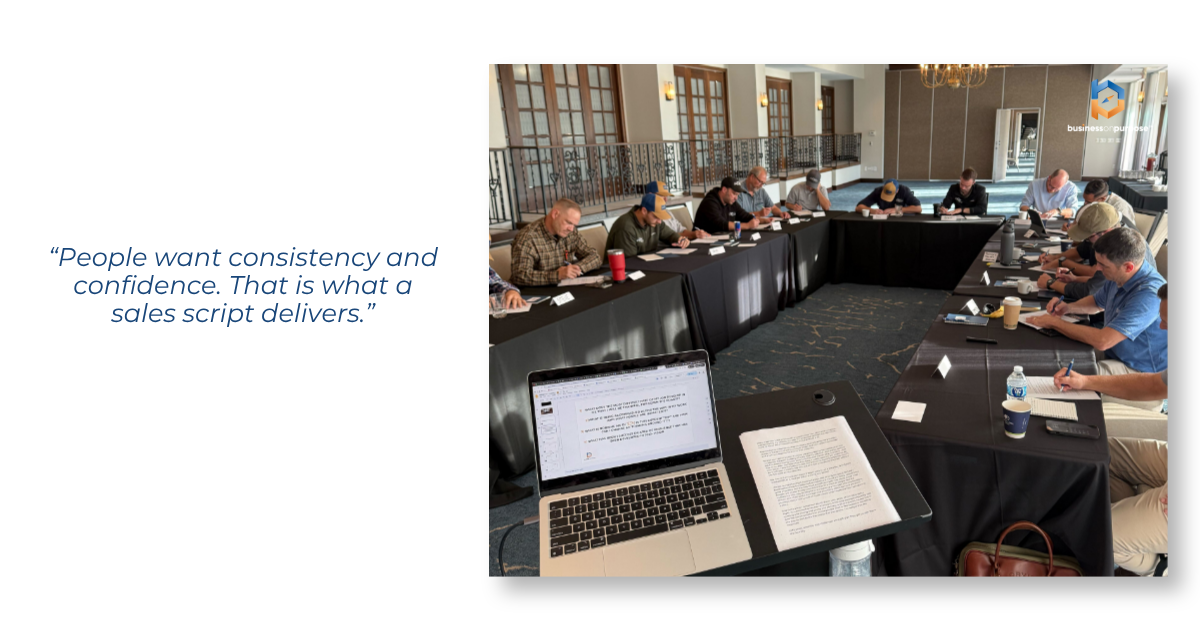
The cornerstone of any sales funnel is a script. Yes, a script. Even if you sell ice cream, sport coats, or home building materials, you need a repeatable process for how you talk to prospects. Here is why: you cannot sell and deliver consistency without one.
Here is an example of a simple sales script used at Business On Purpose:
- Tell me about your business.
- What do you want?
- What are the roadblocks that keep you from getting what you want?
- What would life look like in three years if you did nothing different from what you are doing today?
- What are you willing to invest in terms of time?
- What questions do you have for me?
From there, most prospects naturally ask what you offer and how much it costs. That is your cue to walk through your offer script with confidence.
Does this feel robotic? Maybe at first. But here is what people want more than anything: consistency and confidence. A script delivers both. A football team that says “every man for himself” on the field does not win games. Neither does a sales team without a playbook.
“People want consistency and confidence. That is what a sales script delivers.”
From Chaos to a System That Runs Without You
Here is what most owners experience every single day: marketing bleeds into sales, sales bleeds back into marketing, and there is no clear boundary between the two. Nothing thrives because nothing is treated as a true system that can be processed and delegated.
The goal of this entire exercise is to systematize both functions. When you document your marketing playbook and your sales playbook, you create something powerful: a business that does not depend entirely on you to generate revenue. You can train the right people to market and sell the way you would market and sell, without being in every conversation.
That is not just efficiency. That is freedom.
Your Next Step Starts Here
You do not have to live in the chaos of a business that only grows when you are personally driving every sale. The path forward is a clear strategy, a defined target market, a documented marketing funnel, and a repeatable sales process.
If you are ready to build a business that runs without you, start by getting your marketing and sales systems out of your head and onto paper. And if you want expert guidance to do it the right way, visit businessonpurpose.com/healthy to take the next step toward a healthier, more sustainable business.