Most small business owners treat marketing like a luxury — something you spend money on when things are going well and cut the moment they get tight. That mindset is quietly killing your revenue. If you want predictable growth, it is time to rethink how you categorize, budget, and invest in marketing and sales.
Marketing Comes Before Sales — Always
Before we go any further, let’s clear something up. The common phrase “sales and marketing” has the order backwards. It should always be marketing and sales. Here is why: you cannot sell something to someone who does not know you exist. Marketing builds awareness. Sales closes the deal. One has to come before the other, and marketing is always first.
Now that we have that settled, let’s talk about the bigger issue — why so many business owners treat their marketing pipeline like an afterthought.
The Feast and Famine Cycle Is Predictable (and Avoidable)
When we start working with a new client, one of two things is almost always true about their marketing pipeline: it is either in great shape or in terrible shape. And here is what is interesting — both situations tend to lead to the same problem.
When the pipeline is full, business owners get complacent. They say things like, “We don’t advertise. Everything is word of mouth. We’re fine.” Then six to twelve months later, the pipeline dries up and they are scrambling to rebuild it.
On the flip side, when a business owner with a thin pipeline gets serious about marketing, they build momentum — and then they take their foot off the gas, and the pipeline shrinks right back down.
This feast and famine cycle is one of the most common and most damaging patterns in small business. The fix is not working harder in bursts. The fix is consistency that builds compound value over time.
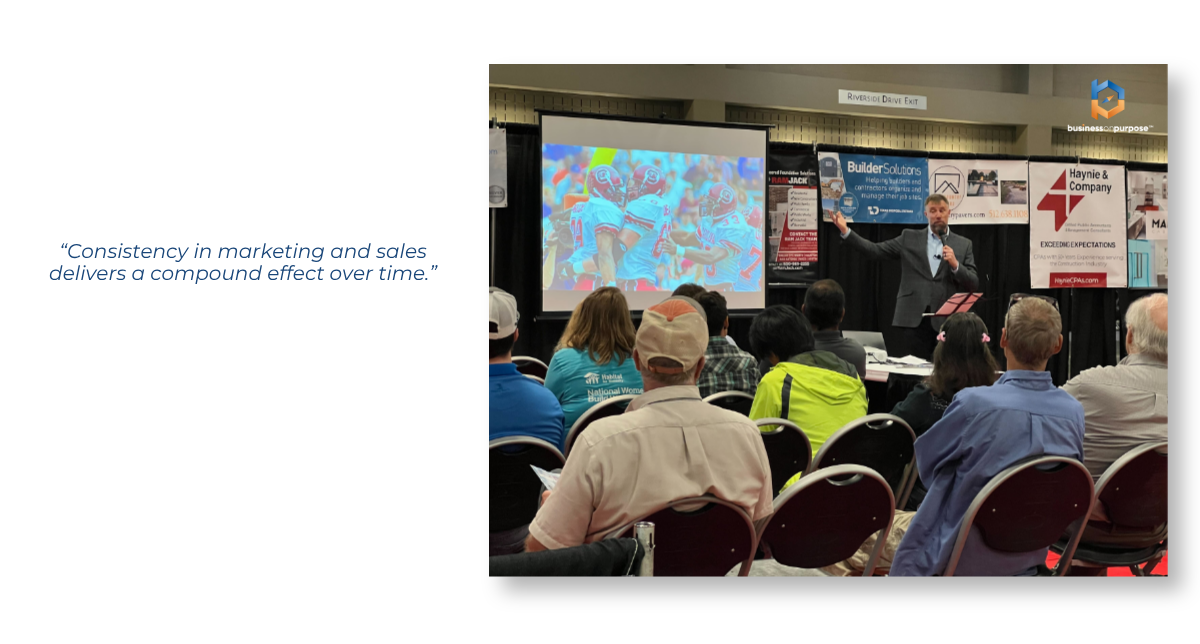
“Consistency in marketing and sales delivers a compound effect over time.”
Lead Well.
If you're looking for more resources to work ON your business, we have them.
Albert Einstein is often quoted saying that compound interest is the eighth wonder of the world. The same principle applies to marketing. You do not insert a dollar today and get a return tomorrow. But if you invest that dollar consistently over time, the return compounds. That is the shift in mindset that changes everything.
Yes, Marketing and Sales Are Operating Expenses — Budget Them That Way
Here is the bottom line: marketing and sales are operating expenses and need to be treated as such. But too many business owners treat them reactively. They hear a competitor is running paid ads, so they run paid ads. They see someone doing well with a billboard, so they buy a billboard. They have a little extra cash and throw it at a marketing person. That is not a strategy. That is chaos.
What you need instead is a proactive, budgeted plan that delivers predictable results. And the numbers are simpler than you might think.
Start with your gross margin — that is your total revenue minus your cost of goods. Whatever is left over is your real revenue. From that number, here is the framework to use:
- Marketing budget: 3 to 13% of gross margin. This includes everything — paid ads, software, CRM tools, and the people responsible for generating leads. Three percent is conservative, and thirteen percent is aggressive, but that range gives you a solid starting point.
- Sales budget: 5 to 20% of gross margin. This covers the compensation and systems tied to converting those leads into paying customers.
Not sure what your current marketing spend is? Do a simple ten-minute exercise. Write down every person, every tool, every ad, and every platform you use to get in front of prospects. Add it all up. Divide that number by your gross margin for the year. That tells you exactly what percentage you are spending right now.
How to Structure Sales Compensation the Right Way
One of the most practical things you can do is set up a three-tiered compensation structure for your salespeople. Whether that is a dedicated salesperson or a team member wearing multiple hats, this structure creates the right incentives without blowing your budget.
Tier One: Livable Base. This is a modest base salary that covers basic living expenses. It is not meant to fund a growing lifestyle — it is just enough to keep things stable while the salesperson builds momentum.
Tier Two: Sales Commission. On top of the base, commission kicks in and should ideally equal double the base salary or more in a good year. This is where most of the income potential lives and where you keep your costs variable rather than fixed.
Tier Three: Tiered Kicker Bonus. This is the motivator. If a salesperson hits a specific milestone — say, landing 100 clients in a quarter — they earn a one-time bonus. It can be $1,000 or $100,000 depending on your business. The point is that it rewards exceptional performance in a way that gets people genuinely excited.
“Commission salespeople on gross margin, not total revenue.”
One important note: always commission your salespeople based on gross margin, not total revenue. Why? Because total revenue includes variable costs that can shift. A salesperson could technically sell you an unprofitable deal and still earn their full commission. Tying commission to gross margin keeps everyone aligned around what actually matters — profitability.
Stop Thinking of Marketing as a Cost. Start Thinking of It as an Investment.
This is the mindset shift that ties everything together. Marketing and sales are not line items to minimize. They are investments that, when done consistently and intentionally, return more than you put in.
Think about evergreen content — blog posts, videos, educational resources. When you invest time and money into creating that content, it keeps working for you long after you created it. People discover it months or years later. It compounds. Contrast that with a one-off speaking engagement or a flash-in-the-pan ad campaign with no follow-up system. That is money in and money gone.
Where you place your marketing dollars matters. But so does making sure those dollars are tracked and visible in your financial systems.
Get Your Books Organized to Reflect This
If you are a business owner, you need to understand your Profit and Loss statement and your chart of accounts. If those terms feel unfamiliar, look them up. Your business depends on it.
Within your chart of accounts, you should have a dedicated marketing section and a dedicated sales section. Under marketing, list things like your CRM, paid advertising lines, and content tools. Under sales, list compensation and sales-related expenses. Some business owners even create a separate bank account just for marketing and sales so they can see exactly what is being deployed and track the return.
This level of clarity changes how you make decisions. Instead of reacting and guessing, you are working from a system — and systems create relief from the chaos that defines so many business owners’ lives.
“You cannot build a business worth owning without building systems around it.”
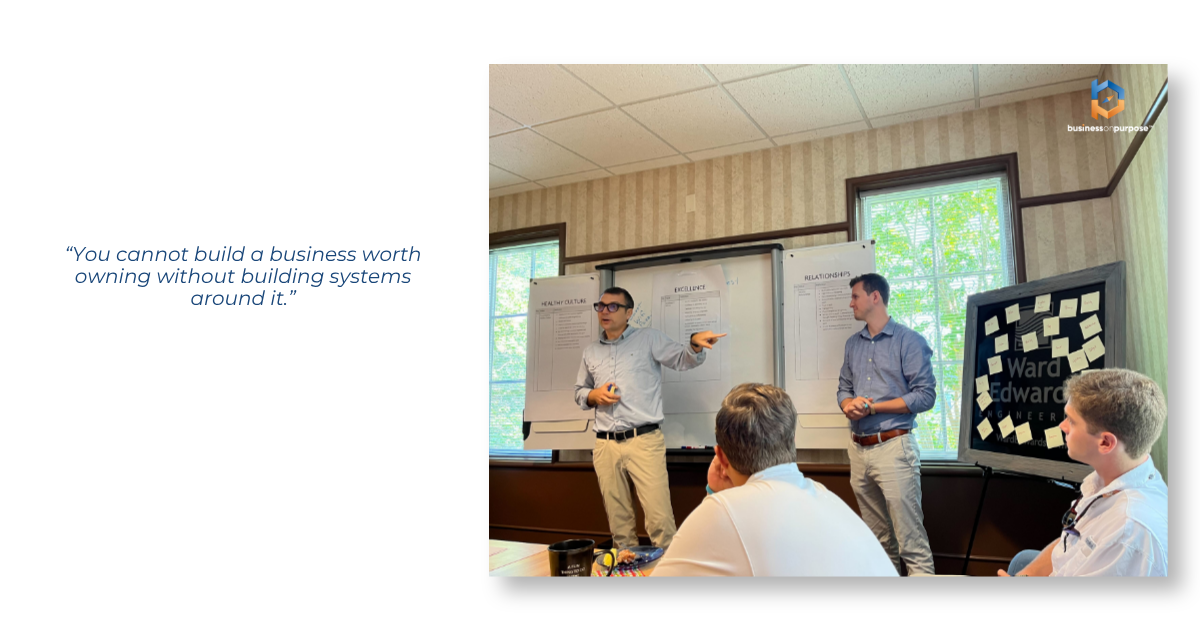
Build the System. Get Free from the Chaos.
Marketing and sales are not optional line items. They are the engine that keeps revenue flowing. When you budget them intentionally, compensate your sales team with a smart three-tier structure, and track everything in your financials, you stop reacting and start building something that grows on its own.
That is not just good business strategy. That is how you build a business that works for you instead of the other way around.
If you are ready to take control of the financial health of your business, start with the tools and resources at businessonpurpose.com/healthy. The clarity you need is closer than you think.
Scott Beebe is the founder of Business On Purpose (mybusinessonpurpose.com) and speaker for the AEC industry and author of the book Let Your Business Burn: Stop Putting Out Fires, Discover Purpose, and Build a Business That Matters. Business On Purpose works with business owners to articulate purpose, people, process, and profit to liberate owners from chaos and make time for what matters most.